


Description
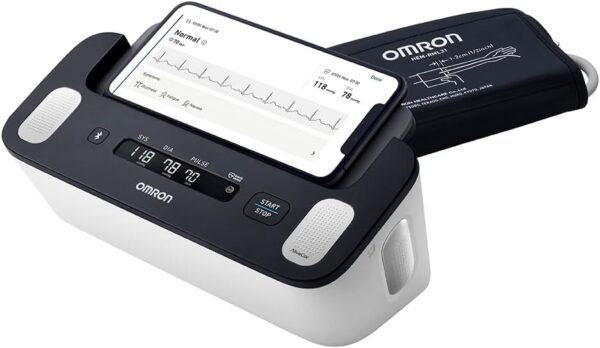
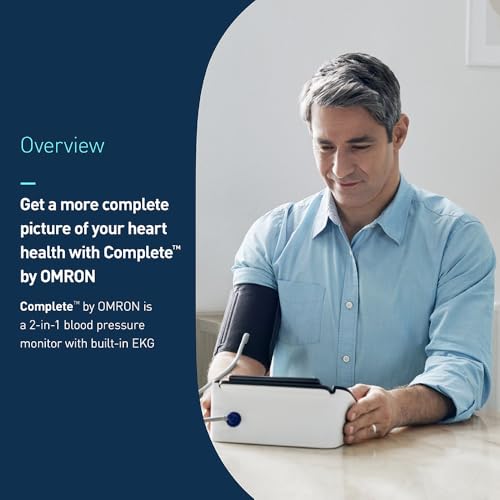
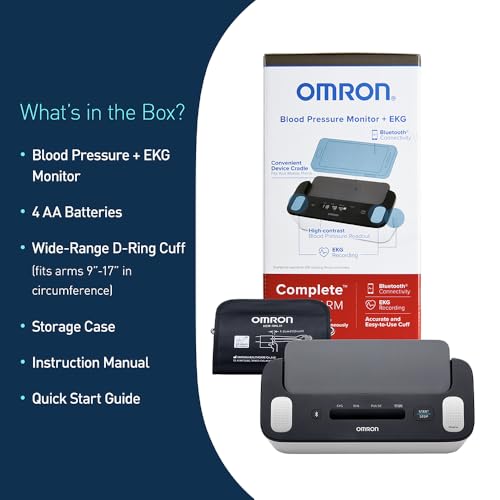
The OMRON Complete BP7900 is an upper arm blood pressure monitor with a single lead EKG recorder built into the same device. It is the most capable and the most serious product in this catalog, and it needs reading more carefully than any of the others. This review describes it from its published listing data. It is not medical advice, it does not tell you what any reading or trace means, and no home device replaces professional medical care. Everything this device records belongs in a conversation with a clinician who knows your history.
What the EKG feature is, and what it is not
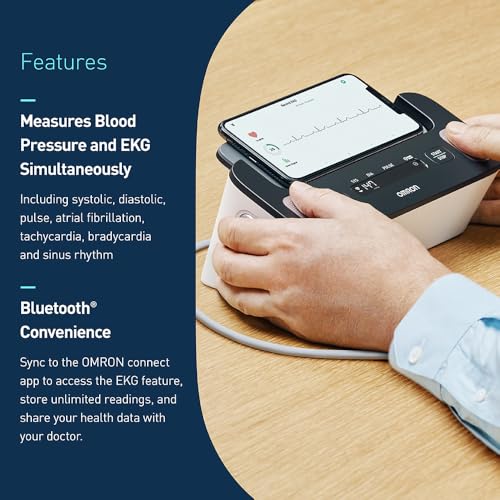
OMRON states that the device measures blood pressure and records a single lead EKG, either simultaneously or separately, and that after an EKG recording the OMRON Connect app returns an analysis of possible atrial fibrillation, bradycardia, tachycardia or normal sinus rhythm. OMRON also states the product was developed with AliveCor and uses an algorithm for improved detection of atrial fibrillation.
Those are the manufacturer’s descriptions of its own feature. Here is what they do not mean. A single lead recording is one view of the heart’s electrical activity, where a clinical assessment uses twelve. An algorithm returning a category is producing a screening result for a clinician to interpret, not a diagnosis. It does not identify why a rhythm is what it is, it cannot exclude anything, and a “normal” classification is not clearance to ignore symptoms. If the app returns any classification at all, including a normal one, the correct next step is to save the recording and take it to a clinician.
OMRON’s own copy goes further than that, stating that the device allows those living with atrial fibrillation a simple way to keep track of their condition and know when to seek treatment. That is the manufacturer’s statement about its own product, and we are reporting it as such rather than endorsing it. Whether home rhythm recording is appropriate for you, how often to use it, and what any result means are questions for the clinician managing your care. Nothing on this page answers them.
One practical constraint: the EKG feature does not work without a smartphone. OMRON states plainly that you must download the OMRON Connect app to use it. The blood pressure function works standalone; the EKG does not.
The cuff range, published in metric
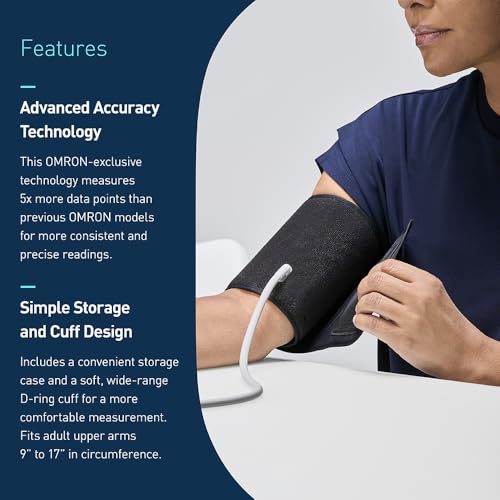
Cuff fit determines whether a blood pressure reading is worth recording, because a cuff too small or too large produces wrong numbers on a device that is working perfectly. The structured band size field reads 22 to 42 centimeters, which is roughly 8.7 to 16.5 inches and covers standard and large adult upper arms. No inch figure appears on the listing. Measure your upper arm at the midpoint between shoulder and elbow before ordering. If you measure above that range, a device supplied with a larger cuff is what you need, and the fit problem is not solved by pulling this one tighter.
Who this device is for and what it settles
The BP7900 settles whether you need two devices. It stores 90 blood pressure measurements on the monitor itself, with unlimited history in the app over Bluetooth on selected iOS and Android devices. Four AA batteries are included, along with a storage case and a quick start guide. Country of origin is given as Japan and the published weight is 19.4 ounces.
Ninety readings on the device is more standalone memory than most connected monitors offer, including the Withings BPM Connect, which publishes no on device figure at all. If you want the blood pressure function without the phone, that works here.
Using it correctly
The blood pressure fundamentals are the same as on any monitor. Sit with your back supported and feet flat on the floor, rest quietly for several minutes before starting, support the arm at roughly heart level, fit the cuff on bare skin rather than over a sleeve, and stay still and silent while the measurement runs. Take readings at the same times each day so they can be compared with one another. Follow OMRON’s manual, and follow any protocol your clinician has given you in preference to a general routine.
For the EKG function, follow OMRON’s instructions on hand and finger placement exactly. A single lead trace is sensitive to contact and to movement, and a poor recording is worse than none because it invites a conclusion that the data does not support.
What the regulatory claims actually say
This listing carries the same wording conflict as the rest of OMRON’s range, and on a device with a rhythm analysis feature it matters more.
The product title states the device is clinically validated, medical grade and FDA cleared. A feature bullet states it is FDA registered as a medical device. Registration means a manufacturer has listed itself and its device with the agency; clearance means the agency reviewed a specific device before marketing. Those are different statuses and the listing asserts both. “Medical grade” is a marketing phrase with no regulatory definition. For a product whose EKG algorithm returns rhythm classifications, the exact regulatory status of that feature is something to establish from the FDA’s own databases rather than from a product page.
The listing also states the monitor meets Validated Device Listing criteria for clinical accuracy as determined through an independent review process, without naming a protocol, and repeats OMRON’s brand claims about being the most recommended and world’s best selling brand. Those are marketing statements we cannot verify. We do not test devices and we will not describe any monitor as accurate, clinically accurate or medical grade in our own voice.
A five year warranty is stated, and the device is FSA and HSA eligible. Feedback is recorded at 4.1 out of 5 across 1,697 ratings, the lowest average of the OMRON devices in this catalog, which is worth weighing given that this is also the most complex device to use correctly.
Alternatives in this catalog
If you do not need the EKG function, OMRON’s Platinum and Gold BP5350 cover blood pressure alone at lower prices with the same cuff family and longer feedback histories. The rest of the blood pressure monitor section sets the specifications side by side, and a few further devices sit in the mixed shortlist section beside unrelated pressure products.
Who should buy it and who should not
Buy it only if a clinician has asked you to record rhythm data at home as well as blood pressure, you have a compatible smartphone, and you understand that every output is information for that clinician rather than an answer. Do not buy it to self screen, do not buy it if the app requirement is an obstacle, and do not treat a normal classification as reassurance about symptoms. Confirm your cuff size before ordering.