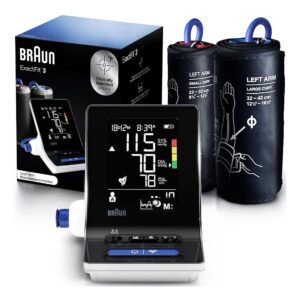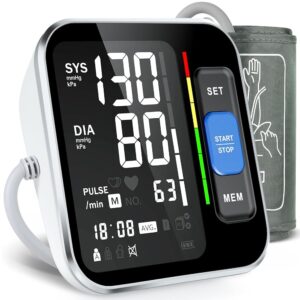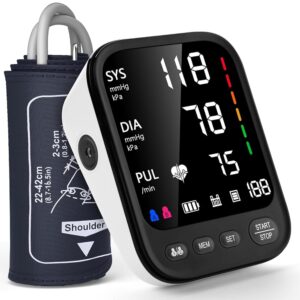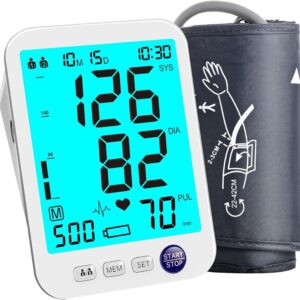


Description
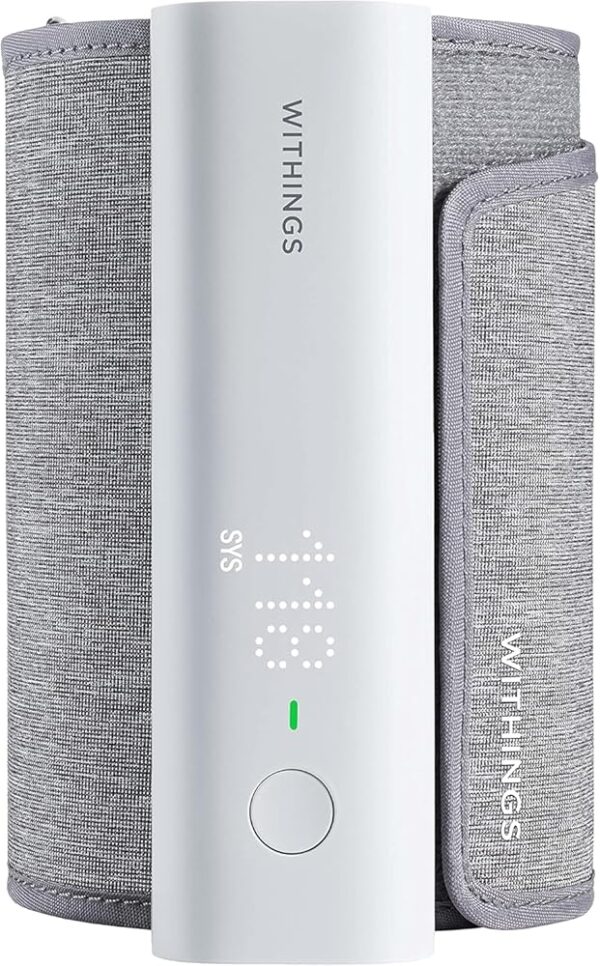
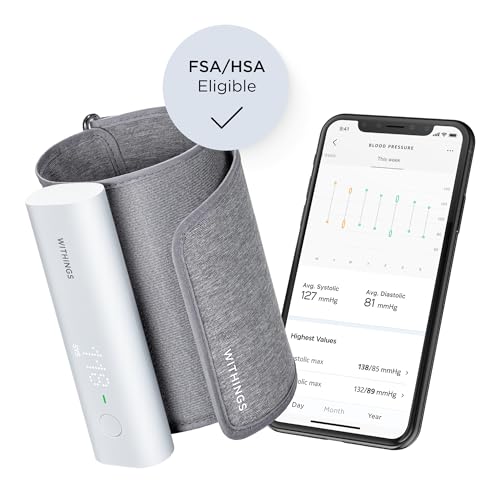
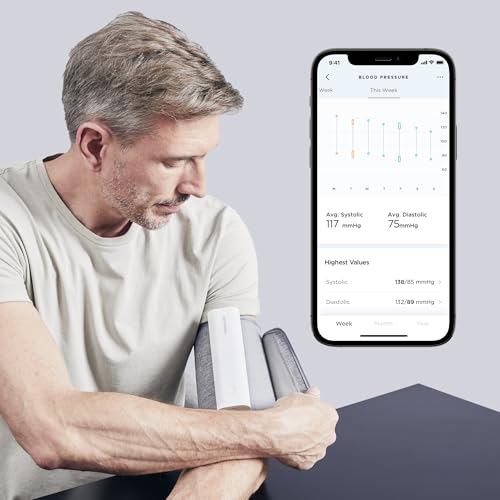
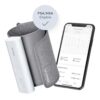
The Withings BPM Connect is an upper arm blood pressure monitor built as a single rolled up cylinder with the display on the outside, syncing over both Wi-Fi and Bluetooth to the Health Mate app. There is no separate monitor box and no tube: the cuff is the device. This review describes it from its published listing data. It is not medical advice, it does not tell you what any reading means, and a home monitor does not replace professional medical care. Readings belong in a conversation with a clinician who knows your history.
Who this monitor is for and what it settles
The BPM Connect settles what a connected monitor should feel like to own. Most devices in the blood pressure monitor section are a plastic box, a length of tube and a cuff that has to be assembled on a table. This is one object that rolls up, weighs 12.8 ounces and measures 2.36 by 2.16 by 6.1 inches when stored.
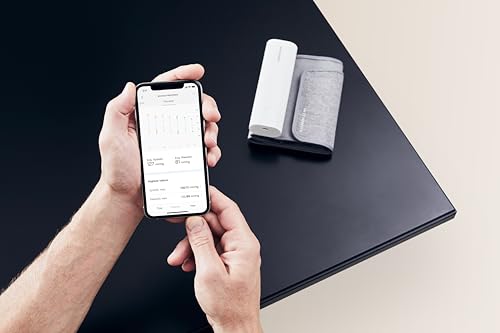
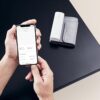
The connectivity is the other differentiator. Wi-Fi syncing means readings reach the app without a phone present, where Bluetooth only devices need the phone in the room and awake. Withings states the charge lasts six months, which removes the battery question almost entirely.
What the listing does not publish is how many readings the device stores on its own. Everything is described in terms of the app and its data history. If you do not want a phone or an account involved, this is the wrong device, and a monitor with a large on device memory is the better starting point.
The cuff range, published in metric only
Cuff fit determines whether a reading is worth recording, because a cuff too small or too large produces wrong numbers on a device that is working perfectly. Technique does not compensate for it.
The structured band size field reads 22 to 42 centimeters, which is a proper two ended range covering standard and large adult upper arms. No inch equivalent appears anywhere on the listing, which for an American audience is an unnecessary obstacle: 22 to 42 centimeters is roughly 8.7 to 16.5 inches. Measure your upper arm at the midpoint between shoulder and elbow before ordering, and if you measure above that range, a device supplied with a larger cuff is what you need.
Using it correctly
Home readings are useful when the routine never changes. Sit with your back supported and feet flat on the floor, rest quietly for several minutes before starting, support the arm at roughly heart level, fit the cuff on bare skin rather than over a sleeve, and stay still and silent while the measurement runs. Take readings at the same times each day so they can be compared with one another. Follow the manual for the exact fitting the device expects, and follow any protocol your clinician has given you in preference to a general routine.
The device gives immediate color coded feedback on its own display. That is the device sorting a single reading into a fixed band. It knows nothing about your history, your medication, the time of day or how you were sitting, and a single reading is not a picture of anything. A color is not a diagnosis and it is not a reason to change what you are doing. This page will not tell you what any color or number means. If one concerns you, record it and take the record to a clinician, which is precisely what the sharing feature is for.
What the accuracy claims actually say
This listing makes stronger claims than most and they need separating.
The product title states the device is FDA cleared. Clearance means the agency reviewed a specific device before it was marketed, and it is a real regulatory status, unlike the registration wording used on several competing listings. It is still a manufacturer statement on a product page, and the FDA maintains its own databases where a reader can check it directly.
The product description says the device provides medically accurate blood pressure and heart rate measurements. “Medically accurate” is not a defined term, no protocol is named alongside it, and no independent validation body is cited. A feature bullet goes further and describes the product as one of the most accurate blood pressure monitors available, which is a comparative claim with nothing supporting it on the page. We do not test devices and we will not describe any monitor as accurate, clinically accurate or medical grade in our own voice.
The same bullet also states the device is ideal for individuals with high blood pressure. That is the manufacturer positioning its product for a condition; it is not a clinical indication and it is not advice for you. Whether home monitoring is appropriate in your situation, and how often, is a question for a clinician.
Three things on this listing that do not line up
The battery description contradicts itself. Withings states a rechargeable battery lasting six months per charge and lists a charger among the included components. The structured batteries field, however, reads “1 LR44 batteries required, included”. LR44 is a small coin cell, not a rechargeable pack, and the two statements describe different devices. Read the bullets as correct and the field as an import error, but confirm what you are getting.
A feature bullet describes emailing reports to a healthcare provider from, in its own words, a wrist blood pressure monitor. This is an upper arm device. Every other part of the listing says so, including the title and the use field.
The same bullet states that emailing reports works on iOS only. If you use Android and intend to send reports to a clinician rather than show them on a screen, check what the Android app can export before buying.
Alternatives in this catalog
For another single piece connected design, the Garmin Index BPM is the closest comparison. For a connected device with a large on device memory as a fallback, the OMRON Platinum stores 100 readings per user independently of its app. The iHealth BP5S Neo is the slimline alternative with file export rather than email. Feedback here is recorded at 4.1 out of 5 across 14,443 ratings, which is a large sample and the lowest average among the premium connected devices in this catalog.
Who should buy it and who should not
Buy it if you want the least fiddly connected monitor available, Wi-Fi syncing without a phone in the room, and a six month charge. Do not buy it if you want a usable record without an app, if you are on Android and need email export, or if your upper arm falls outside 22 to 42 centimeters. Further options sit in the mixed shortlist section alongside unrelated pressure products.