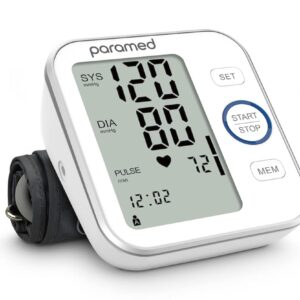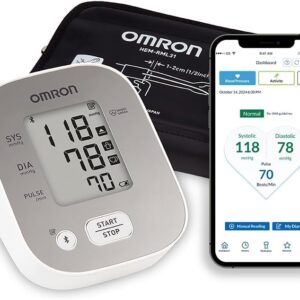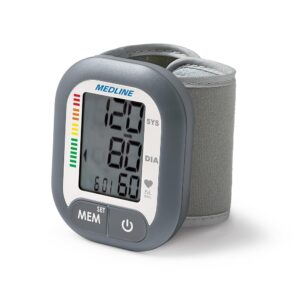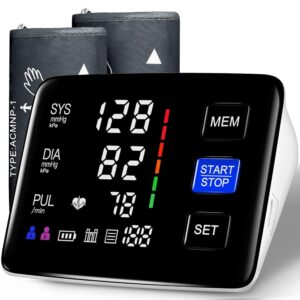



Description
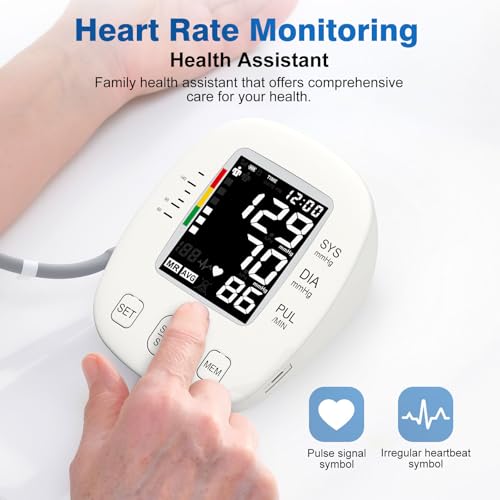
The Orwk BSX593 is an upper arm blood pressure monitor with a backlit LCD, automatic averaging of three measurements, irregular heartbeat alerting and storage for 99 readings each across two users. This review describes the device from its published listing data. It is not medical advice, it does not tell you what any reading means, and a home monitor does not replace professional medical care. Readings belong in a conversation with a clinician who knows your history.
Who this monitor is for and what it settles
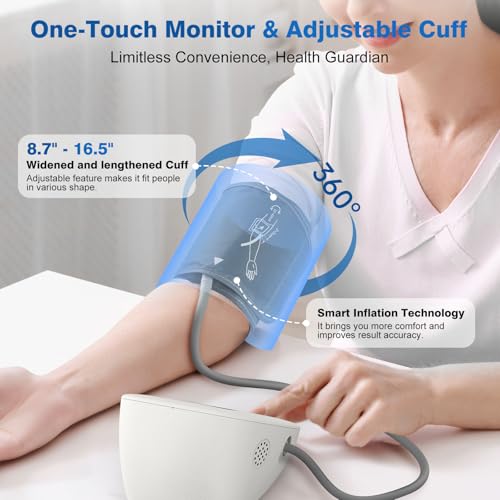
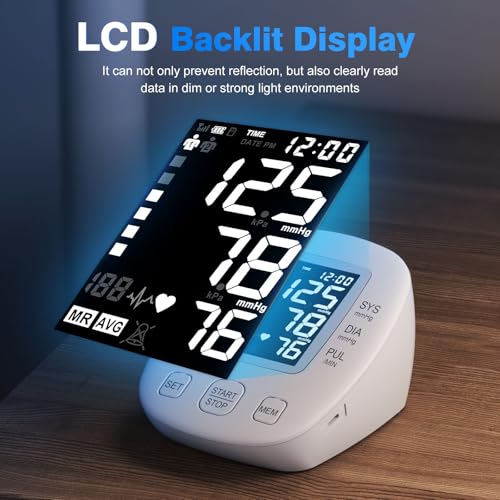
The BSX593 settles whether the useful features migrate down to the value brands, and largely they have. It averages three measurements automatically, which is what most measurement routines are built around and which removes a common source of arithmetic error. It alerts on an irregular heartbeat. It has a 360 degree adjustable cuff, one button operation and a backlit screen legible in dim or bright light.
The stated box contents are the monitor, the cuff, four AA batteries, a Type-C cable, an instruction manual and a bag. Published dimensions are 4.55 by 3.59 by 2.48 inches. Nothing in the listing describes Bluetooth or an app, so the 99 readings per user on the device are your complete record.
“Charging” here does not mean rechargeable
The listing describes the Type-C cable as a charging cable and calls the combination a flexible charging option. Read that carefully, because the same box also contains four AA batteries, and AA cells are not rechargeable in an appliance like this.
What this almost certainly means is what the comparable devices in this catalog do: the cable supplies mains power as an alternative to batteries, and there is no internal cell to charge. The Oklar C02 states this explicitly and says the product is not rechargeable. Orwk does not say either way. If you were planning to charge this device and carry it, confirm with the seller first, because the previous description on this page described a rechargeable battery and nothing in the current listing supports that.
The cuff range, and where the listing publishes it
Cuff fit determines whether a reading is worth recording, because a cuff too small or too large produces wrong numbers on a device that is working perfectly. Technique does not compensate for it.
The product title and a feature bullet both state a longer cuff of approximately 8.7 to 16.5 inches, and those agree. The structured band size field reads only “16.5 inch”, giving the maximum with no minimum, and the size field reads “Medium”, which is not a measurement of anything.
Measure your upper arm at the midpoint between shoulder and elbow before ordering and work from the 8.7 to 16.5 inch figures. If you measure above that, a two cuff device such as the LIVAROCI U80B, which supplies a second cuff reaching 21 inches, is where to look.
Using it correctly
Home readings are useful when the routine never changes. Sit with your back supported and feet flat on the floor, rest quietly for several minutes before starting, support the arm at roughly heart level, fit the cuff on bare skin rather than over a sleeve, and stay still and silent while the measurement runs. Take readings at the same times each day so they can be compared. Follow the user manual for the exact fitting the device expects, and follow any protocol your clinician has given you in preference to a general routine.
Two of the device’s outputs report rather than interpret. The irregular heartbeat alert tells you the device detected an irregularity in the pulse while measuring. It does not identify what it was, does not say whether it matters, and diagnoses nothing. Note it and raise it with a clinician.
The three color indicator bars on the left of the screen are attributed in the listing to the International Society of Hypertension. Citing an organization’s published categories is not the same as that organization endorsing the device, and the bars themselves are doing nothing more than sorting a single reading into a fixed band. They know nothing about your history, your medication, the time of day or how you were sitting. A color is not a diagnosis. This page will not tell you what any band or number means; if a reading concerns you, record it and take the record to a clinician.
What the clinical testing claim actually says
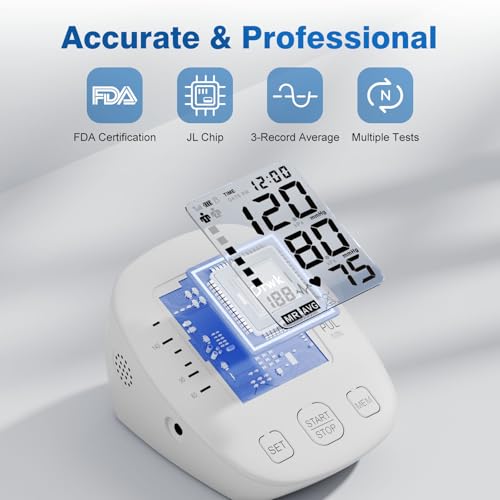
The first feature bullet makes the strongest claim on the page: that the monitor is equipped with the latest 2024 JL chip and has passed clinical tests involving thousands of high pressure patients.
That sentence has the shape of a validation claim without any of the substance. It names no protocol. It names no testing body, no institution and no publication. It gives no date, no sample description beyond “thousands” and no result. There is no reference a reader could follow to check any part of it, and it appears alongside no statement about FDA clearance or registration.
Compare it with the iHealth Track listing, which names the ESH 2010 protocol outright. A named protocol can be looked up. A reference to unspecified clinical tests cannot, and it should not carry the same weight with you.
If validation status matters to your decision, the device listings published by validation programs and the FDA’s own databases are the places to check rather than a product page. We do not test devices and we will not describe any monitor as accurate, clinically accurate or medical grade in our own voice. Feedback is recorded at 4.6 out of 5 across 809 ratings, which measures buyer satisfaction rather than measurement performance. No warranty term is published anywhere on the listing.
Alternatives in this catalog
Note also that the size field on this listing reads “Medium” while the cuff itself is described as a longer cuff reaching 16.5 inches. Those are not the same statement, and the size field should be ignored in favor of the measured range.
The BSX platform appears under several brand names in the blood pressure monitor section, including the Laukum BSX583, so a shortlist of these devices may be narrower than it looks. Further options sit in the mixed shortlist section alongside unrelated pressure products.
Who should buy it and who should not
Buy it if you want automatic averaging and irregular heartbeat alerting at a low price, your upper arm measures between 8.7 and 16.5 inches, and mains or battery operation suits you. Do not buy it expecting a rechargeable battery, do not buy it if a published validation protocol or a warranty term matters to you, and do not read the clinical testing claim as validation.