Description
Who the Westinghouse WPX2300e is for
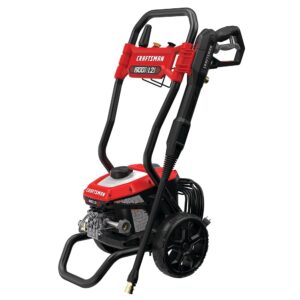
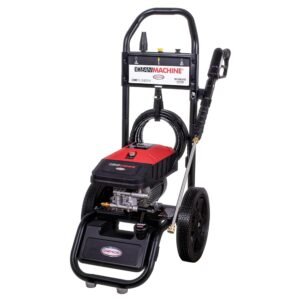
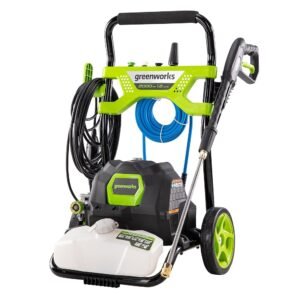
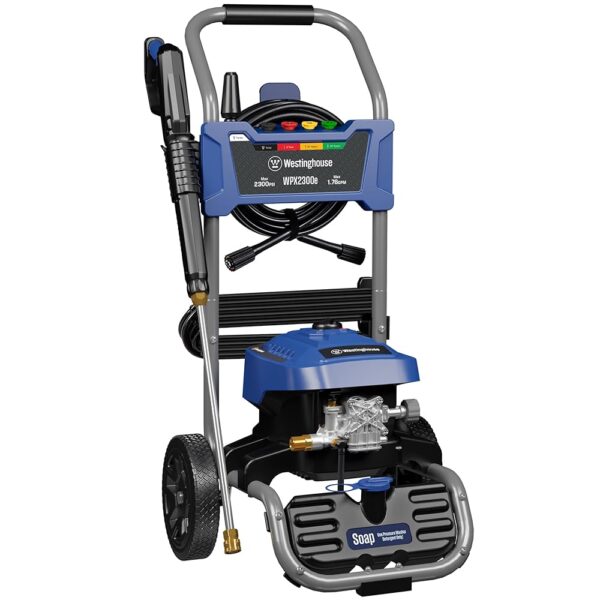
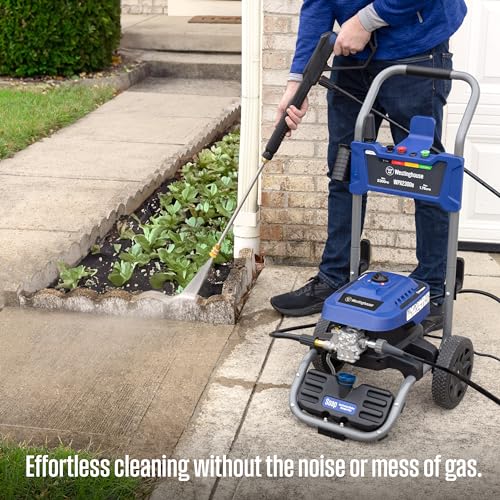
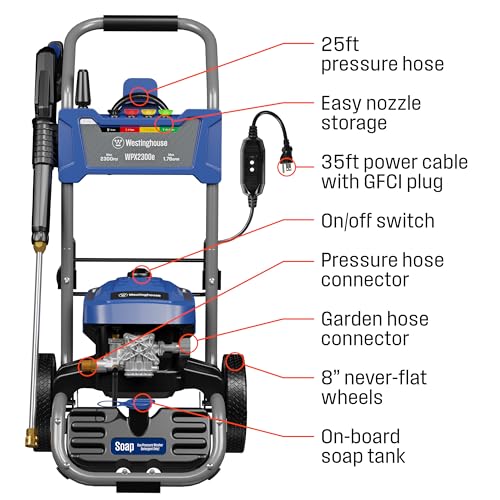
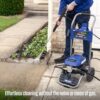
The WPX2300e is a corded electric pressure washer on a steel frame with 8 inch never flat wheels, built for household outdoor work: decks, sidewalks, siding, fences, railings, garage floors, cars and patio furniture. It is a mid range machine in a class where the alternatives are either a small handheld unit or a gas engine, and the decision it settles is whether an electric washer can move enough water for your job without the noise, fuel and exhaust of an engine.
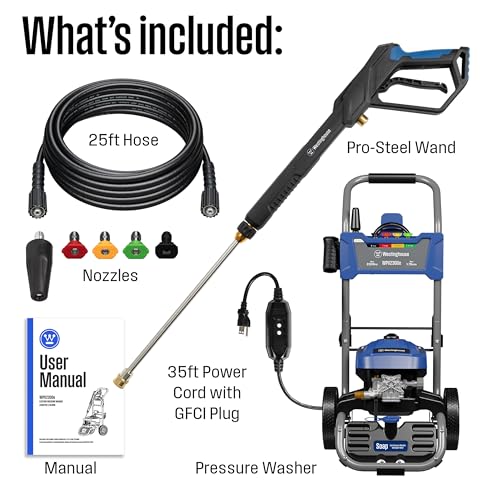
For most household work the answer is yes, and the specific advantage here is the cord. The listing states a 35 foot GFCI cord, which is unusually long for this class and removes the most common frustration with electric washers, namely working on a leash. Combined with a 25 foot hose, that gives a working radius of about 60 feet from the outlet without moving anything.
The published output figures, and one clear contradiction
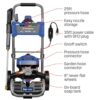
The headline figures are a maximum of 2300 PSI and a maximum of 1.76 gallons per minute, driven by a 120 volt AC motor described as an induction motor in the title and as a heavy duty electric engine in the bullets. The pump is described as a maintenance free axial three piston auto stop pump.
There is a contradiction in the listing that a buyer should see rather than have smoothed over. The product title, the feature bullets and the stored attributes all give 2300 as the maximum PSI. The product description on the same listing opens by describing the WPX2300e as having Max 3000 PSI and Max 1.76 GPM. Both figures cannot be right for the same machine, and the model name itself points to the lower one. Our reading is that the description text was copied from a different model in the range, but that is an inference rather than a fact we can confirm, so treat 2300 as the figure to verify with the manufacturer before ordering.
Reading maximum figures correctly
Both numbers here are labeled maximum, which is the honest way to publish them but also a signal. A maximum PSI figure is usually measured under conditions you will not reproduce while cleaning, so the working pressure at the nozzle is lower. What actually governs how quickly a driveway comes clean is the two figures together. Pressure breaks the bond between the dirt and the surface, flow washes it away, and 1.76 gallons per minute is a modest flow that will handle a patio comfortably and a long driveway slowly.
There is a smaller inconsistency in the soap tank. The bullets describe a half gallon onboard soap tank, the description says 1.6 liters. Those are not the same volume, since 1.6 liters is about 0.42 gallons. The difference is unimportant in use, but it is another sign that the listing text has been assembled from more than one source.
Setting it up and using it safely
The listing states the cord carries GFCI protection, which is the correct arrangement for a machine used in standing water. Plug it into an outdoor rated outlet and do not defeat the device. Manufacturers of pressure washers commonly restrict or prohibit extension cords, and with 35 feet of cord already supplied there is rarely a reason to add one. If you must, check the manual for a permitted gauge and length.
The jet from a 2300 PSI machine can drive water, grit and whatever was on the surface through skin. An injection injury of that kind can appear as a small puncture while causing serious damage under the surface. Never aim the wand at a person or an animal, never at your own hand, and wear eye protection throughout, because hard surfaces throw grit straight back. Clear the area of children and pets before starting.
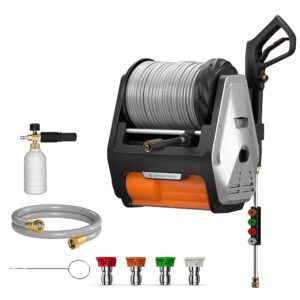
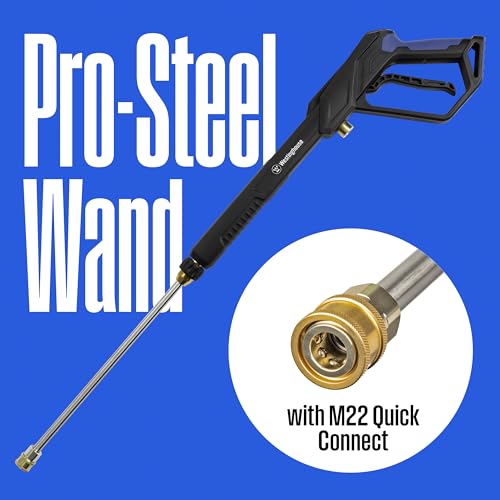
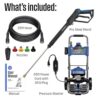
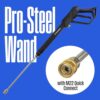
Five quick connect nozzles are supplied: 0 degree, 15 degree, 25 degree, soap and turbo. The wide angle tips are the workhorses. The 0 degree and turbo tips concentrate the same energy into a small area and will strip paint, tear the soft grain out of cedar and pine decking, cut mortar from brick joints and drive water behind lap siding where it cannot dry. Start wide, stand back, and close in only if the surface tolerates it. Test on a hidden section first. The machine takes M22 accessories, so surface cleaners, undercarriage bars and foam cannons will fit.
Limits and gaps
The motor amperage is not published anywhere in the record, which is a real gap on a corded machine, since it decides whether your outdoor circuit can carry the load alongside anything else on it. The pump is called maintenance free, a marketing term rather than a specification, and no service interval or pump detail is given beyond axial three piston. The listing states that all Westinghouse pressure washers are functionally tested at the factory and are covered by a three year limited warranty on service, labor and parts.
The other limit is the flow rate. At 1.76 gallons per minute this is not a machine for a large commercial area, and the difference between it and a gas unit at 2.5 gallons per minute is felt as time rather than as cleaning quality. The stated weight is 27.5 pounds and the country of origin is Vietnam.
Water supply matters as much as electricity on a machine like this, and the listing does not cover it. A pressure washer pump has to be fed at least as much water as it moves, so a garden hose that is kinked, undersized or fitted with a partly closed tap will starve the pump and cause it to cavitate, which is the most common way these machines are damaged. Run the hose out straight, open the tap fully, and let water flow through the machine before pulling the trigger for the first time. Check the inlet filter screen for grit after any session on a dusty site, because a blocked screen produces the same starvation as a closed tap.
Alternatives worth comparing
Westinghouse fields several machines close to this one and the numbers separate them. The WPX2700e, a step up in rated pressure, and the WPX3000e at the top of the corded range are the direct comparisons, while the EPX3100 sits on a different frame. If your job needs more flow than any corded unit provides, the WPX3200 gas model moves 2.5 gallons per minute, with the exhaust and maintenance that an engine brings. Our index of corded and cordless machines and our index of engine driven machines lay the published figures out side by side.
Who should buy it and who should not
Buy it if you want a full size electric washer with a long cord and a wide accessory fit for regular household cleaning, and you accept a modest flow rate. Do not buy it if you need the manufacturer own description to agree with its own title, since it does not here, and confirm the pressure rating before ordering. Do not buy it for large area work where flow rate governs the time on the job.