

Description
Which AILE 111 this is, and why that matters
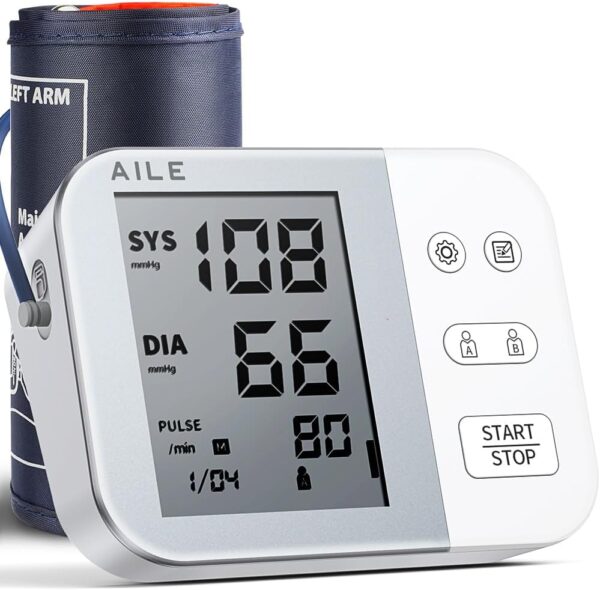
AILE sells the 111 in two configurations, and our catalog carries both. They share a model number, a manufacturer, a feature list and almost an entire product title. What separates them is the cuff in the box.
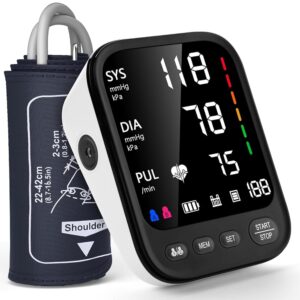
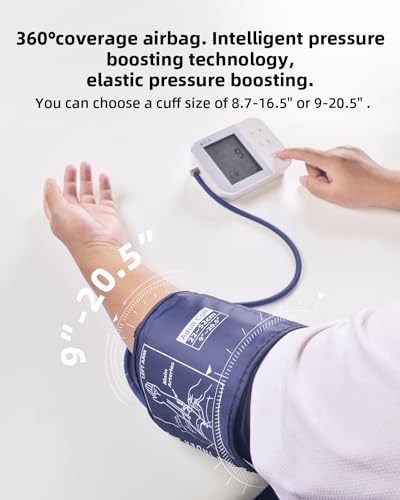
This listing is the extra large version. The band supplied here covers 9 to 20.5 inches of upper arm circumference. The other listing, covered in our AILE 111 review with the standard cuff, supplies a band of 8.7 to 16.5 inches. AILE’s own feature bullet on this page confirms the arrangement: two cuff options exist, and the one included here is the 9 to 20.5 inch band.
Four inches at the top end is the entire purchase decision. If your arm is above 16.5 inches, this is the listing you need and the other one is not. If your arm is below 16.5, the standard version fits better, because a band with a great deal of excess is harder to seat evenly than one sized for the job. Measure the midpoint of your upper arm with a soft tape, arm relaxed at your side, and buy on that number rather than on a title that reads almost identically to its sibling.
The device measures and records. It does not diagnose, it does not replace professional medical care, and its readings are for the clinician who manages your health to interpret.
The claim on the box that needs unpacking
The first feature bullet states that the product is registered in the United States, has obtained official 510K clearance, and has a doctor recommendation. Those are AILE’s words and each part needs separate treatment.
A 510(k) clearance is a specific regulatory status and cleared devices carry a clearance number. No number appears anywhere in this listing, nor a submission date, nor the name of the entity holding it. The manufacturer field names Shenzhen Yuezhongxing Technology, which for a device made under contract is not always the same as the brand on the box. If regulatory status is part of why you are buying, that status is checkable in the FDA’s public database, and looking it up against the manufacturer name is a better use of your time than reading a bullet.
The phrase doctor recommendation is not a regulatory status at all. No doctor is named, no organization is named, and no basis is given. We will not describe this or any device as doctor recommended in our own voice.
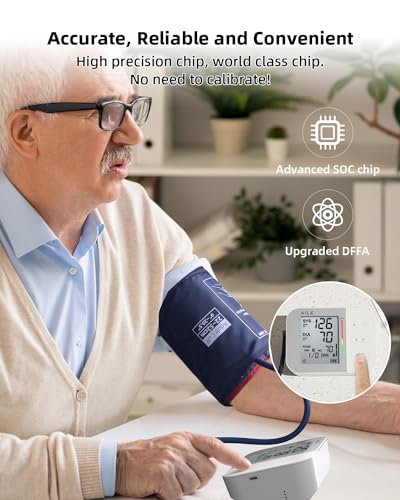
AILE also states the monitor is calibrated in advance as required. No validation protocol is named, no accuracy tolerance is published, and there is nothing here that can be checked. Validation status is available independently through the lists that medical societies publish. We make no accuracy claim about this device in our own voice.
The rest of the specifications
Voice and controls
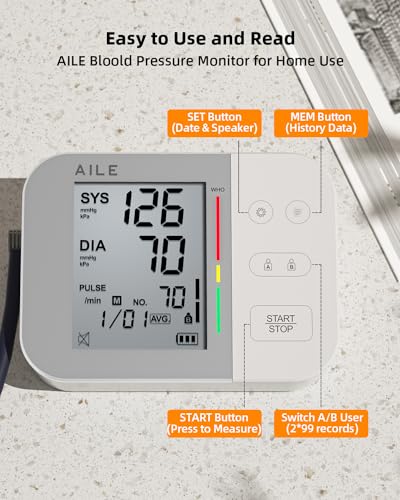
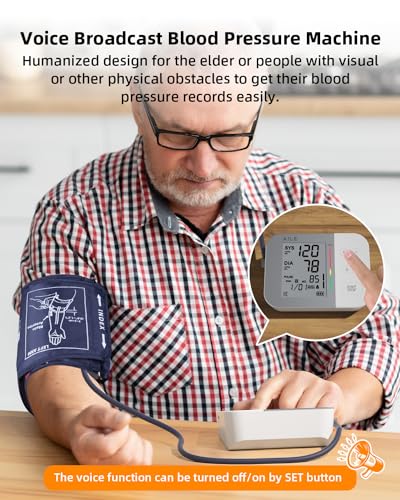
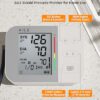
The device reports systolic, diastolic and pulse aloud after each measurement, and AILE states the voice can be turned off through the quick start guide. Being able to silence a talking monitor matters if it will be used in a shared room or at night. The listing does not name the language spoken, which is worth confirming if the device is a gift.
Memory and users
Two users with 99 timestamped records each, recallable in one press. That is around seven weeks of twice daily measurements per person before anything is overwritten. AILE frames the memory as something to review with a doctor, which is the right framing: a home log is material for an appointment rather than something to interpret at the kitchen table.
Power, and a claim we have removed
The specification field states four AAA batteries are required, and unlike many listings in this catalog it does not say they are included. No AC adapter is named anywhere in the data. Our own previous description of this product claimed it could be run from batteries or a plug in power source. Nothing in the listing supports that, so the claim has been removed rather than carried forward. If mains power matters to you, confirm it with the seller before ordering.
Size and contents
Listed dimensions are 3.3 by 6.3 by 4.3 inches and listed weight is 1.57 pounds, which is on the heavier side for a home unit. The included components field names a cuff, a tube, a kit and a case, which is more than the standard version’s listing gives.
One gap in the band figures
The structured band size field gives only 20.5 inches, a single number with no lower bound, so use the 9 to 20.5 figure from the title and bullets instead. No centimeter equivalent is published anywhere, which is unhelpful if you have measured with a metric tape. For reference against your own, 9 inches is about 23 centimeters and 20.5 inches is about 52.
Using it correctly
Rest for five minutes before measuring, sitting with your back supported, both feet flat on the floor and legs uncrossed. Bare the upper arm rather than pushing a sleeve up, since on a larger arm a rolled sleeve is a particularly effective second cuff. Place the lower edge of the band about an inch above the elbow crease with the artery marker over the inside of the arm, and tighten until two fingers slide underneath with mild resistance. Rest the arm on a table so the cuff sits level with your heart, and support a heavier arm rather than holding it up, since muscular effort changes the result.
If the voice function is for someone with limited vision, run through the settings with them once so they know how to silence it, rather than leaving it as a surprise. Confirm the correct user profile before pressing start, and write readings down with dates and times even though the device stamps them. A short paper log is what a clinician can read at a glance.
Alternatives worth comparing
For a machine whose extra large band reaches 52 centimeters with an irregular heartbeat flag and an averaging mode, read our Greetmed FC-BP111 review. For two cuffs in one box reaching 55 centimeters, our KIKEANG BP362A review is the comparison. AILE’s other machine is covered in our AILE X5 review, and if you only need a replacement band, our AILE CR009 cuff review covers that route. The wider selection sits in our home blood pressure monitor section.
Who should buy it, and who should not
Buy this version of the AILE 111 if your arm measures above 16.5 inches, up to 20.5, and if a spoken result that can be switched off is what will keep the device in use. Buy the standard version instead if your arm is smaller, since the two listings differ in the cuff and nothing else that matters. Skip both if you need mains power, if you need batteries in the box, or if the regulatory language in the first bullet is what persuaded you, because none of it carries a number you can check from the listing alone.