Description
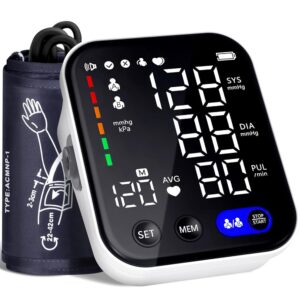
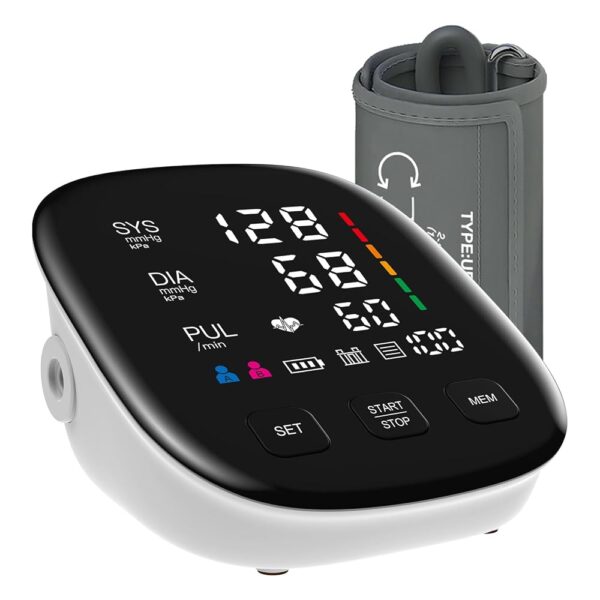
The CRABCLAW upper arm blood pressure monitor is a value priced device with a large LED display, storage for 199 readings each across two users, and a stated 40 second measurement. Its listing makes one claim about what the device can tell you that is considerably larger than the device, and this review deals with that first. Everything here comes from the published listing data. It is not medical advice, it does not tell you what any reading means, and a home monitor does not replace professional medical care. Readings belong in a conversation with a clinician who knows your history.
The listing overstates what a blood pressure monitor can tell you
A feature bullet headed “Comprehensive Health Monitoring” states that the device provides a comprehensive health assessment and that by tracking pulse rate it can detect irregular heartbeats and provide users with complete information about their cardiovascular health.
No blood pressure monitor does that. This device inflates a cuff, measures pressure oscillations and reports systolic pressure, diastolic pressure and a pulse rate. That is three numbers taken at one moment on one arm. It is a useful set of numbers and it is not a comprehensive health assessment, it is not complete information about anything, and it is not a picture of cardiovascular health. Those words describe a clinical workup, not a home appliance.
The irregular heartbeat function is a flag: the device noticed an irregularity in the pulse while measuring. It does not identify what the irregularity was, whether it matters, or what should be done about it, and it does not diagnose anything. If it appears, note it and raise it with a clinician.
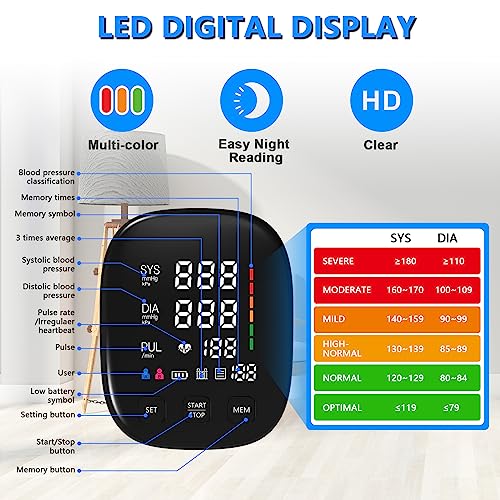
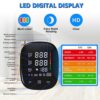
The same bullet set describes a color coded display that, in the listing’s words, quickly interprets blood pressure status. It does not interpret anything. It sorts a single number into a fixed band, knowing nothing about your history, your medication, the time of day or how you were sitting. A color is not a diagnosis and it is not a reason to change what you are doing. This page will not tell you what any color or number means.
The cuff range, published properly
Cuff fit determines whether a reading is worth recording, because a cuff too small or too large produces wrong numbers on a device that is working perfectly. Technique does not compensate for it.
CRABCLAW publishes 9 to 17 inches in both the product title and the structured band size field, which agree. That is a complete specification with a generous upper bound, better than the 15.7 and 16.5 inch cuffs on several competitors in the blood pressure monitor section. Measure your upper arm at the midpoint between shoulder and elbow before ordering. If you measure above 17 inches, a two cuff device such as the ALPHAGOMED U80BH, which supplies a second cuff reaching 21 inches, is where to look.
Who this monitor is for and what it settles
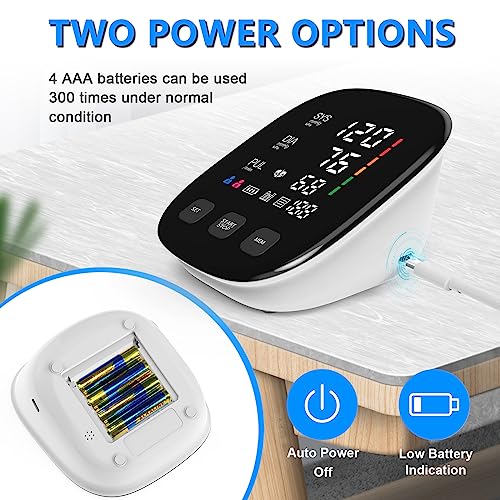
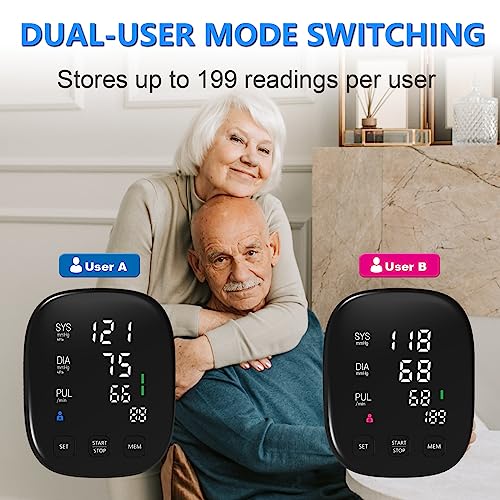
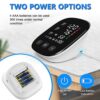
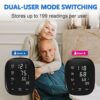
Set the marketing aside and the specification is a competent budget monitor. It stores 199 readings for each of two users, which is among the larger on device memories here, takes about 40 seconds per measurement, and runs from either batteries or a USB-C cable. The display is a large LED type intended to be legible without effort.
Nothing in the listing describes Bluetooth or an app, so the 199 readings per user held on the device are your complete record. That makes the large memory more valuable than it would be on a connected device.
The included components field lists only “Cuff”, which is obviously incomplete for a product that ships with a monitor and a cable. Check the contents list on the product page rather than the specification table before ordering, and note that the listing does not say whether batteries are supplied.
Using it correctly
One point on power before the routine. The listing states the device runs from batteries or a USB-C cable but never says whether there is an internal cell to charge. On the evidence of comparable devices from the same manufacturer the cable supplies mains power rather than charging anything, but the listing does not confirm it. If you were planning to charge the device and carry it, ask the seller first.
Home readings are useful when the routine never changes. Sit with your back supported and feet flat on the floor, rest quietly for several minutes before starting, support the arm at roughly heart level, fit the cuff on bare skin rather than over a sleeve, and stay still and silent while the measurement runs. Take readings at the same times each day so they can be compared with one another. Follow the manual for the exact fitting the device expects, and follow any protocol your clinician has given you in preference to a general routine.
With two profiles, each person must select their own before measuring, or the record becomes a mixture of two people’s numbers and is useful to nobody.
What the accuracy claims actually say
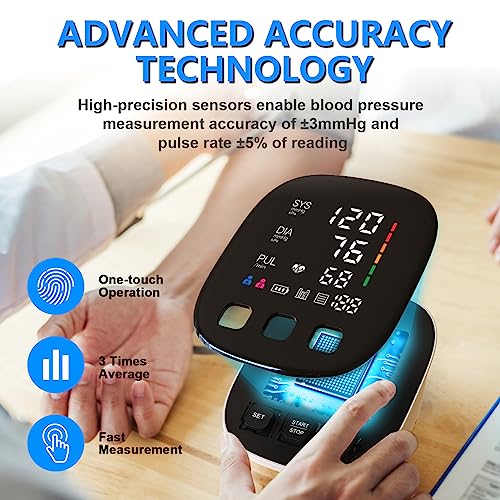
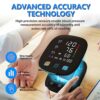
The first bullet is headed “Advanced Accuracy” and describes advanced sensor technology and built in intelligent algorithms producing reliable readings. No validation protocol is named. No independent validation body is cited. There is no statement about FDA clearance or registration, and no warranty term is published anywhere on the listing.
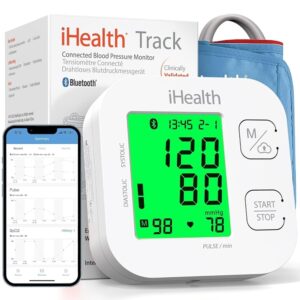
Compare that with the iHealth Track, which names the ESH 2010 protocol. Naming a protocol lets a reader check the claim; naming a sensor technology does not. If validation status matters to your decision, the device listings published by validation programs and the FDA’s own databases are the places to look rather than a product page. We do not test devices and we will not describe any monitor as accurate, clinically accurate or medical grade in our own voice.
No manufacturer model number is published anywhere on this listing, which makes it difficult to identify the device when contacting the seller about parts or a replacement cuff. The manufacturer field reads Shenzhen Urion Technology Co Ltd rather than CRABCLAW, and that manufacturer sits behind several other brands here including the Urion U81RH, so devices that look like independent alternatives may be the same hardware.
Feedback is recorded at 4.6 out of 5 across 1,354 ratings, which measures buyer satisfaction rather than measurement performance.
Who should buy it and who should not
Buy it if you want a large memory and a generous cuff range at a low price, your upper arm measures between 9 and 17 inches, and you can read past the marketing on the page. Do not buy it expecting a comprehensive health assessment, because no blood pressure monitor provides one, and do not buy it if a published validation protocol, a model number or a warranty term matters to you. Further options sit in the mixed shortlist section alongside unrelated pressure products.