




Description
What This Actually Is
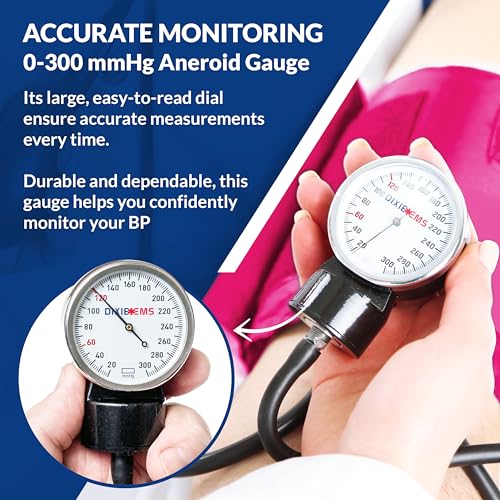
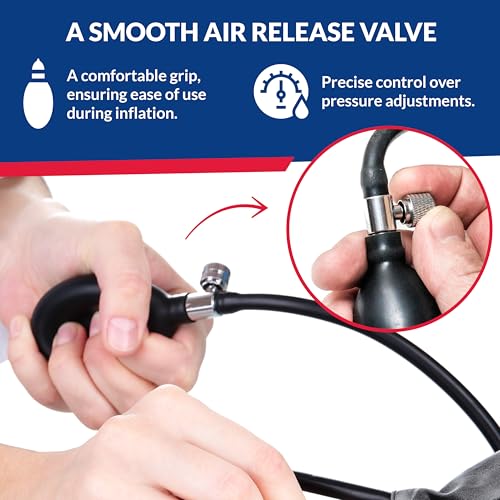
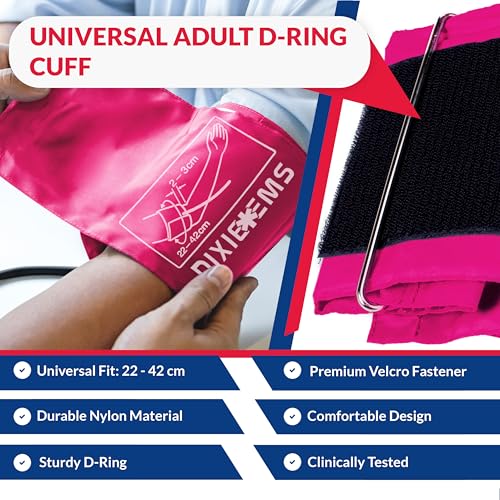
The Dixie EMS Deluxe aneroid sphygmomanometer is not an automatic blood pressure monitor. It is a manual instrument: a nylon cuff with a D-ring closure, a rubber bulb, a metal air release valve and an analog dial. There is no digital display, no memory, no batteries and no automatic anything. The display type field in the listing data says analog, and that is the single most important word on the page.
That difference decides who this product is for. A manual aneroid set is the type of equipment used with a stethoscope by someone trained to listen for the sounds that mark the systolic and diastolic points as the cuff deflates. It produces a reading through a person, not through a chip. If you were shopping for a device that gives you two numbers when you press a button, this is not that, and an automatic unit such as the Omron BP5100 Bronze is the category you actually want.
The standing point applies with extra force here: this review describes equipment and its published specifications. It does not interpret readings, it does not teach a measurement technique, and this equipment does not replace professional medical care. Readings taken with it belong in a conversation with a clinician.
No Stethoscope, and the Self Measurement Claim
Nothing in the listing data indicates a stethoscope is included. The specification block has no included components field at all, and no bullet lists one. A bullet nonetheless describes effortless one-hand self-measurement at home.
Those two facts do not sit together, and the gap is worth naming plainly rather than glossing. An aneroid gauge shows cuff pressure. On its own it does not tell anyone where the systolic and diastolic points fall; that identification is what the stethoscope and the listener provide. A cuff and dial without a stethoscope, used by someone who has not been taught the technique, will produce a needle moving down a scale and no reading.
Anyone considering this set should confirm with the seller exactly what is in the box, and should be clear that manual measurement is a learned skill. This page does not teach it and will not attempt to. If a manual set is genuinely what you want, a combination kit such as the McKesson aneroid and stethoscope combination at least pairs the two instruments in one purchase.
The Cuff Range Is Not Published
No arm circumference range appears anywhere in this listing. Not in the title, not in the bullets, not in the specification block, not in the stored attributes. What appears instead is the phrase universal cuff.
Universal is not a measurement. On automatic monitors a wrong cuff size silently distorts readings, and on a manual set the same physics applies: a cuff that is too small for the arm requires more pressure to occlude the artery, and a cuff that is too large requires less. The gauge will not warn anyone about it.
Measure the bare upper arm at the midpoint between shoulder and elbow and ask the seller for the range in centimeters before ordering. If that answer does not come, buy equipment that publishes the figure. The other Dixie EMS sphygmomanometer listing in this catalog is worth checking alongside it for the same reason.
What Is Actually Documented
The build description is the strongest part of the listing. The body is zinc alloy, the manometer mechanism is described as durable, and the air release valve is a metal needle valve with a check valve and a reticulated filter intended to keep dust out of the mechanism. A filtered valve is a real feature on manual equipment, because dust in the air path is a common cause of a valve that will not hold or release smoothly.
The cuff is nylon with a hook and loop strip and a D-ring, which is the closure type that makes one handed wrapping possible. The dial is described as large and easy to read. A carrying case is mentioned in a bullet. The set measures 7.5 by 4.25 by 2.75 inches and weighs 1.04 pounds, and it carries a UPC. The listing dates from July 2024 and the color offered on this page is pink.
Calibration is not mentioned
Aneroid gauges are mechanical, and mechanical gauges drift. Manufacturers of this type of equipment normally specify a recalibration interval and a way to check the needle rests at zero when the cuff is fully deflated. Nothing in this listing says anything about calibration, a service interval, or what to do if the needle does not return to zero. That is a substantial omission on a manual instrument and worth raising with the seller.
What the Listing Claims, and Who Is Making the Claim
One bullet states that the device is clinically tested and approved for consistent accuracy. That is the seller’s claim and not ours. No testing body is named, no protocol or standard is cited, no approval reference is given and no accuracy specification in millimetres of mercury appears anywhere in the data. Approved is a word that means nothing without an approver attached to it.
A further bullet says the equipment is designed for both medical professionals and home use and ensures precise readings, helping the user maintain optimal health. We do not test devices, we do not verify manufacturer claims, and we do not adopt statements about maintaining health. What a set of equipment can do is produce a measurement in trained hands. What it cannot do is assess anyone, and nothing on this page tells anyone what any reading means.
Using It Correctly
The general setup is the same as for any upper arm measurement. The cuff goes on the bare upper arm rather than over a sleeve, with the lower edge roughly an inch above the elbow crease and the artery marker over the inside of the arm, closed so one finger slides underneath with mild resistance. The person being measured sits with the back supported and both feet flat, the arm supported so the cuff is level with the heart, silent and still.
Beyond that, manual measurement depends on technique that has to be taught by someone qualified, including where to place the stethoscope, how fast to release the valve, and what to listen for. That instruction is not something a product review can substitute for. A digital device such as the Contec CONTEC08A removes the technique requirement entirely, which for most home users is the deciding difference.
Who Should Buy It, Who Should Not
Buy it if you already know how to take a manual reading, you own a stethoscope, and you want a metal bodied aneroid set with a filtered valve. Skip it if you are buying your first blood pressure equipment, if nobody in the household has been trained in manual measurement, if you need a published cuff range before committing, or if the phrase one-hand self-measurement is what drew you here, because a manual set without a stethoscope does not produce a reading. The full selection of automatic monitors and cuffs sits in our blood pressure monitor category.