

Description
What the CONTEC08A is, and who it is aimed at
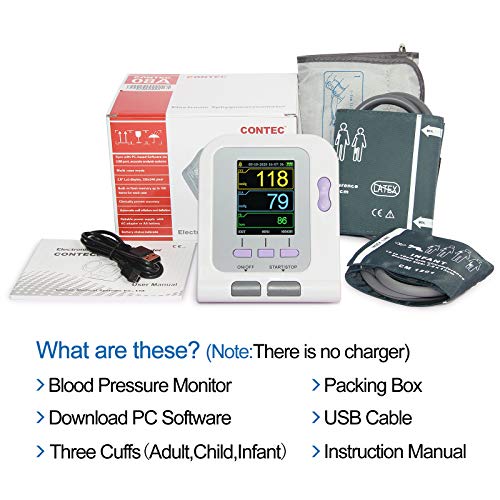
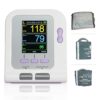
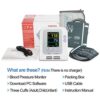
This is a desktop automatic blood pressure monitor of a kind rarely sold to consumers. It is supplied with three cuffs described as adult, pediatric and neonatal, stores 300 readings, has a color LCD, and connects to a computer over USB for free software that reviews data, plots trends and prints reports. CONTEC is a manufacturer of clinical instrumentation, and this listing reads like a clinical product placed on a consumer shelf.
That framing matters, so we will state it plainly. A home reader who wants to track their own blood pressure does not need a three cuff desktop unit with PC reporting, and would be better served by a straightforward upper arm monitor. This device records numbers. It is not a diagnostic instrument in your hands and it does not replace professional medical care.
The three cuffs, and a serious caution about two of them
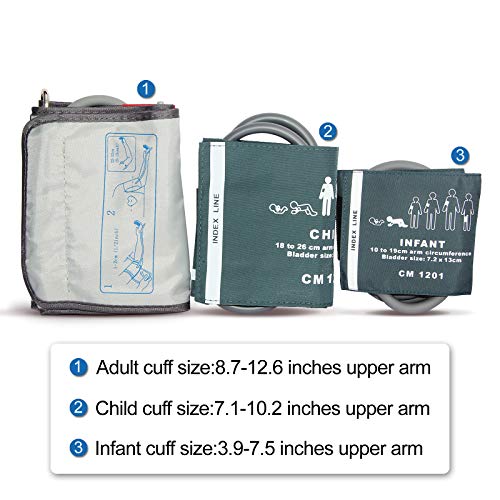
The adult cuff is the one most buyers will use. Our stored band size attribute records 12.6 inches as a single figure, with no range and no separate figures for the other two cuffs, and the listing text does not publish circumference ranges for any of the three. That is a significant gap on a device whose selling point is cuff choice. Measure your bare upper arm at the midpoint between shoulder and elbow before ordering and ask the seller for the actual range of the adult cuff, because we cannot give it to you from this listing.
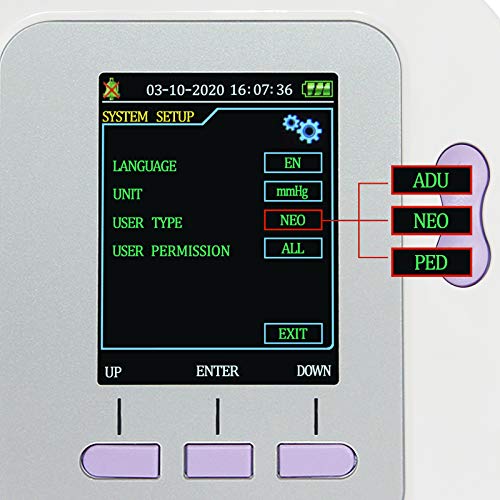
The pediatric and neonatal cuffs need a much stronger caution. Measuring blood pressure in a child, and particularly in an infant or a newborn, is not a home activity. Correct cuff sizing in pediatrics is calculated against limb dimensions, the technique differs, and interpretation is entirely a clinical matter that depends on age and on the individual child. Nothing on this page should be read as instruction for measuring a child’s blood pressure. If a clinician has asked you to take readings for a child at home, follow their instructions and the device they specify, not a retail listing.
Contradictions in the record
Several fields disagree. The included components attribute lists a single cuff, while the listing describes three. The display type attribute records LED, while the listing describes a high definition color LCD. The power source attribute records corded electric, and the listing then states that the supplied USB cable is not a charger and that a power adapter must be purchased separately. Read that last point carefully before ordering, because it means the device arrives without a way to power it from the wall.
Memory, software and the alarm function
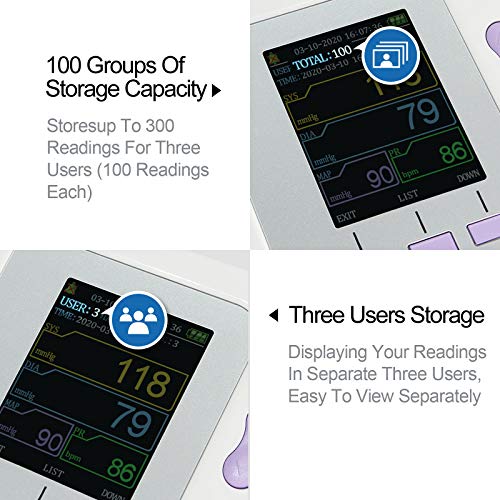
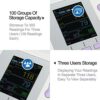
The monitor stores up to 300 readings, which is deep by home standards. The free PC software is downloadable rather than supplied on disc, and the listing states that instructions for obtaining it are in the box. It provides data review, analysis, trend viewing and report printing, which is the genuine differentiator here and the reason someone might choose this over a phone connected consumer device.
The listing also states that the monitor will alert you if it detects an irregular blood pressure, and that the alarm limits can be set. A user settable alarm threshold is a clinical feature and we are not going to suggest values for it. Where those limits should sit for a particular person is a decision for a clinician, and setting them arbitrarily produces either alarms that mean nothing or silence that means nothing. If you use this function, use numbers a clinician has given you.
Using it correctly, and what the readings are for
Sit with your back supported and your feet flat on the floor rather than crossed, and rest quietly for several minutes before measuring. Fit the correct cuff on a bare upper arm rather than over a sleeve, and support the arm so the cuff sits at about the height of your heart. Do not talk during the measurement. The listing describes cuffs that inflate around the arm and a graded deflation measurement method. Use the same arm and the same cuff at about the same time each day.
What you collect is a record. What any reading means, whether a pattern across readings is significant, and whether anything about your care should change are questions for a healthcare professional who knows your history and your treatment. This device does not replace professional medical care, and no reading from it should be used to start, stop or alter treatment on your own.
Claims, limits and gaps
The listing describes the measurement as advanced accuracy and the readings as precise. That is the manufacturer’s wording. We do not test devices and we will not describe any monitor as accurate in our own voice. No independent validation protocol and no assessing body is named. For a device presented in clinical terms, that absence is more noticeable than it would be on a consumer monitor, and it is worth checking an independent validation listing for this model number.
Practical gaps are substantial. No cuff circumference ranges are published for any of the three cuffs. No power adapter is included despite mains operation. No display dimension is given. The description of memory across users is unclear, with the listing referring to a large memory suitable for a whole family without stating how the 300 readings are divided. No warranty term appears in the record we hold, and the PC software has no stated operating system requirement.
A note on our own earlier summary, which described the device as reliable for both home and medical use. We have removed that. We are not in a position to say what this device is fit for in a clinical setting.
Alternatives worth comparing
Within the same brand, the CONTEC ABPM50 ambulatory monitor is the other clinical style listing in our catalog. If a professional style device is genuinely what you want, the Omron HEM-907XL is the established comparison. For a manual instrument, the McKesson aneroid sphygmomanometer and stethoscope kit sits in a different tradition entirely. If a correctly sized cuff for a child is what you were actually looking for, the Pro Comfort pediatric cuff and the ELERA pediatric cuff are listed separately, and both should be used only on clinical advice. Our index of home monitors and cuffs covers the rest.
Who should buy it and who should not
Buy it only if you specifically want desktop hardware with PC reporting and a deep memory, and you are prepared to buy a power adapter separately and to establish the cuff sizes with the seller. Do not buy it as a first home monitor, do not use the pediatric or neonatal cuffs without clinical direction, and do not set the alarm limits to numbers you chose yourself.