


Description
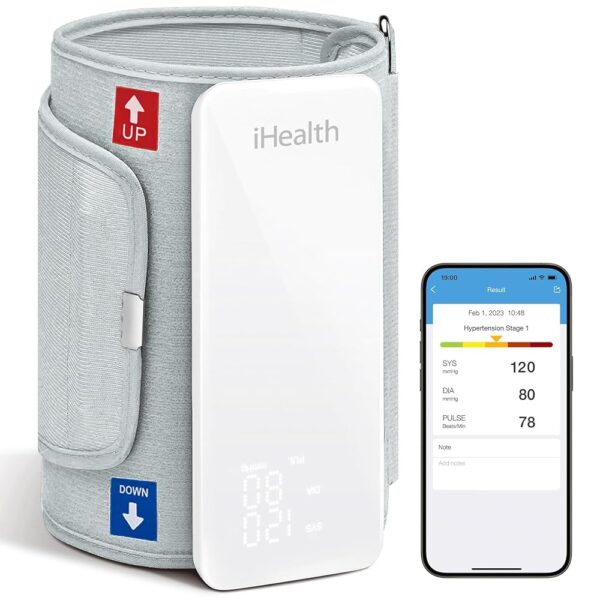
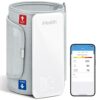
The iHealth BP5S, sold as the iHealth Neo, is an ultra thin upper arm blood pressure monitor with a rechargeable battery and Bluetooth to the MyVitals app. At 0.75 inches thick it is the slimmest device in this catalog. This review describes it from its published listing data. It is not medical advice, it does not tell you what any reading means, and a home monitor does not replace professional medical care. Readings belong in a conversation with a clinician who knows your history.
Who this monitor is for and what it settles
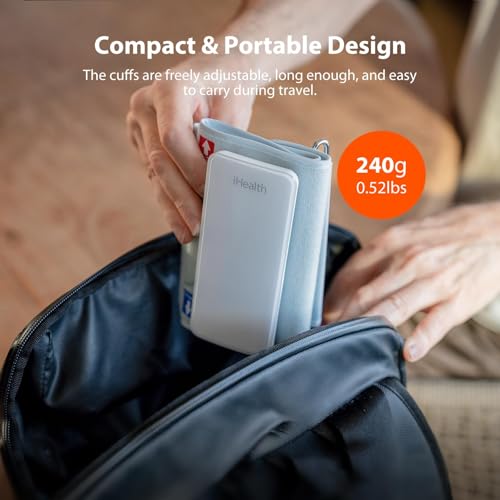
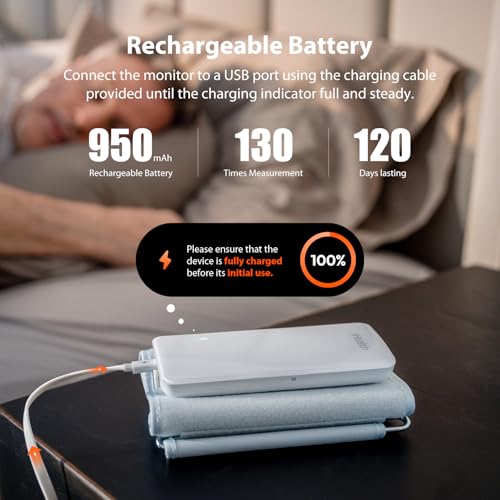
The Neo settles the portability question for upper arm devices. Published dimensions are 5.57 by 2.38 by 0.75 inches at 8.47 ounces, which is a monitor that goes flat in a bag rather than needing a shelf. A 950 mAh rechargeable lithium battery is stated to give up to 130 measurements per charge, so there are no AAA cells to carry either.
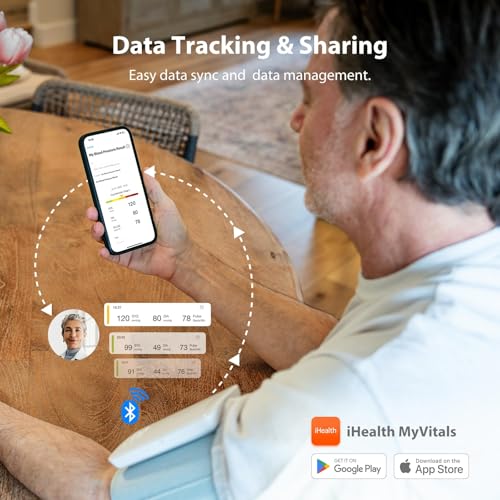
The data handling is the other reason to look at it. Readings sync in real time over Bluetooth to the MyVitals app, which stores an unlimited history and, crucially, exports to CSV, XLS or PDF files. That is a materially better export story than the competing connected devices in the blood pressure monitor section: the Withings BPM Connect, for example, limits emailed reports to iOS. A file you can attach to an email or print is the most portable form a record can take.
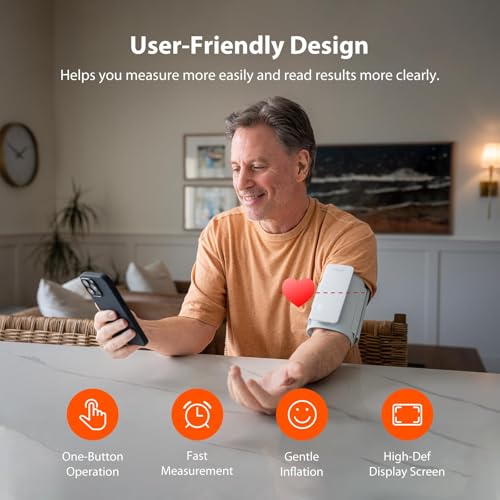
iHealth also states gentle inflation technology for comfort and a measurement completing in 30 to 60 seconds.
The cuff range, published properly
Cuff fit determines whether a reading is worth recording, because a cuff too small or too large produces wrong numbers on a device functioning perfectly. Technique does not compensate for it.
The structured band size field reads 22 to 42 centimeters, a proper two ended range covering standard and large adult upper arms, which is roughly 8.7 to 16.5 inches. No inch figure is given on the listing, which is an unnecessary obstacle for an American audience but not an ambiguity. Measure your upper arm at the midpoint between shoulder and elbow before ordering. If you measure above that range, a device supplied with a larger cuff is what you need.
What the listing does not tell you about memory
The listing never states how many readings the device stores on its own. All the storage language is about the app: unlimited data storage, real time syncing, file export. If your phone is not to hand, or if you would rather not run an app at all, you cannot tell from this page what the monitor keeps.
That matters because it is the difference between a device that works standalone and one that is a sensor for a phone. The sister product, the iHealth Track, publishes 99 readings on the device itself. Ask iHealth what the Neo holds before buying if that matters to you.
Two dimension sets, and what they mean
The listing publishes two different sets of dimensions. One reads 3.03 by 7.36 by 9.21 inches at 8.47 ounces, and the other reads 5.57 inches long by 2.38 inches wide by 0.75 inches thick. The first is almost certainly the shipping package with the cuff coiled inside it, and the second the monitor body itself. Neither is labeled as such, so if you are buying on size, work from the smaller figures and expect the cuff to add bulk. The weight of 0.24 kilograms is consistent across both records.
Using it correctly
Home readings are useful when the routine never changes. Sit with your back supported and feet flat on the floor, rest quietly for several minutes before starting, support the arm at roughly heart level, fit the cuff on bare skin rather than over a sleeve, and stay still and silent while the measurement runs. Take readings at the same times each day so they can be compared with one another. Follow the manual for the exact fitting the device expects, and follow any protocol your clinician has given you in preference to a general routine.
The listing publishes no color banding, no hypertension indicator and no irregular heartbeat detection. The device reports numbers and leaves the interpretation where it belongs, which for a home monitor is with a clinician who knows your history. If you were specifically looking for irregular heartbeat flagging, this listing does not offer it and devices such as the Konquest KBP-2704A do.
What the accuracy claims actually say, and a feature that has gone missing
The first feature bullet is headed “Clinically Validated for Accuracy” and states that the accuracy of the device has been thoroughly tested and conforms to relevant certification standards, with no calibration required.
Read the phrase “relevant certification standards” carefully. It names nothing. No protocol appears, no certification body is identified, and no independent validation listing is cited. That is a notable step down from iHealth’s own Track listing, which names the ESH 2010 protocol outright. The same manufacturer disclosing a protocol on one product and not on another is worth knowing about. There is also no statement about FDA clearance or registration anywhere on this page.
If validation status matters to your decision, the device listings published by validation programs and the FDA’s own databases are the places to check rather than a product page. We do not test devices and we will not describe any monitor as accurate, clinically accurate or medical grade in our own voice.
One further correction to the record. The description previously carried on this page described a “Triple Check” mode averaging three consecutive measurements. Nothing in the current listing mentions that feature. It may exist, it may have been a different iHealth model, or it may have been invented. We are naming the gap rather than repeating a feature the seller does not publish. If automatic averaging is part of why you are buying, ask iHealth to confirm before ordering.
Feedback is recorded at 4.2 out of 5 across 1,987 ratings, which measures buyer satisfaction rather than measurement performance. No warranty term is published on this listing.
Who should buy it and who should not
Buy it if you travel with a monitor, want file export you can send to any clinician on any platform, and prefer a rechargeable device to one that eats batteries. Do not buy it if you want a device that keeps a usable record without a phone, if you need irregular heartbeat flagging, or if a named validation protocol is part of your decision. Further options sit in the mixed shortlist section alongside unrelated pressure products.