Description
Who the Greetmed CK-W132 is for, and what it settles
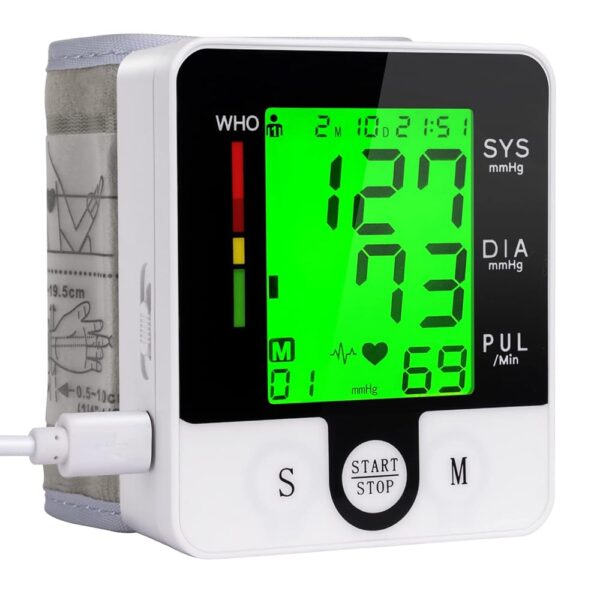
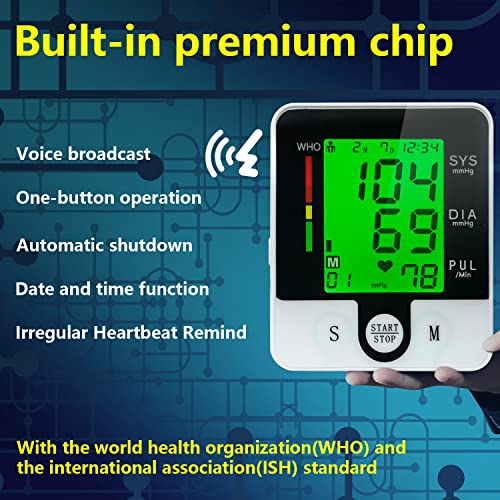
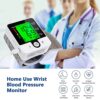
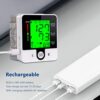
This is a rechargeable talking wrist monitor with a three color backlit LCD, two user profiles sharing 180 stored readings, a knitted cloth strap and a carrying case. It charges over USB from a computer or a phone charger, and it shuts itself off after a minute of inactivity to save power.
Before the specifications, the format. A wrist device is not equivalent to an upper arm device. The wrist sits further from the heart, the arteries there are smaller, and the result moves noticeably with how the hand is held. Upper arm monitors remain the usual recommendation for home monitoring, and a wrist unit is normally chosen when an arm cuff is impractical or uncomfortable. Our HoMedics upper arm review covers what you would be trading away.
The device measures and records. It does not diagnose, it does not replace professional medical care, and whatever it shows belongs in a conversation with the clinician who manages your health.
The three color backlight, and what it is not
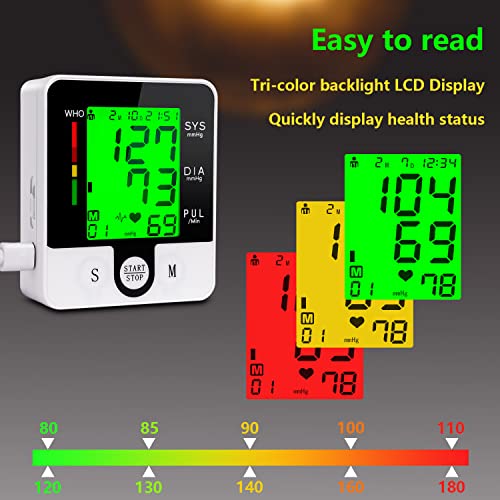
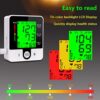
The screen changes color according to which band a reading falls into. Greetmed describes it as reflecting the range of blood pressure values, and on a small display in a dim room a color is easier to register at a glance than three numbers.
What a color is not is an assessment of your health. It is a hardware feature that sorts one measurement into one of three categories, using a classification the manufacturer has chosen. It does not account for your history, your medication, the time of day, how you slept or anything else a clinician would consider, and a single measurement in any color is one data point. If a reading concerns you, that is a reason to speak to a clinician, not a reason to change anything yourself or to keep measuring until the color moves.
The specifications that matter
Band range, published awkwardly
The listing gives the band as 5.4 into 7.6 inches, which appears to be a typographical error for 5.4 to 7.6, alongside a metric equivalent of 13.15 to 19.5 centimeters. Those do not quite line up: 5.4 inches is 13.7 centimeters rather than 13.15, and 13.15 centimeters is closer to 5.2 inches. The gap is about half a centimeter at the lower end.
That will not matter to most buyers, but it matters to anyone with a slim wrist, and it is a reminder that the numbers in this listing were not checked against each other. Measure your wrist just below the bone, where a watch strap would sit, and if you land near either boundary, ask Greetmed to confirm before ordering. Wrist bands have very little adjustment to spare.
Battery, and a figure worth noticing
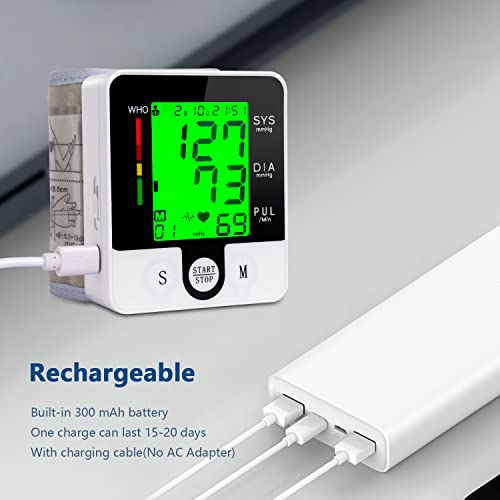
The internal cell is stated as 300 milliamp hours, which is small. For comparison, Greetmed’s own upper arm machine in our AES-U522 review carries 800 milliamp hours, and other rechargeable devices in this catalog quote 750. The listing publishes no runtime, no charge time and no number of measurements per charge, so there is no way to translate 300 into how often you will be plugging it in. A wrist unit draws less than an arm machine, since it inflates a much smaller bladder, but expect to charge this more often than a device with a larger cell. A USB cable is supplied and can be used with a computer or a charger.
Memory
The listing states 180 groups of data for two users. It does not say whether that is 180 each or 90 each. Ninety each is the usual arrangement on this platform, but the listing does not say so, and if the depth matters to a log you are keeping, ask before ordering.
Strap material
Greetmed describes a knitted woolen cloth strap, chosen for comfort against the skin. That is unusual, since most wrist bands are nylon or a coated fabric, and it cuts both ways. A soft cloth band is more comfortable against thin skin. It is also harder to wipe clean than a smooth synthetic, and if the device is shared between two people, that is worth thinking about.
Contradictions and gaps
The listed dimensions are 3 by 3 by 3 inches, three identical figures, which is a placeholder rather than a measurement of a wrist device. The power source field reads battery powered, the same label this catalog applies to devices taking disposable cells, while the copy describes a rechargeable internal battery.
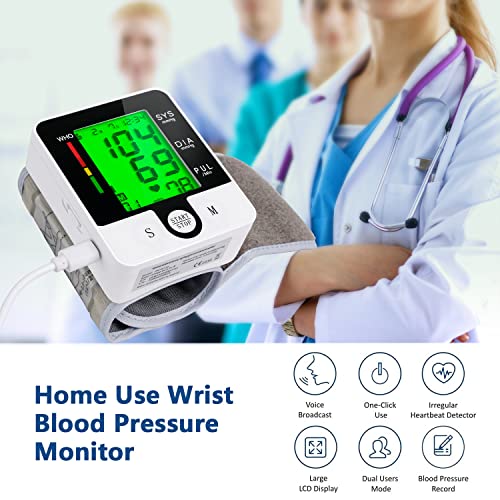
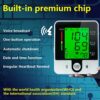
Voice broadcast is mentioned once, in a bullet about the chip, and never described further. The listing does not say what language it speaks, whether the volume can be adjusted, or whether it can be switched off, all of which Greetmed’s other wrist machine does state. If a spoken result is why you are buying, confirm those details.
Greetmed states a premium chip delivers precise measurement. That is the manufacturer’s phrasing. No validation protocol is named, no clearance number is quoted and no accuracy tolerance is published, so there is nothing here that can be checked and nothing we will claim in our own voice. Validation status is available independently through the lists that medical societies publish.
One more thing to check before ordering. This exact model code appears twice in our catalog under the same Greetmed brand on two separate listings, and our second Greetmed CK-W132 review covers the other one. The CK model family also runs across other brand names entirely, as our CK-W118 review and our NOUYAN CK-W355 review show, with Shenzhen Changkun Technology named as the manufacturer on all of them.
Using it correctly
Position decides the result on a wrist device. Rest for five minutes first, sitting with your back supported and both feet flat on the floor. Put the band on the bare wrist with the display facing up, snug enough that it will not slide. Rest your elbow on a table and raise the wrist so it sits level with your heart, roughly in line with the middle of your chest. Support the arm rather than holding it there under tension, because muscular effort changes the reading.
Keep the wrist flat rather than bent forward or back. Stay quiet and still. If you take a second reading, wait a few minutes rather than measuring again immediately, and repeat the identical posture.
Confirm the correct user profile before pressing start, charge on a routine rather than waiting for the device to go flat, and write results down with dates and times. A short paper log is what a clinician can read at a glance.
Who should buy it, and who should not
Buy the CK-W132 if an arm cuff is impractical, if your wrist sits comfortably inside the published range rather than near its edges, and if a rechargeable cell and a color coded screen are what will keep the device in use. Skip it if you need the memory split confirmed, if the small battery worries you, or if a spoken result in a particular language is essential and cannot be confirmed. The alternatives, including devices with published battery runtimes, sit in our home blood pressure monitor section. And whatever color the screen turns, the interpretation belongs to a clinician.