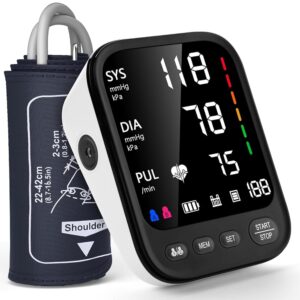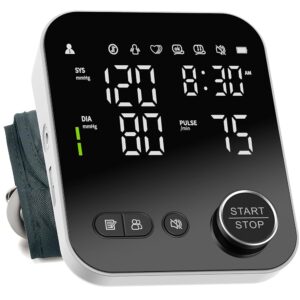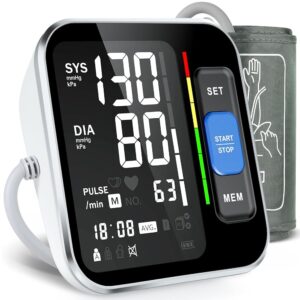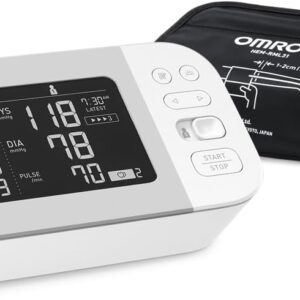


Description
Who the HoMedics upper arm monitor is for
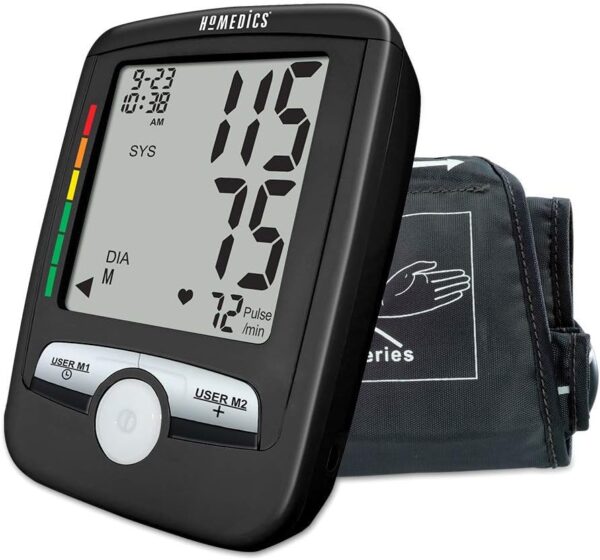
This is an upper arm automatic blood pressure monitor, listed as model BPA-O300 in the feature text, built for two people in one household who each want their own record. It stores more readings than most devices at this level, runs on AAA batteries and has no app. It records numbers for a clinician to review. It is not a diagnostic device and it does not replace professional medical care.
The decision it settles is a plain one. If you want a device that two people can share without their readings mixing, that holds a long history on the device itself, and that does not require a phone, this covers it. The listing states that the device is intended for adults aged 18 and over.
Cuff range and the specifications that matter
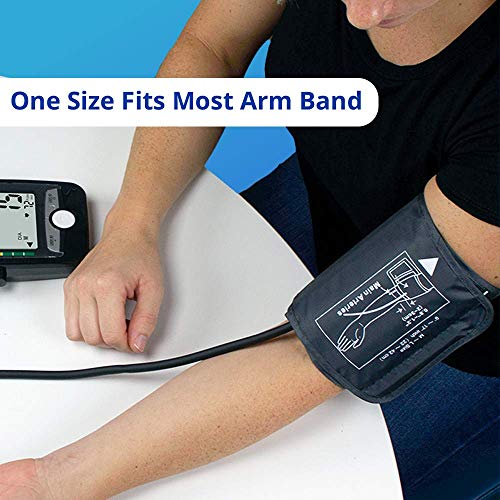
The cuff covers upper arm circumferences of 9 to 17 inches, and the stored attribute agrees. That is a wide range cuff and it covers most adults, which is a meaningful advantage over monitors supplied with a standard cuff only. Measure your bare upper arm at the midpoint between shoulder and elbow with a tape measure and check the figure before ordering.
One wording point in the listing needs correcting rather than repeating. The feature text describes the cuff as measuring 9 to 17 inches in diameter. A cuff is specified by the arm circumference it fits, not by diameter, and an arm 17 inches in diameter is not a thing that exists. The intended figure is circumference, which is what you get by running a tape measure around the arm. The distinction matters because a reader who measured across the arm instead of around it would reach entirely the wrong conclusion about fit.
Memory, features and a battery contradiction
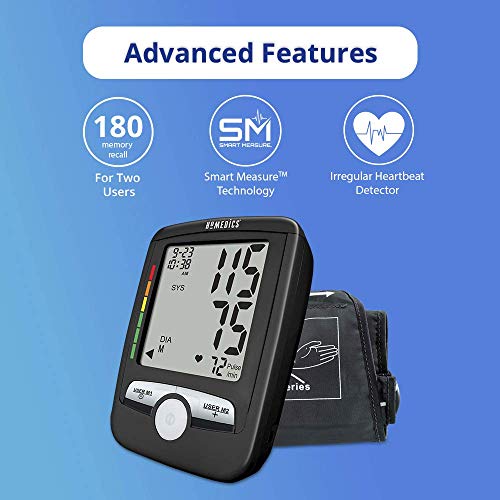
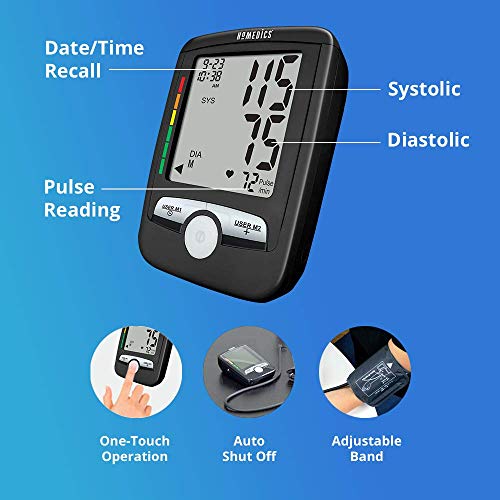
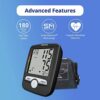
The device holds memory for two users and stores up to 180 readings, 90 per user, which is the largest on device memory in this part of the catalog. Each user can also view an average of their last three readings, which gives a steadier figure than a single measurement. Listed features are irregular heartbeat detection, excessive body movement detection, a risk category index, date and time stamping and auto shutoff. HoMedics describes an inflation system it calls Smart Measure Technology, which inflates and deflates to a judged level rather than to a fixed pressure.
The batteries are contradictory in the record. The product title and the feature text state that four AAA 1.5 volt batteries are included. The specification block states that two AAA batteries are required and included. Those cannot both be right, and it is the sort of detail that leaves you short on the first day. Assume you may need a spare pair. A further stored field records the size as a six piece set, which is import junk rather than a description of anything.
Using it correctly, and what the readings are for
Sit with your back supported and your feet flat on the floor rather than crossed, and rest quietly for several minutes before you start. Put the cuff on a bare upper arm rather than over a sleeve, and support the arm so the cuff sits at about the height of your heart. Do not talk while the measurement runs, and let the movement detection work rather than fidgeting through it. Use the same arm at about the same time of day so that the readings can be compared with each other.
What you are building is a record for someone else to read. What any number means, whether a pattern in your readings is significant, and whether anything about your treatment should change are questions for a healthcare professional who knows your history. This device does not replace professional medical care, and readings from it should be discussed with a clinician rather than acted on alone.
The irregular heartbeat detection flags that the device noticed something in the rhythm during a measurement. It does not identify what, it does not diagnose anything, and it is a reason to mention it at an appointment. The risk category index is a band display driven by manufacturer thresholds, and we are not reprinting those thresholds here as targets, because interpreting a number for a particular person is clinical work rather than a device function.
Claims, and what is not named
The feature text describes the measurement as personalized, accurate and comfortable, and states that the one touch operation ensures accurate readings. That is HoMedics describing its own product. We do not test devices and we will not describe any monitor as accurate in our own voice.
No independent validation protocol and no assessing body is named anywhere in this listing. Home blood pressure monitors can be assessed against published protocols, and where a model has been through one the protocol is normally identified by name. If that assurance matters to you, check whether this model number appears on an independent validation listing before ordering. It is a short check and it is more informative than any adjective on a retail page.
Limits and gaps
There is no app and no wireless connection, so 180 readings across two users is the complete history unless you write them down, and there is no way to export it other than by hand. No AC adapter is listed, battery life is not published, and no display dimension is given. The battery count contradiction described above is unresolved.
The two user limit constrains a larger household, and there is no guest mode that keeps a one off measurement out of someone’s record. The stated age indication of 18 and over is worth noting if you were considering this for a younger family member, since pediatric measurement needs a differently sized cuff and a different device.
Alternatives worth comparing
Within the same brand, the HoMedics BPA-O200 is the nearest upper arm relative, while the HoMedics BPW-O300 and the HoMedics BPW-O200 are the wrist versions of the same idea, with the positioning caveats that come with wrist devices. For a comparable two user arm monitor from a larger brand, the Omron 5 Series BP742N covers the same cuff range, and if your arm is at the smaller end the Medline MDS4001 is supplied with a standard cuff instead. Our index of home monitors and cuffs lists the published cuff range for each.
Who should buy it and who should not
Buy it if two adults will share the device, your arms measure between 9 and 17 inches, and a long on device memory matters more than app syncing. Do not buy it if you want readings on a phone, if you need more than two separate records, or if you were buying for someone under 18. Take whatever you record to a clinician rather than interpreting it yourself.