Description
Who This Monitor Is For and What It Settles
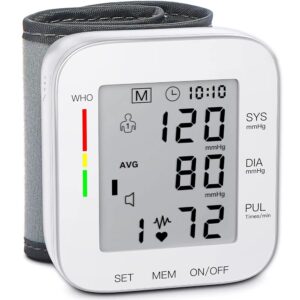
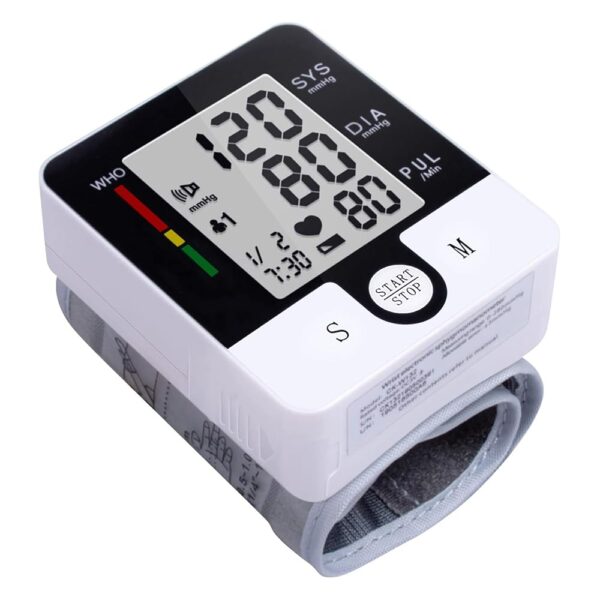
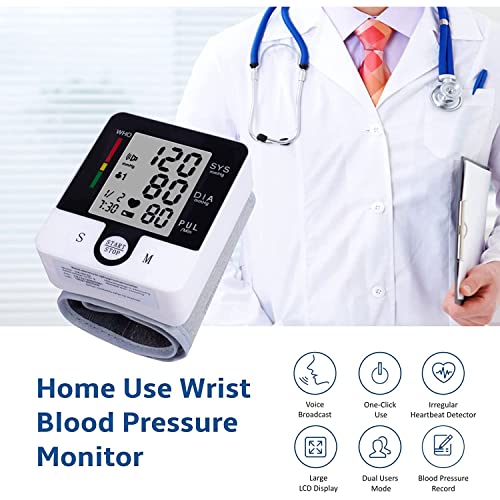
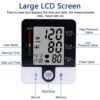
The Greetmed CK-W132 is a wrist blood pressure monitor with a single measurement button, a soft knitted wrist strap, 180 stored readings across two users, and a carrying case. It is aimed at people who want something small enough to keep in a bag or a drawer, and at people who find fitting an upper arm cuff one-handed awkward.
The form factor is the decision this product actually settles, so it deserves stating plainly rather than burying. Wrist monitors are not equivalent to upper arm monitors. On the wrist, how the joint is held and how high the device sits relative to the heart both change the result, so positioning matters far more than it does on the arm. Upper arm devices remain the usual recommendation for home monitoring, and a documented upper arm unit such as the Omron BP5100 Bronze is the comparison to make before choosing a wrist device on convenience alone. This review describes a device. It does not interpret readings, and a home monitor does not replace professional medical care.
The Specifications That Matter
The wrist cuff range is published and, unusually for this bracket, it is consistent everywhere it appears. The specification block gives 13.5 to 19.5 cm, a bullet repeats it as 5.4 to 7.6 inches, and the stored attributes agree. Measure around the bare wrist just above the wrist bone before ordering. A wrist cuff that is too loose will not seal against the skin and one that is too tight will not sit flat, and neither failure announces itself on the display.
The strap itself is described as a knitted woolen cloth chosen for skin comfort and adjustability, which is a reasonable choice for a device worn against the wrist. The unit measures 3.54 by 3.43 by 3.03 inches and weighs 8 ounces, or half a pound, and those two figures agree with each other across the fields, which is more than several listings in this catalog manage.
Memory, power and the display
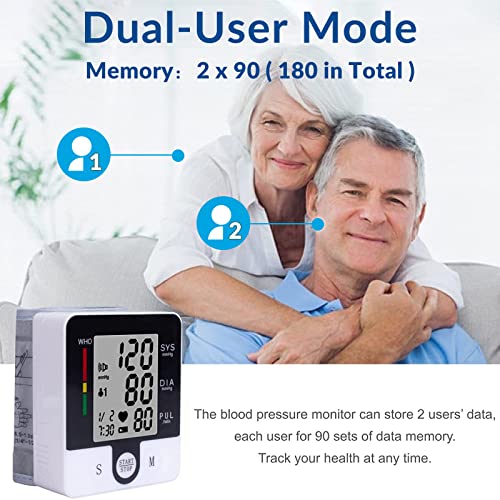
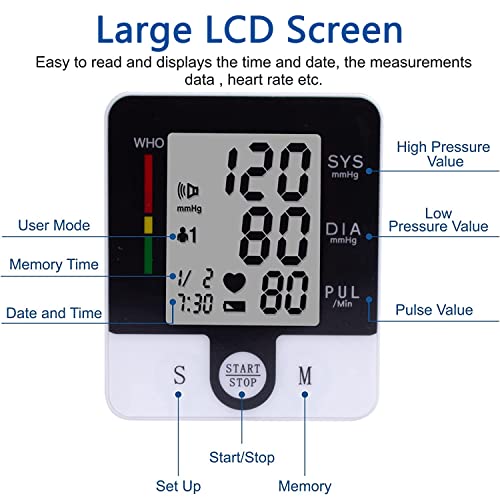
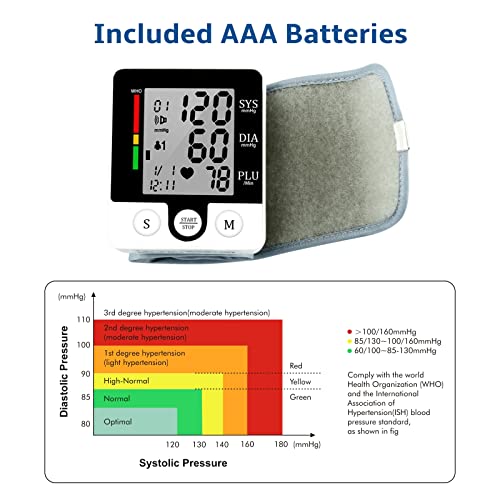
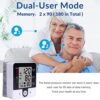
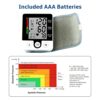
Memory is 90 readings for each of two users, 180 in total, which is deep enough to hold months of twice-daily logging before anything is overwritten. Power is two AAA batteries, included, with no USB option and no internal cell, which is a simple arrangement with no ambiguity in the data. The screen is an LCD described as large, though no digit height is published, so legibility has to be judged from the product photographs rather than from a number.
The device also reports heart rate alongside the pressure readings and stamps entries with date and time, which is what makes a stored log worth keeping rather than a pile of unlabeled numbers.
The Irregular Heartbeat Reminder
One bullet lists an irregular heartbeat reminder among the features. This needs saying precisely. A reminder of that kind flags that the device detected an irregularity in the rhythm during the measurement, and that is all it does. It does not diagnose anything, it does not identify what the irregularity is, and it does not distinguish between a genuine finding and an artifact caused by movement, talking or a poorly positioned cuff. If the indicator appears, the useful response is to note it and raise it with a clinician, who is the only party in a position to assess it. Nothing in this review tells anyone what such a flag means for them.
Using It Correctly
Wrist technique carries this form factor. Rest the forearm on a table, sit with the back supported and both feet flat, and raise the wrist so the device sits level with the heart, typically by supporting the elbow as the manual directs. Keep the wrist straight rather than bent, keep the device against bare skin, and stay silent and still through the measurement. Rest for several quiet minutes first rather than measuring straight after moving around, and use the same wrist at the same times each day.
One bullet on this listing claims the monitor can be used without taking off clothes, which is true in the narrow sense that a sleeve does not need rolling above the elbow. It should not be read as permission to measure over a cuff of fabric. The device still needs to sit on the bare wrist to work as intended, so push the sleeve clear of the wrist itself. Set the user bank before the first reading so the two logs stay separate.
Limits and Gaps in the Published Data
The description field is empty, so five bullets and a specification table carry the whole technical case, and one of those bullets is about customer service rather than the product. Absent from the data: any pressure or pulse measurement range, any tolerance, any accuracy figure, any validation protocol, any regulatory clearance claim, any digit height, and any battery life estimate.
Two oddities in the record are worth naming. The manufacturer field contains two companies run together, Shenzhen Finicare and Shenzhen Changkun Technology, preceded by a stray punctuation mark, so it is not clear which one actually makes the device or where a warranty claim would go. More significantly, the product title advertises this as a talking blood pressure cuff, yet not one of the five bullets, none of the specification fields and none of the stored attributes mentions a speaker, a voice output or an audio option. A talking function is either present in the hardware or it is not, and a claim that appears only in the title and nowhere in the specifications is one to confirm with the seller before buying on the strength of it. If voice output is the requirement, a device that documents it properly such as the MBUPAI CK-W355 wrist monitor is the safer purchase.
The point that outranks all of the above: this device collects numbers and stores them. It does not diagnose, it does not replace professional medical care, and nothing in this review is guidance about anyone’s health.
Alternatives Worth Comparing
The same CK-W132 model appears on a second Greetmed listing under a different ASIN, with its own specification block, so compare the two before deciding which page you are buying from. Among other wrist options here, the Scian LD-737 and the ZIQING wrist monitor cover a similar wrist range and are worth weighing side by side. The complete shelf, arm and wrist together, sits in our blood pressure monitor category.
Who Should Buy It, Who Should Not
Buy it if your wrist measures inside 13.5 to 19.5 cm, portability genuinely outweighs the positioning penalty of the wrist, and 180 stored readings across two users suits your household. Skip it if you can use an upper arm cuff, if you need documented accuracy or validation, if the unresolved talking claim in the title matters to your purchase, or if you want a single clearly identified manufacturer behind the device.