

Description
Who This Monitor Is For and What It Settles
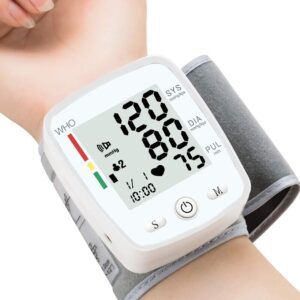
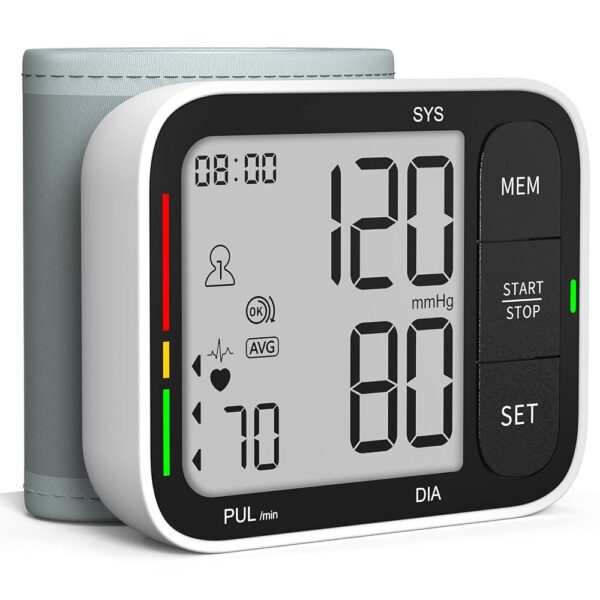
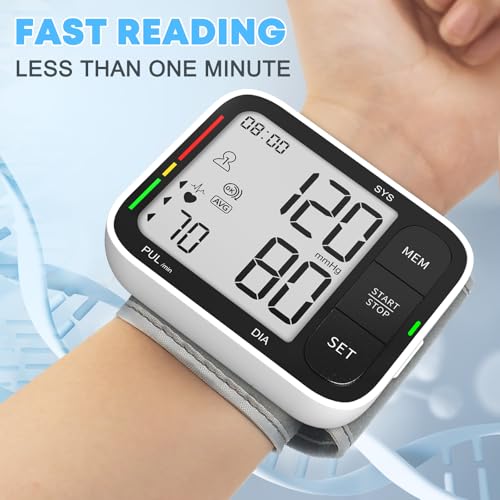
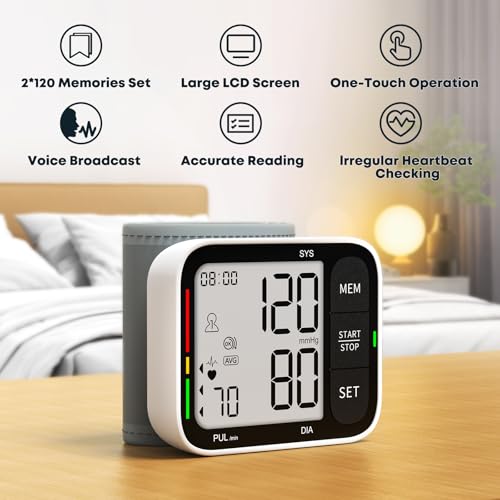
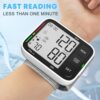
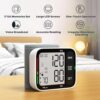
The KIKEANG FC-BP201 is a wrist blood pressure monitor with a large LCD, a voice broadcast that can be switched off, and 240 stored readings split between two users. It arrives with two AAA batteries and a carrying case, so it works straight out of the box, and it carries a stated twelve month warranty.
The form factor is the first thing to settle. Wrist monitors are not equivalent to upper arm monitors. On the wrist, the angle of the joint and the height of the device relative to the heart both change the result, so positioning carries far more weight than it does on the arm, and upper arm devices remain the usual recommendation for home monitoring. This review describes a device and its published data; it does not interpret readings, and a home monitor does not replace professional medical care.
The Specifications That Matter
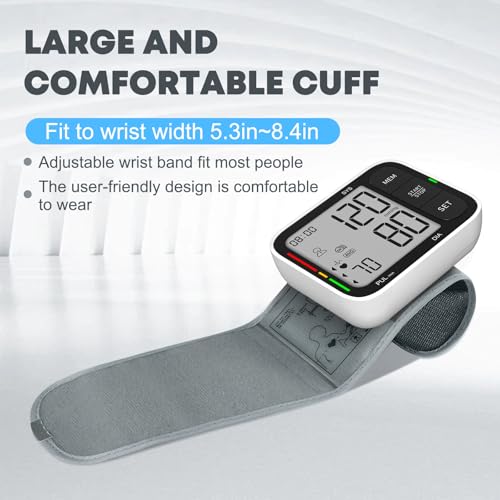
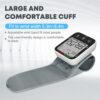
The wrist range is published consistently in three places: the product title, the structured band size field and a bullet, all giving 5.3 to 8.4 inches, or 13.5 to 21.5 cm. Three agreeing fields is better than most listings in this catalog manage, and the upper figure is generous for a wrist device, where many competitors stop around 7.6 inches.
Measure around the bare wrist just above the wrist bone before ordering. A band that closes loosely will not seal against the skin and one that will not close is simply the wrong purchase, and neither failure shows on the display.
Voice, memory and power
The voice broadcast is documented properly, aimed at users with poor eyesight, and the listing states that it can be turned off following the manual. It does not say whether the volume is adjustable or what language it speaks, both worth confirming before buying for someone who will depend on it.
Memory holds 120 readings for each of two users, 240 in total, which is deep enough for months of twice daily logging before anything is overwritten. Power is two AAA batteries, included, with the monitor, a manual and a portable case completing the box. There is no USB option and no internal cell, which is a simple arrangement with no ambiguity.
The body is ABS plastic and the cuff material is described only as environmentally friendly materials, which is not a specification. Published dimensions are 3.2 by 0.95 by 2.5 inches at 8.47 ounces. That weight is high for a wrist unit, where four to five ounces is typical on this shelf, and the 0.95 inch thickness is slim for a device that has to house a pump, so the figure most likely covers the boxed kit rather than the monitor alone. The listing does not say.
What the Listing Claims, and Who Is Making the Claim
The lead bullet says the monitor has undergone a lot of clinical trials and uses advanced chips. That is the seller speaking, not us. A lot of clinical trials is not a protocol: no study is named, no registry entry is cited, no test population is described, and no accuracy figure, tolerance or regulatory clearance appears anywhere in the listing data. We do not test devices and we do not verify manufacturer claims. Validation status for home monitors can be checked independently through the registries medical bodies maintain, and on a wrist device that check matters more, not less, because the wrist adds a positioning variable on top of whatever the hardware does.
The same bullet does something better than most, though, and it deserves credit. It adds that the user also needs to measure in the correct posture to ensure the accuracy of the reading. That is true, it is the single biggest thing a home user controls, and most listings in this category never mention it at all.
Using It Correctly
Rest the forearm on a table, sit with the back supported and both feet flat on the floor, and raise the wrist so the device sits level with the heart, supporting the elbow as the manual directs. Keep the wrist straight rather than bent, keep the device against bare skin with the sleeve pushed clear, and stay silent and still through the measurement.
Rest for several quiet minutes before the first reading rather than measuring straight after moving around, and use the same wrist at the same times each day so the record compares with itself. Set the user bank before the first reading so the two logs stay separate, and decide up front whether the voice stays on, since a shared room usually settles that question.
Limits and the Wider Picture
The description field is empty, so six bullets and a specification table carry the whole technical case, and one of those bullets is about the warranty. Nothing is published about the pressure or pulse measurement range, tolerance, averaging across readings, irregular heartbeat detection, digit height or battery life.
The manufacturer of record is Shenzhen Finicare, which supplies several brands in this catalog under the FC model prefix, including the ZIXCARE FC-BP102 and the Greetmed FC-BP111. KIKEANG itself appears here on hardware from more than one factory, including the KIKEANG BP362A, so specifications on one page under this brand should not be read across to another.
The point that outranks the rest: this device produces numbers, stores them and speaks them. It does not diagnose, it does not replace professional medical care, and nothing in this review is guidance about anyone’s health.
Alternatives Worth Comparing
Among other wrist options here, the Care Touch digital wrist monitor is the plainer comparison, and the full shelf of arm and wrist devices sits in our blood pressure monitor category. Anyone choosing a wrist device purely for convenience should weigh the upper arm alternative honestly first, since the arm removes the positioning variable entirely and takes one large source of error out of every reading. If the reason for looking at a wrist unit is that an upper arm cuff has never fitted comfortably, the better fix is usually a properly sized arm cuff rather than a change of form factor altogether.
Who Should Buy It, Who Should Not
Buy it if your wrist measures inside 5.3 to 8.4 inches, spoken results with an off switch is what you want, and 120 readings each for two users covers your household. Skip it if you can use an upper arm cuff, if you need a validation protocol rather than the phrase clinical trials, if you need the voice volume and language confirmed first, or if a monitor with no published measurement range is not something you want to buy blind.