Description
Who This Monitor Is For and What It Settles
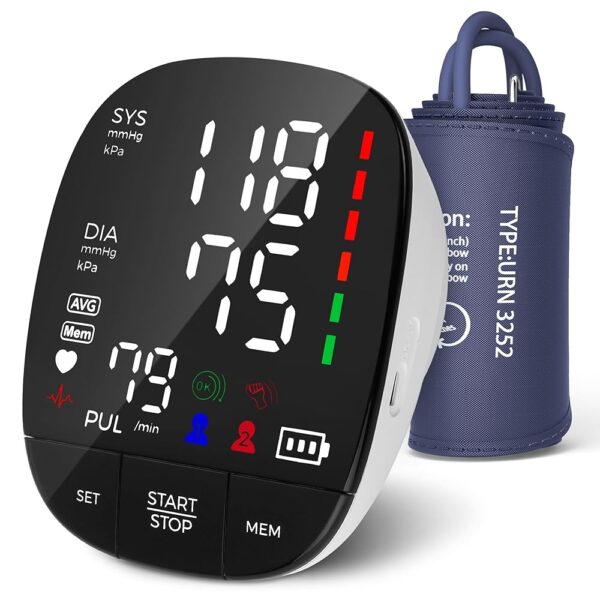
The ZIXCARE FC-BP102 is an upper arm blood pressure monitor with one button, a large LED screen and a wide cuff. It is aimed at the buyer who wants the simplest possible device with the biggest possible numbers on the display, and no app anywhere in the process. What it settles is whether a plain automatic monitor with a legible screen is enough, or whether you need the memory depth, averaging and validation data this listing does not publish.
The standing point comes first, as it does on every device in this category. This review describes a product and the specifications published for it. It does not interpret readings, it does not tell anyone what their numbers mean, and a home blood pressure monitor does not replace professional medical care.
The Specifications That Matter
Cuff circumference decides whether the monitor can work for a given arm, because a cuff that is too small or too large produces wrong readings on hardware that is behaving perfectly, and nothing on the screen warns you it is happening. Here a bullet gives the range as 8.7 to 16.5 inches, which covers most adult arms. The structured band size field records only 16.5 inches, the upper bound with the lower bound dropped.
Measure the bare upper arm at the midpoint between shoulder and elbow before ordering. If your measurement sits near either end of that span, confirm the actual cuff supplied with the seller rather than trusting a single bullet. Buyers whose arms fall outside it should start from a documented replacement cuff such as the Alcarefam BD42 and work back to a compatible monitor.
Display and the arm detection feature
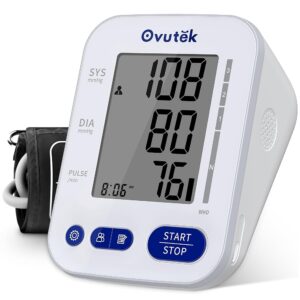
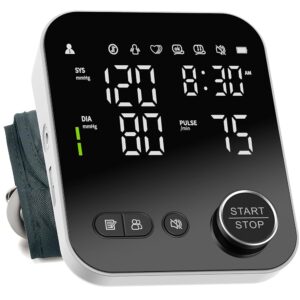
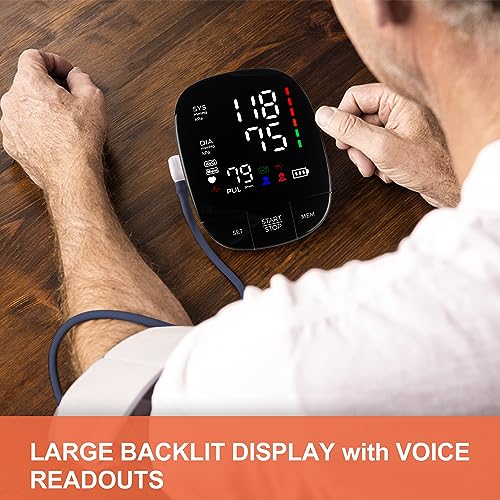
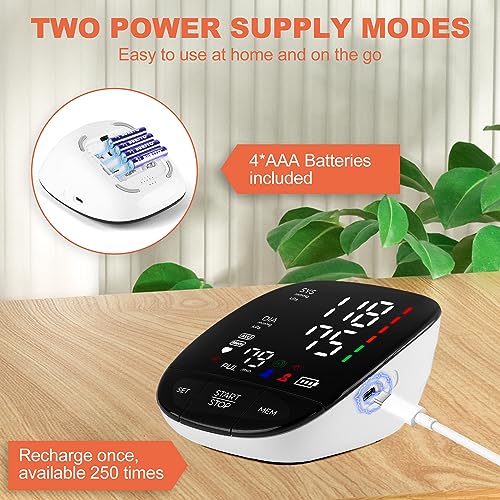
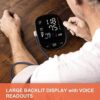
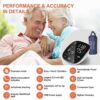
The screen is the headline. The specification field calls it LED and a bullet describes a large LED color screen with an HD backlight and colored patterns intended to stay readable at night. No digit height is published, so the actual character size has to be judged from photographs, but a color backlit panel is a genuine advantage over the plain grey LCD used on most budget monitors.
The listing also describes an automatic arm detection function that shows an on-screen icon, presented as a check that the cuff is on properly. Treat that as a convenience rather than a guarantee. A detection icon can confirm that the cuff has found an arm; it cannot confirm that the cuff is the right size, positioned at the right height, or aligned over the inside of the arm, and those are the errors that actually distort readings.
Where the Data Falls Apart
Several parts of this record are visibly damaged, and it is fairer to name them than to paper over them.
The product title stored for this item is a fragment: it reads as a broken string with a word repeated and the sentence cut off midway. Whatever the retailer’s page shows, the data behind this listing does not carry a coherent product name.
Dimensions appear twice with different values. One field gives 6.3 by 4.53 by 3.9 inches at 1.1 pounds, another gives 6.69 by 3.8 by 4.7 inches. Those are not the same object, and the listing never labels which is the carton and which is the monitor.
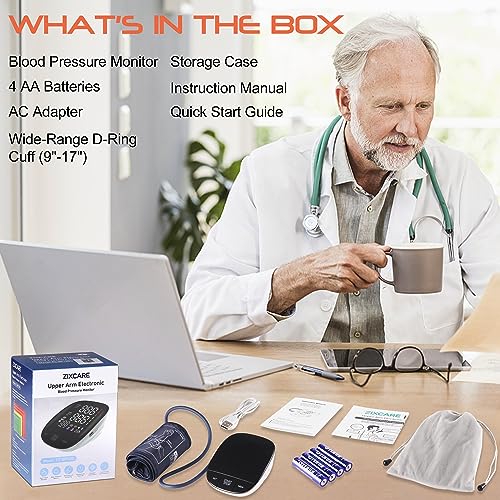
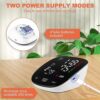
Power is the most consequential gap. The power source field says corded electric, yet the included components list only a cuff, no adapter is mentioned anywhere, no battery type or count appears, and no battery life is stated. A monitor described as mains powered with no adapter in the box is not a buyable proposition until the seller clarifies it. Ask before ordering.
Memory is not published at all. There is no reading capacity, no user count and no averaging function described anywhere in the source data, which for a home monitor is a substantial omission.
What the Listing Claims, and Who Is Making the Claim
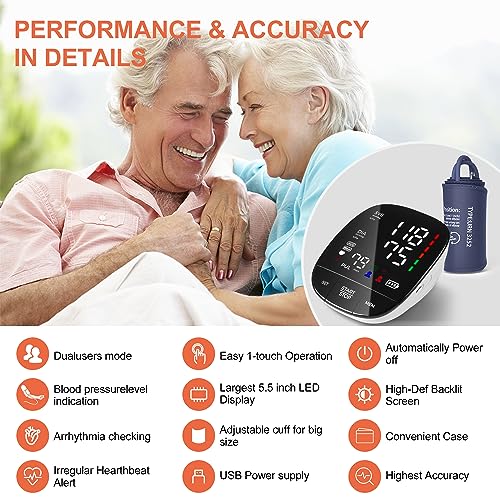
A bullet headed with the word accurate states that advanced automatic measurement technology and an intelligent chip provide better readings at all times. That is the seller’s claim and not ours. We do not test devices and we do not verify manufacturer statements. No accuracy figure, no tolerance, no validation protocol and no regulatory clearance appears anywhere in the data. Validation status for home monitors can be checked independently through the registries medical bodies maintain, and that check is worth making before purchase.
One claim in the previous copy on this page has been removed rather than repeated. It described an arrhythmia detection feature offering peace of mind for users at risk. Nothing in the listing title, bullets, specification block or stored attributes mentions arrhythmia detection, irregular heartbeat detection, or any rhythm feature at all, so the claim is unsupported by the source data. It also framed the device as something for people at risk of a condition, which is not a claim any product page here should be making. Separately, the older copy referred to memory storage, which the listing likewise never documents.
Using It Correctly
Fit the cuff to the bare upper arm rather than over clothing, with the tubing running down the inside of the arm toward the palm and the lower edge roughly an inch above the elbow crease, closed so one finger slides underneath with mild resistance. Sit with the back supported and both feet flat on the floor, rest the arm so the cuff sits level with the heart, and stay silent and still through the inflation and the release.
Rest for several quiet minutes before the first reading rather than measuring straight after activity, and use the same arm at the same times each day so the record compares with itself. Since no memory capacity is documented, plan to write readings down rather than assume the device will hold them.
Limits and the Statement That Matters
The manufacturer of record is Shenzhen Finicare, which supplies several brands in this catalog under the FC model prefix, including the ZIXCARE FC-BP106, the KIKEANG FC-BP201 and the Greetmed FC-BP111. One factory serving several brands means the specifications on one page should not be assumed to hold on another.
The point that outranks everything above: this device produces numbers. It does not detect conditions, it does not diagnose, it does not replace professional medical care, and nothing in this review is guidance about anyone’s health.
Alternatives Worth Comparing
If a large legible display is what you are shopping for, compare a monitor that publishes its memory capacity and its power arrangement alongside its screen, because those are the details that determine whether the device is usable day to day. A documented alternative such as the Omron BP5100 Bronze answers all three questions on its own page. The wider selection sits in our blood pressure monitor category.
Who Should Buy It, Who Should Not
Buy it only after the seller has confirmed how the device is powered and whether an adapter is included, and if your arm falls inside 8.7 to 16.5 inches and a bright color screen is the deciding feature. Skip it if you need documented memory capacity, if you need documented accuracy or validation, if a record carrying a broken product title and two sets of dimensions undermines your confidence, or if you were shopping for the rhythm detection feature this listing does not describe.