Description
Who This Monitor Is For and What It Settles
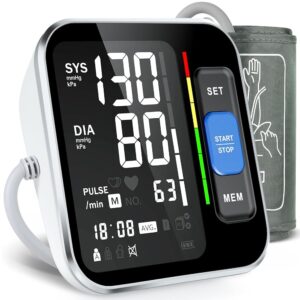
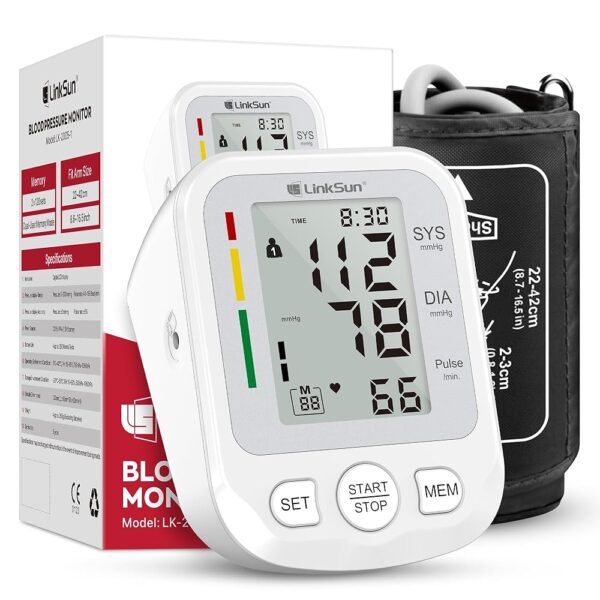
The LinkSun 2005 is a one-button upper arm blood pressure monitor with a wide range cuff, an LCD screen and two-user recording. It is aimed at the household that wants a single device on a shelf, operable without setup, and it settles the question of whether a plain automatic monitor covering a broad span of arm sizes is enough for you, or whether you need connectivity, deeper memory or documented performance figures.
State the obvious first, because on this category it is not optional. This review describes a device and the specifications published for it. It does not interpret readings, it does not tell anyone what their numbers mean, and a home blood pressure monitor does not replace professional medical care. The readings belong in a conversation with a clinician who knows the person taking them.
The Specifications That Matter
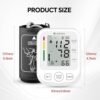
Cuff circumference is the figure that decides whether this monitor can work for a given person, because a cuff that is too small or too large yields wrong readings on hardware that is behaving perfectly, and nothing on the display warns you it is happening. Here a bullet gives the range clearly: 22 to 42 cm, or 8.7 to 16.5 inches, which covers most adult arms. The structured specification block is less useful and records only a band size of 16.5 inches, dropping the lower bound entirely.
The listing then contradicts itself about size in a way worth pausing on. The bullet calls it a large cuff and the title calls it a wide range cuff, while the structured size field says Medium. Those cannot all be describing the same accessory. Measure the bare upper arm at the midpoint between shoulder and elbow before ordering, and if the result is near either end of 22 to 42 cm, confirm the actual cuff supplied with the seller rather than trusting whichever field you happened to read.
Power, weight and what arrives
The power description does not hold together. The specification block says two AAA batteries are required and included, and that the unit is battery powered, while the included components list a charging cable and a bullet describes automatic power-off. Disposable AAA cells and a charging cable are not a natural pairing, and the listing never explains what the cable is for or whether an internal cell exists alongside the AAAs. Anyone planning to run this off USB should confirm that before ordering.
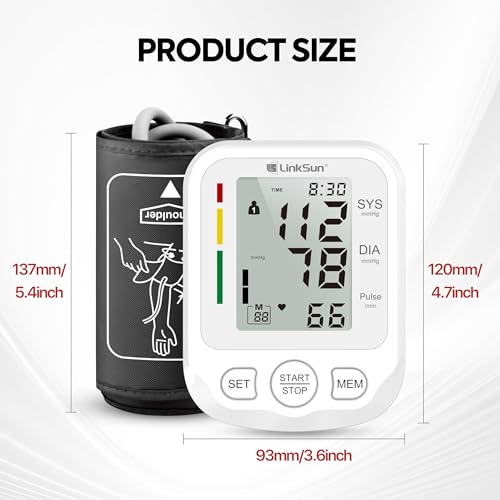
Physical figures are 6.3 by 3.9 by 4.3 inches at a listed one pound, matched by an attribute entry of 16 ounces, so at least those two agree. The included components are the cuff, the monitor, a charging cable, a manual and batteries; a bullet separately mentions a storage bag that does not appear in the components list. The manufacturer of record is bioland, which is not the brand on the box, a common arrangement but relevant if you need warranty support.
What the Listing Claims, and Who Is Making the Claim
The lead bullet is headed with the words clinically accurate and trustworthy, and states that an advanced chip and a high sensitivity sensor deliver fast and accurate readings, individually calibrated for reliability. That is the seller speaking, not us. We do not test devices and we do not verify manufacturer claims. No accuracy figure appears, no tolerance is stated, no validation protocol is named and no regulatory clearance is cited anywhere in the data, so the word clinical is doing work here that nothing behind it supports.
Independent validation status for home monitors can be checked through the registries medical bodies maintain, and that check is worth making before purchase rather than after. A claim of individual calibration is likewise something to confirm with the manufacturer, since it implies a per-unit process that a listing bullet alone cannot demonstrate.
Using It Correctly
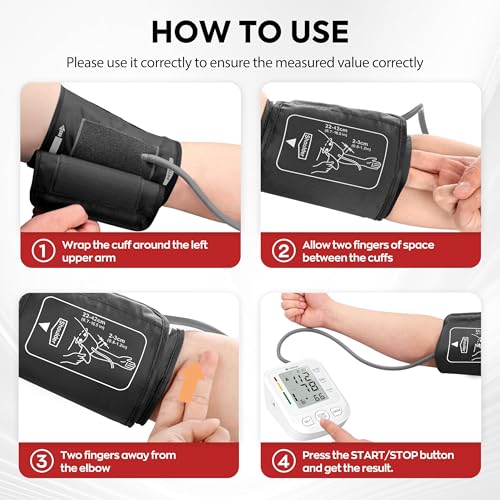
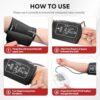
Fit the cuff to the bare upper arm rather than over clothing, with the tubing running down the inside of the arm toward the palm and the lower edge roughly an inch above the elbow crease. The listing mentions a placement sticker on the cuff, which is a genuinely useful touch, but it does not remove the need to align the cuff with the inside of the arm. Snug, not tight: a finger should slide underneath with mild resistance.
Sit with the back supported and both feet flat, rest the arm so the cuff sits level with the heart, and stay silent and still through inflation and release. Wait several quiet minutes before the first reading rather than measuring straight after moving around, and use the same arm at the same times each day so the log compares with itself. Set the user slot before the first reading so the two records stay separate.
Limits and Gaps in the Published Data
The description field is empty and only four bullets carry the technical case, which leaves a lot unpublished. There is no memory capacity anywhere: the listing says the device records data for two users but never says how many readings each user gets, which for a monitor sold on family use is a strange thing to omit. There is no pressure or pulse measurement range, no tolerance, no digit height despite the screen being a selling point, no averaging function described, and no mention of irregular heartbeat detection.
One contradiction deserves naming directly. The short description that previously ran on this page described a silent mode, voice notifications and a voice setting for users with visual impairments. Nothing in the listing title, bullets, specification block or stored attributes mentions audio, a speaker or a voice option of any kind. Those claims are unsupported by the source data and are not repeated here. If a talking monitor is genuinely what you need, buy one that documents the feature; the SmartHeart 01-742T talking monitor puts it in its own specifications rather than leaving it to secondhand copy.
And the statement that outranks the rest: this device collects and stores numbers. It does not diagnose, it does not replace professional medical care, and nothing here should be read as advice about anyone’s condition or treatment.
Alternatives Worth Comparing
If you want the same simplicity from a manufacturer that publishes more of its own figures, the A&D Medical UA-651 is the closest equivalent in the catalog, and the Greater Goods 0663 documents memory capacity, which this listing does not. If the cuff is your real constraint rather than the monitor, a documented replacement such as the Alcarefam BD42 large cuff covers the same 22 to 42 cm span and can be fitted to a monitor you already trust. The full range of upper arm units, wrist units and cuffs sits in our blood pressure monitor category.
Who Should Buy It, Who Should Not
Buy it if your upper arm falls inside 22 to 42 cm, you want one button and no app, and you are content that memory depth is unstated. Skip it if you need to know how many readings it holds, if the AAA batteries plus charging cable question needs answering first, if you need documented accuracy or validation, or if you came here expecting the voice features that this listing does not describe.