Description
Who the maguja RN-032A is for
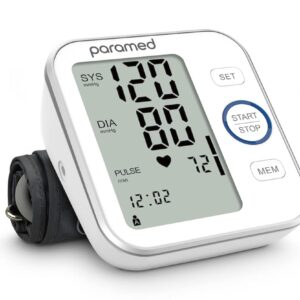
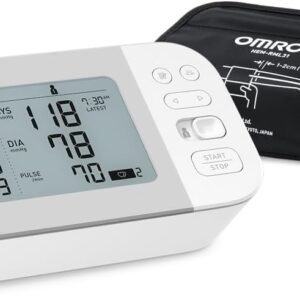
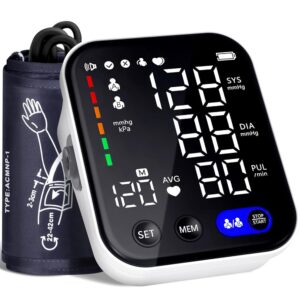
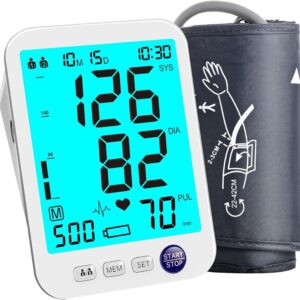
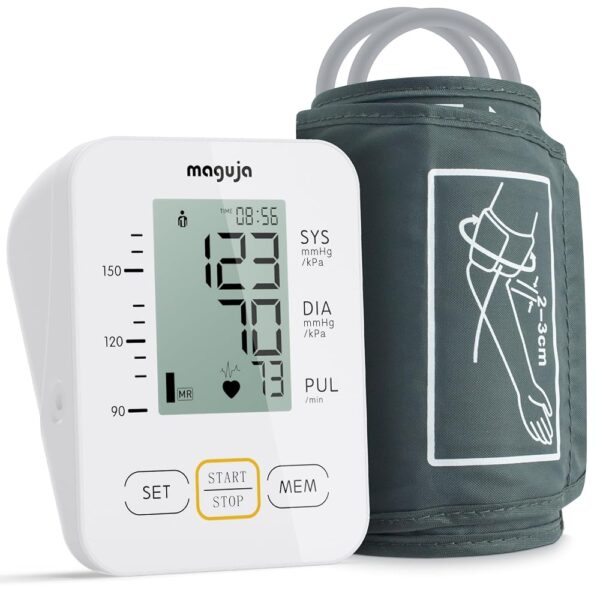
This is an upper arm automatic blood pressure monitor with a wide range cuff, two user memories, an automatic three reading average and a classification display. It records numbers for a clinician to review. It is not a diagnostic device and it does not replace professional medical care.
The buyer it suits is a two person household that wants an inexpensive device with an averaging function and does not need an app. It is worth knowing before you compare listings that this model number appears in our catalog under several different listing codes, so a page you find elsewhere on this site may be the same device.
Cuff range, and a stored figure that contradicts it
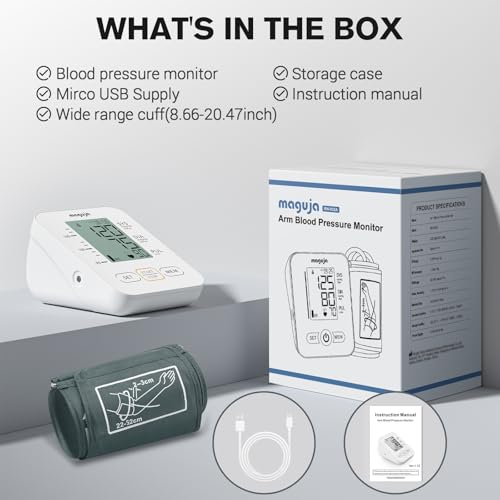
The feature text states that the supplied cuff measures 8.66 to 16.54 inches, which is 22 to 42 cm. That is a standard wide range cuff and it covers most adults.
Our stored band size attribute, however, records 20.5 inches. That is four inches beyond what the listing describes and it would put this in extra large territory, which the rest of the listing does not support. Work from the 8.66 to 16.54 inch figure and confirm with the seller if your measurement is near the top. Measure the circumference of your bare upper arm with a cloth tape, midway between elbow and shoulder, before ordering. A cuff that is too small or too large produces a reading that does not match what the same device would record with the right one, and nothing on the display warns you.
Memory, averaging and power
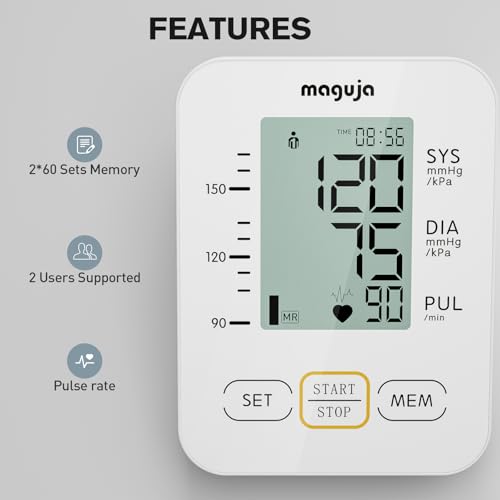
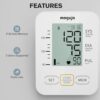
The monitor stores 120 measurements for two users, 60 each, kept separately. It calculates the average of the most recent three measurements automatically, which is the most useful function on the specification list, because single readings vary for ordinary reasons and a short averaged series is a steadier record.
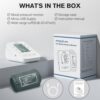
The box contains the monitor, a USB cable, the cuff, a manual and a storage bag. Note that no batteries are listed and no mains adapter is listed, while the stored power source attribute records battery powered. Those do not agree. In practice you should expect to supply power over USB, and to check with the seller whether the device also takes cells.
The classification display, and a claim about it we will not repeat
The listing states that the device classifies blood pressure according to World Health Organization and International Society of Hypertension guidance, and it names the vintage of that guidance: 1999. That date is worth noticing. Classification thresholds published a quarter of a century ago are not necessarily what a clinician works to today, and a display that categorizes your reading against an old reference can give a misleading impression of what is or is not worth discussing.
The listing goes further and describes the classification as convenient for judging whether your blood pressure is normal or not. We are not repeating that framing, and it is the thing on this page most likely to cause harm. A category band on a consumer display is a prompt to raise a reading with a clinician. It is not a judgment about whether you are well, it does not know your history or your medication, and it is not a substitute for someone who does. We are also not reprinting the thresholds involved, because what a number means for a particular person is a clinical matter.
Using it correctly, and what the readings are for
Sit with your back supported and your feet flat on the floor rather than crossed, and rest quietly for several minutes before measuring. Fit the cuff on a bare upper arm rather than over a sleeve, and support the arm so the cuff sits at about the height of your heart. Do not talk during the measurement, and if the automatic three reading average is running, stay seated and still through the whole sequence. Use the same arm at about the same time each day.
What you collect is a record for someone else to read. What a reading means, whether a pattern across your readings is significant, and whether anything about your care should change are questions for a healthcare professional who knows your history and your medication. This device does not replace professional medical care, and no reading from it should be used to start, stop or alter treatment on your own.
Limits and gaps
No irregular heartbeat detection is described. There is no app and no wireless connection, so 60 readings per user is the whole history unless you write them down. No accuracy figure, no independent validation protocol and no assessing body is named anywhere in the listing, so check an independent validation listing for this model number if that matters to you. No warranty term appears in the record, no display dimension is given, and the stored product dimensions of 8.7 by 8.7 by 2.67 inches describe the packaging rather than the device.
The duplicate listing problem, and what to check
This model appears in our catalog under four separate listing codes, and that is worth understanding rather than treating as a curiosity, because it changes how you should compare prices. When one device is sold through several listings, the listings often differ in what is in the box, in who the seller is, and in what happens if something fails. The device may well be identical.
What to check before ordering, then, is not the specification, which will read the same on all of them, but the practical detail: whether batteries or a power supply are included, what the stated warranty is, who the seller of record is, and whether the cuff supplied is the same size on each. A listing that appears cheaper because it omits the power supply is not cheaper. A listing with a longer stated support period may be worth a small premium on a device that has no independent validation behind it.
It also means that reviews and ratings are split across the listings rather than pooled, so a page with few ratings is not necessarily a product nobody has bought. Read across all of them.
Alternatives worth comparing
This model appears repeatedly in our catalog under different listing codes, including a second maguja RN-032A listing, a third and a fourth. Compare them on what is in the box and on the seller rather than assuming a difference in the device. The maguja CK-W118 is a wrist device from the same brand. For an established brand alternative with an averaging function, the Omron 5 Series BP742N covers a comparable cuff range. Our index of home monitors and cuffs publishes what each listing states.
Who should buy it and who should not
Buy it if two people need separate records, arms measure between 8.66 and 16.54 inches, and automatic averaging matters more than connectivity. Do not rely on the stored 20.5 inch cuff figure, do not treat the classification display as an assessment of your health, and do not assume batteries are in the box. Take your readings to a clinician.