
Description
A brand discrepancy that has to come first
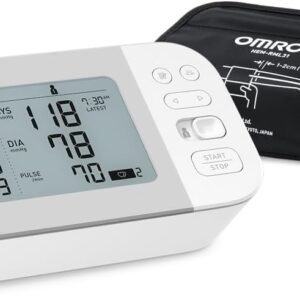
Before anything else about this product, a problem in the data that a reader deserves to know about. Our stored brand field for this listing records Omron. Nothing else supports that. The product title in the listing carries no brand at all, reading simply as a new upper arm blood pressure machine for home use. The manufacturer field records Dongguan Kangweile Electronic Technology. No feature bullet, no description sentence and no model designation in the record mentions Omron.
We cannot reconcile those, and we are not going to write about this device as though it were an Omron product, because a brand attribution is a factual claim and this one is unsupported. If brand matters to your purchase, and with a measuring device it reasonably might, confirm it with the seller before ordering rather than relying on a category page.
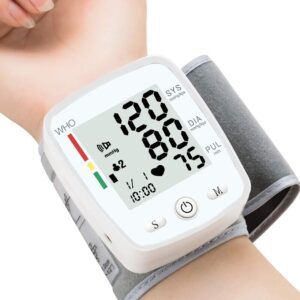
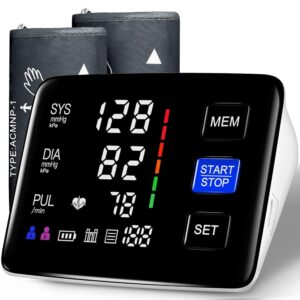
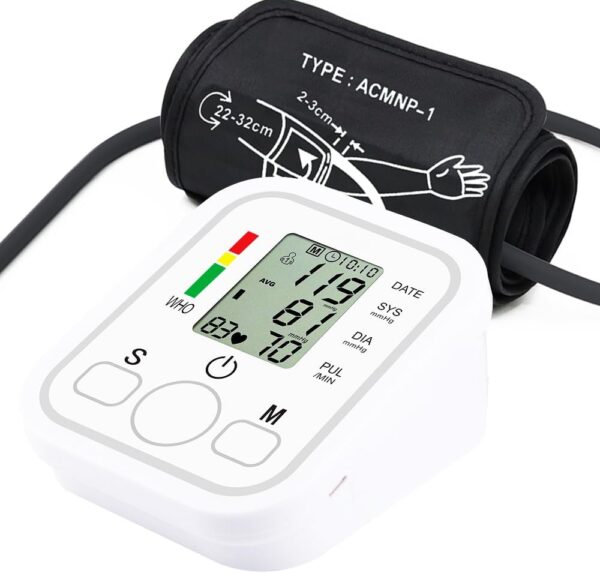
Read below on the merits of what the listing actually describes: an entry level upper arm automatic monitor with a large backlit screen, two user memory and a fairly narrow cuff. It records numbers for a clinician to review. It is not a diagnostic device and it does not replace professional medical care.
Cuff range, and the figure to use
This is the specification that decides whether the device is right for you, and the listing gives it twice with different numbers. The feature text states that the cuff fits arm circumferences from 7 inches to 12.6 inches, given as 22 to 32 cm. Those two do not agree with each other: 22 cm is about 8.7 inches, not 7. The product description gives 22 to 32 cm as 8.7 to 12.6 inches, which is internally consistent.
Work from 8.7 to 12.6 inches. That is a standard adult cuff and it is narrow by the standards of this catalog, where wide range cuffs commonly reach 16.5 or 17 inches. A great many adults measure above 12.6 inches at the upper arm, and for them this monitor as supplied is the wrong purchase. Measure the circumference of your bare upper arm with a cloth tape, midway between elbow and shoulder, before ordering. A cuff that is too small produces readings that do not match what the same device would record with a correctly sized one, and the display gives no warning.
Memory, display and a useful alert
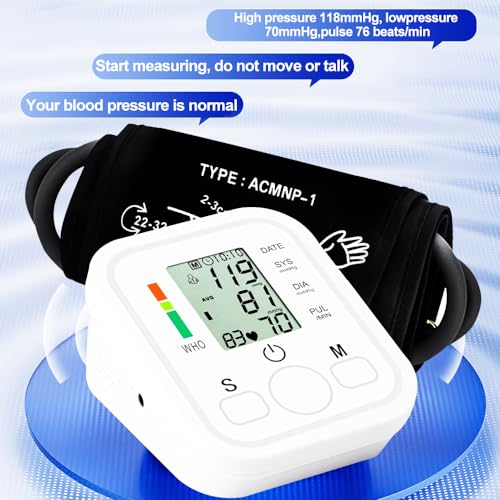
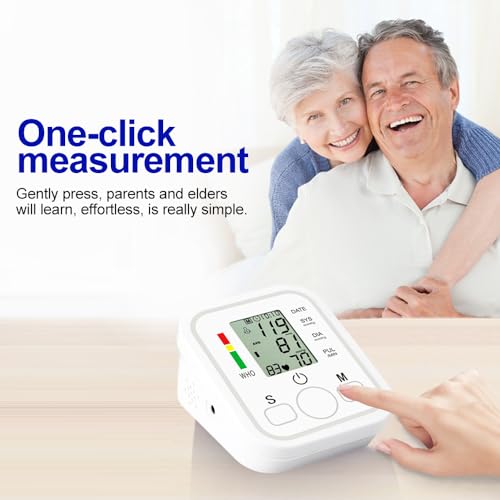
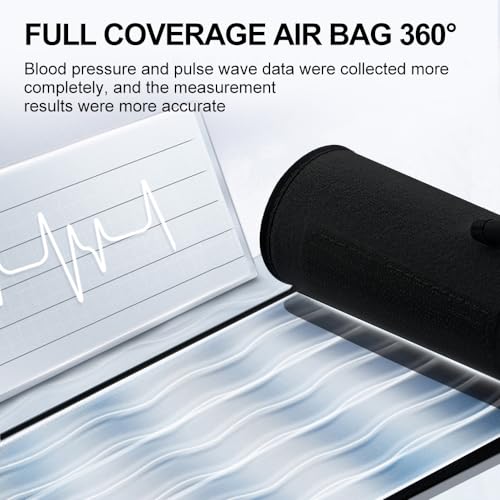
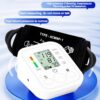
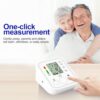
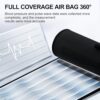
The device stores 198 readings, 99 for each of two users. The screen is a backlit LCD with oversized numbers and large buttons, and operation is a single button. One genuinely useful feature is described: an alert when the cuff has been fitted improperly, which addresses the most common source of a bad home reading. The cuff is described as adjustable through 360 degrees so that it can be fitted with one hand.
The stored product dimensions read one inch by one inch by one inch, which is junk data from the import and should be ignored. The included components field lists only a cuff, and no batteries, adapter or case is confirmed anywhere in the record.
Using it correctly, and what the readings are for
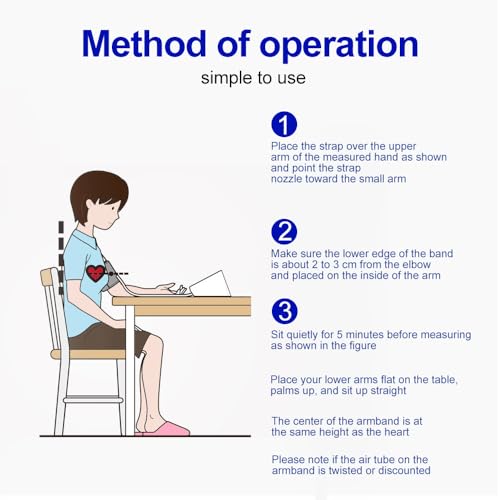
The listing carries its own step by step instruction and it is a reasonable one, so it is worth relaying. Sit up straight and relax, with the arm resting on a table, palm upward. Fit the cuff on the upper arm, align it level with the heart, and tighten it moderately, with the lower edge two to three centimeters above the elbow and the tube running down the inside of the arm without twisting. Then start the measurement and stay still and quiet while it runs.
To that, add the things the listing does not say: sit with your feet flat on the floor and uncrossed, rest for several minutes before the first reading, fit the cuff on bare skin rather than over a sleeve, and use the same arm at about the same time each day.
What you collect is a record for someone else to read. What a reading means, whether a pattern across your readings is significant, and whether anything about your care should change are questions for a healthcare professional who knows your history and your medication. This device does not replace professional medical care, and no reading from it should be used to start, stop or alter treatment on your own.
Claims, limits and gaps
The listing describes an advanced sensor providing accurate measurements and calls the device a reliable home health assistant. Those are the seller’s descriptions. We do not test products and we will not describe any monitor as accurate in our own voice. No accuracy figure, no independent validation protocol and no assessing body is named anywhere in the listing, which is a meaningful absence on a device whose brand identity is itself unclear.
On gaps: no irregular heartbeat detection, no averaging function, no app and no wireless connection are described. Battery life is not published and no warranty term appears in the record. The narrow cuff range remains the practical limit for most buyers.
A note on our own earlier summary of this product, which said the readings give peace of mind even for those monitoring critical health conditions. That is not a claim we should have published about any home monitor, and we have removed it.
A general point about unbranded measuring devices, since that is effectively what this listing describes. With a kettle or a lamp, an unbranded product either works or it does not, and you can tell which. With a measuring instrument you cannot tell. A monitor that reads consistently wrong produces numbers that look entirely plausible, and nothing about using it reveals the problem. That is the reason brand and validation matter more here than in most categories, and it is why the absence of both on this listing is worth weighing rather than shrugging at. If you do buy it, a sensible step is to take it to your next appointment and compare a reading from it against one taken there, which is the simplest check available to a home user.
Alternatives worth comparing
If you were shopping for an Omron specifically, the Omron Bronze BP5100, which publishes a 9 to 17 inch cuff range and names an independent validation listing is the entry point of that brand’s own range, with the Omron Bronze upper arm listing under a second code and the Omron 5 Series BP742N above it. If a narrow cuff is genuinely what you need, the Medline MDS4001, supplied with an 8.5 to 12 inch cuff is the comparison, and a small replacement cuff is worth checking if your arm is at the slim end. Our index of home monitors and cuffs lists the ranges each publishes.
Who should buy it and who should not
Buy it only if your upper arm measures between 8.7 and 12.6 inches, you want a large display at a low price, and you are content with an unbranded device. Do not buy it on the assumption that it is an Omron, since nothing in the listing supports that, and do not buy it if your arm is above 12.6 inches. Take your readings to a clinician.