Description
Who the RENPHO RP-BPM001S is for
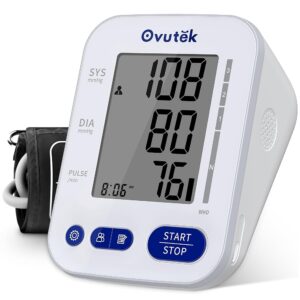
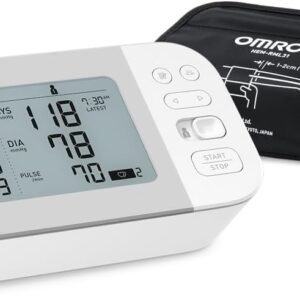
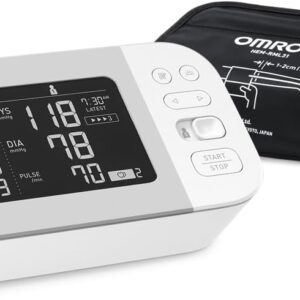
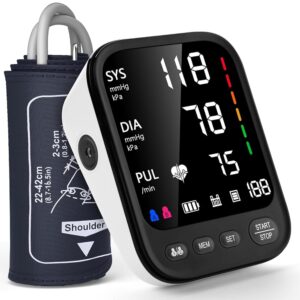
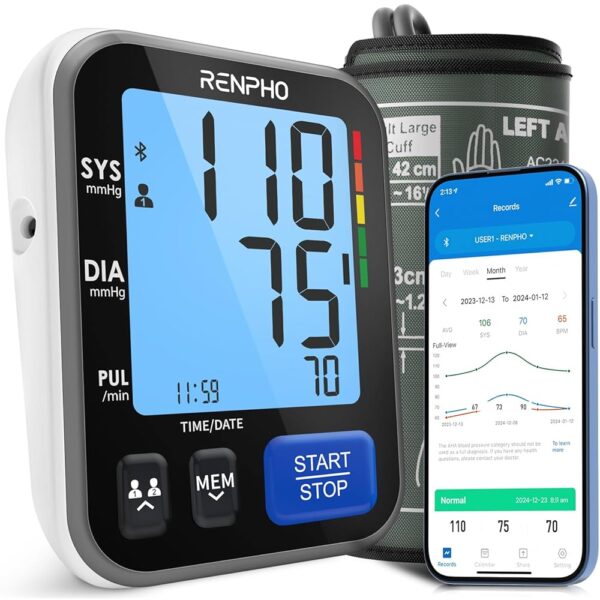
This is an upper arm automatic blood pressure monitor with Bluetooth, a wide range cuff, a large backlit display and a deep on device memory. It is listed as FSA and HSA eligible. It records numbers for a clinician to review. It is not a diagnostic device and it does not replace professional medical care.
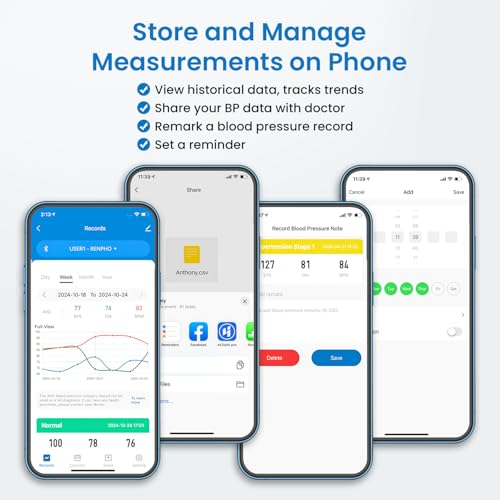
The decision it settles is whether you want a connected monitor whose value sits mostly in the app. RENPHO’s proposition here is a device that is simple in itself and that hands the analysis to a phone, where the history is unlimited and can be exported as a report. If you will not set the app up, you are buying a 240 reading two user monitor, which is still a lot of memory but is not what you paid for.
Cuff range and the specifications that matter
The listing states an adjustable wide range upper arm cuff covering 8 and three quarter inches to 16 and a half inches, given as 22 to 42 cm. Our stored band size attribute records only 42 centimeters, dropping the lower bound, so use the full range as stated. Measure your bare upper arm at the midpoint between shoulder and elbow with a tape measure before ordering.
Cuff fit is the specification that decides whether the rest of the page matters. A cuff too small or too large for the arm produces readings that do not match what the same device would record with a correctly fitted cuff, and there is no warning on the display. The listing markets the cuff as suitable for large adult arms, and 16.5 inches is a reasonable upper limit, but it is not an extra large cuff and anyone above that figure should look elsewhere.
Memory, display and timing
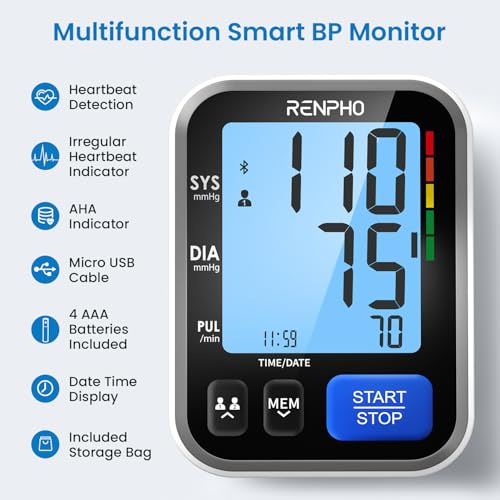
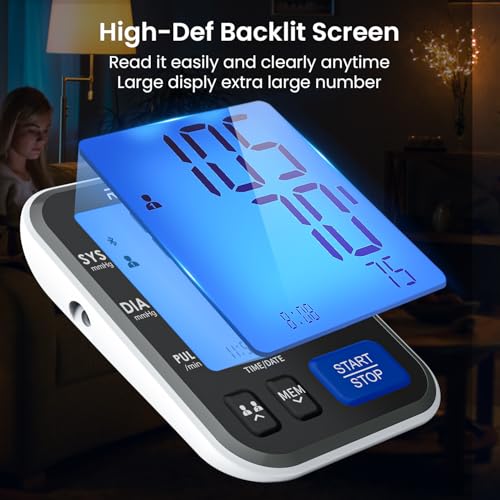
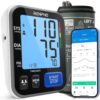
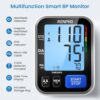
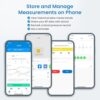
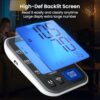
On device memory is stated as up to 240 sets for two users, with unlimited storage in the RENPHO Health app on iOS or Android, where readings can be viewed daily, weekly, monthly or yearly. The backlit LCD is given a measured size, 2.91 by 2.36 inches, which is more useful than the usual claim that a display is large. The listing states a measurement completes in 45 seconds or less. The app is described as adding blood pressure analysis, charts, multi user support, note taking, irregular heartbeat detection and shareable reports.
The on screen category display, and how to read it
The listing states that the monitor displays what it calls AHA levels on the screen, referring to a classification published by the American Heart Association. That is a category indicator: a band or symbol that appears according to where a reading falls against thresholds the manufacturer has programmed in. It is RENPHO’s implementation and RENPHO’s reference, not ours.
We are not reproducing those thresholds here as targets to aim for. What a number means for a particular person depends on their history, their treatment and their clinician’s judgment, and a colored band on a consumer display is a prompt to have a conversation rather than an interpretation of your health. Treat the indicator the same way you would treat a warning light: it tells you to ask, not what the answer is.
The same applies to the irregular heartbeat detection described in the app feature list. It flags that the device noticed an irregularity during a measurement. It does not identify a rhythm, it does not diagnose any condition, and the correct response is to mention it to a clinician.
Using it correctly, and what the readings are for
Sit with your back supported and your feet flat on the floor rather than crossed, and rest quietly for several minutes before starting. Fit the cuff on a bare upper arm rather than over a sleeve, and support the arm so that the cuff sits at about the height of your heart. Do not talk during the measurement. Use the same arm at about the same time of day, so that the series you build can be compared with itself.
What you are collecting is a record. What a reading means, whether a pattern in your readings matters, and whether anything about your treatment should change are questions for a healthcare professional who knows your history. This monitor does not replace professional medical care, and no reading from it should be used to adjust medication on your own. The report export in the app is genuinely useful here, because it turns a pile of numbers into something a clinician can read in a few seconds.
Claims, limits and gaps
RENPHO describes the monitor as detecting blood pressure and heart rate accurately and calls it a reliable and accurate digital monitor. Those are the manufacturer’s descriptions. We do not test devices and we will not describe any monitor as accurate in our own voice. No independent validation protocol and no assessing body is named in this listing, and where a model has been assessed against a published protocol, the protocol is normally identified. Check an independent validation listing for this model number if that assurance matters to you.
On gaps: no AC adapter is listed and battery life is not published, so plan on batteries. The included components field records only a bag. No warranty term appears in the record we hold. App based products also carry a dependency worth naming, since the analysis and the unlimited history live on a service the manufacturer maintains, and a device that outlives its app becomes a plain 240 reading monitor.
A note on our own earlier summary of this product, which described a durable carrying case. The listing lists a bag, which is not the same thing, and we have adjusted the wording rather than repeating it.
Alternatives worth comparing
For a directly comparable connected monitor, the Etekcity TMB-1583-BS covers the same cuff range with a different app, and the Greater Goods 0663 and the Greater Goods Bluetooth monitor are the closest competitors on price and features. At the premium end, the Withings BPM Connect and the iHealth BP5s take a different approach to the same idea. Our index of home monitors and cuffs lists the published cuff range for each.
Who should buy it and who should not
Buy it if you want a connected monitor with a measured display size and a deep on device memory, your arm falls between 8.75 and 16.5 inches, and you will use the app to produce reports. Do not buy it if your arm is above that range, if you want mains power without sourcing an adapter, or if you expect an on screen category display to tell you something a clinician should be telling you.