
Description
Who This Monitor Is For and What It Settles
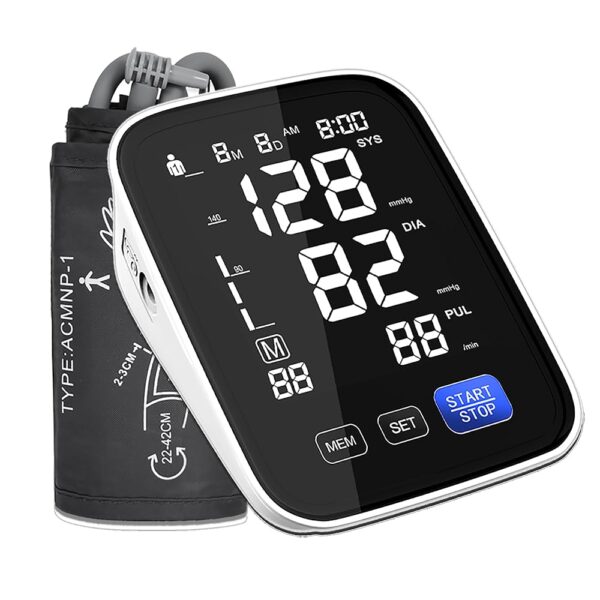
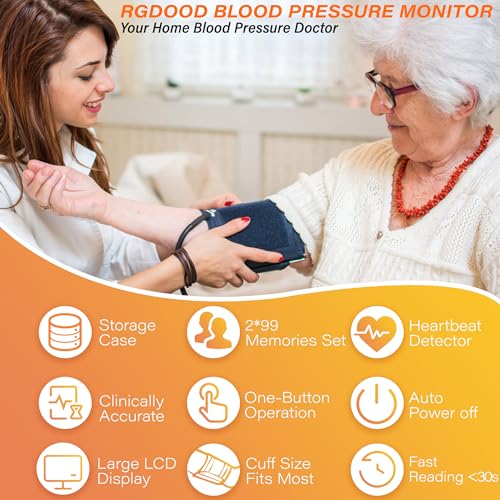
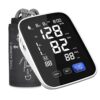
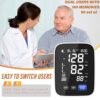
The Rgdood U80N is a plain upper arm blood pressure monitor with a wide range cuff, two user banks holding 90 readings each, and a choice between batteries and a cable. The listing is refreshingly modest about what it is: a fully automatic home device with no app, no voice and no colored scale, aimed in its own words at older couples keeping separate records.
Before the specifications, the standing point. This review describes a device and the data published for it. It does not interpret readings, it does not tell anyone what their numbers mean, and a home blood pressure monitor does not replace professional medical care.
The Specifications That Matter
Cuff circumference decides whether this monitor works for a given arm, because a cuff that is too small or too large produces wrong readings on hardware that is functioning perfectly, and nothing on the display warns you it is happening. The listing publishes the range twice in metric, in the structured band size field and in the packing bullet, as 22 to 42 cm.
The product title publishes it in inches as 8.5 to 16.5. Those two do not quite line up: 22 cm is 8.66 inches rather than 8.5, so the title claims about a sixth of an inch more reach at the bottom than the metric figure supports. The gap is small but it is at the exact end of the scale where a slim armed buyer is deciding. Work from 22 to 42 cm, which is the figure that appears twice.
Measure the bare upper arm at the midpoint between shoulder and elbow before ordering. If your measurement falls outside that span, a documented replacement cuff such as the Alcarefam BD42 fitted to a compatible monitor is the better route than hoping an adjustable cuff stretches further than its stated figure.
Memory, display and what is in the box
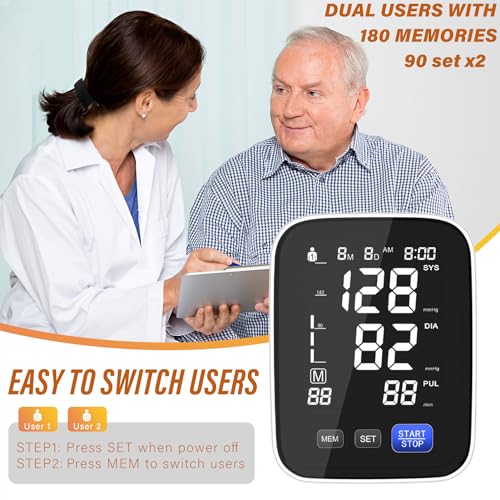
Memory is 90 readings for each of two users, 180 in total. That is enough for around a month and a half of twice daily logging per person before anything is overwritten, which is adequate rather than generous.
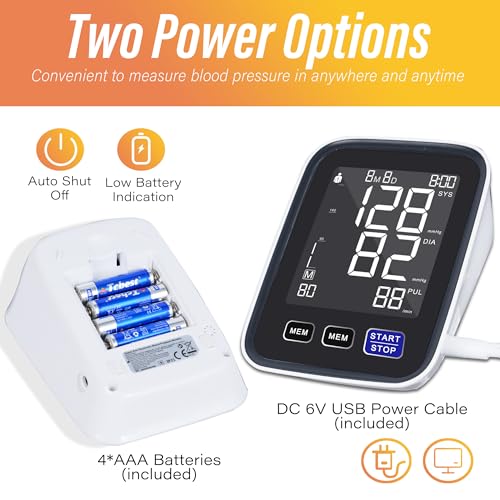
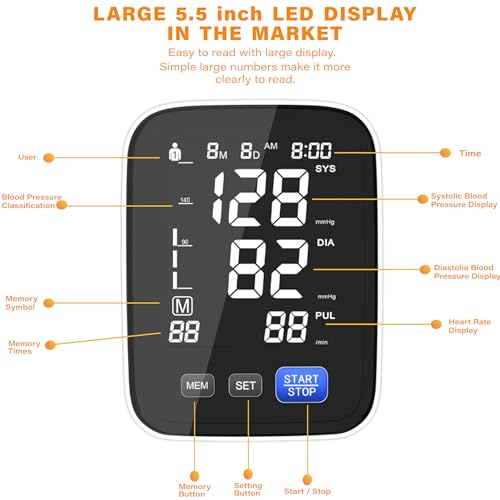
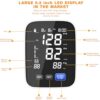
The display field says only large display and no digit height is published, so how large the numbers actually are has to be judged from photographs. The box contains the monitor, the cuff, a case, four AAA batteries and a manual, with the components field spelling batteries incorrectly.
The power arrangement, and an oddity in it
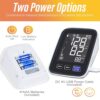
The device runs on four AAA batteries, included, or from a cable, which the listing describes in two places as a DC 6V USB-A cable. That description does not hold together. A USB-A port supplies 5 volts, not 6, so a cable described as both DC 6V and USB-A is either a cable with a converter in it, a cable intended for a 6V adapter that happens to use a USB-A shaped plug, or a specification written carelessly. The listing does not say which, and it does not say whether an adapter is included.
If you intend to run this from mains rather than cells, settle that with the seller before ordering, because plugging a monitor into the wrong supply is not a mistake worth making with a medical device.
What the Listing Claims, and Who Is Making the Claim
The claims here are unusually restrained by the standards of this shelf. The lead bullet says the monitor helps you track your blood pressure with accuracy and ease. There is no superlative, no color scale, no hypertension indicator, no detection claim and no clinical validation assertion anywhere on the page.
That restraint is worth noting, but it cuts both ways. No accuracy figure, no tolerance, no validation protocol and no regulatory clearance appears anywhere in the data either. We do not test devices and we do not verify manufacturer claims. Validation status for home monitors can be checked independently through the registries medical bodies maintain, and that check is worth making before purchase.
One bullet does something better than most. Headed with a note about how to measure accurately, it simply tells the buyer to read the user manual and follow the instructions so the results are not disturbed. That is a more honest sentence than most listings in this category manage anywhere on the page, and it is correct: technique matters as much as the hardware.
Using It Correctly
Fit the cuff to the bare upper arm rather than over a sleeve, with the tubing running down the inside of the arm toward the palm and the lower edge roughly an inch above the elbow crease, closed so one finger slides underneath with mild resistance. Sit with the back supported and both feet flat on the floor, rest the arm so the cuff sits level with the heart, and stay silent and still through inflation and release.
Rest for several quiet minutes before the first reading rather than measuring straight after activity, and use the same arm at the same times each day so the record compares with itself. Set the user slot before the first measurement so the two banks of 90 stay separate, and review the log periodically rather than letting it fill and overwrite unnoticed.
Limits and Data Oddities
The description field is empty, so five bullets and a specification table carry the whole technical case. Nothing is published about the pressure or pulse measurement range, tolerance, averaging across readings, irregular heartbeat detection, digit height or battery life.
The product dimensions read 2.75 by 2.3 by 1.57 inches at 8 ounces. That is smaller than most arm monitors on this shelf, and an upper arm device has to house an inflation pump, so the figure looks more likely to describe part of the package than the monitor itself. The model name field contains the generic phrase upper arm monitor rather than a designation, while the item model number reads U80N.
That model number is worth a note. The U80 prefix belongs to a family of monitors made by Shenzhen Urion and sold in this catalog under many brand names, including the AQESO U80B, the VERWINT U80AH and the HealthTree U80B. On this page the manufacturer of record is given as the brand itself rather than Urion, so the relationship is not established by the listing. Either way, the specifications on one U80 page should never be assumed to hold on another.
The point that outranks the rest: this device produces numbers and stores them. It does not diagnose, it does not replace professional medical care, and nothing in this review is guidance about anyone’s health. The full selection sits in our blood pressure monitor category.
Who Should Buy It, Who Should Not
Buy it if your arm falls inside 22 to 42 cm, two people need 90 readings each, and you want a monitor that does not attempt to interpret anything for you. Skip it if you need the cable and adapter question settled before committing, if 90 readings per user is too shallow, if you need documented accuracy or validation, or if the mismatch between the metric and inch cuff figures leaves you guessing at the slim end.