


Description
Who This Monitor Is For and What It Settles
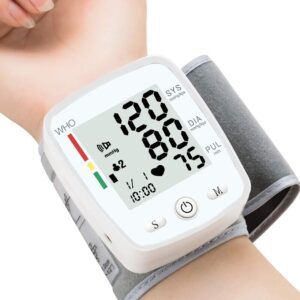
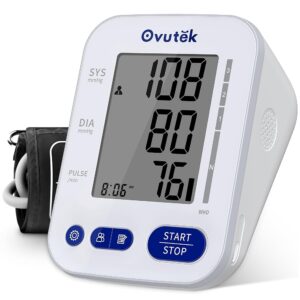
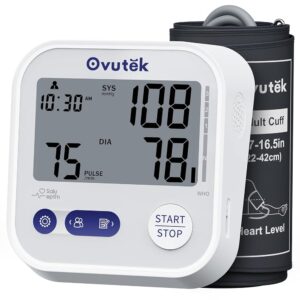
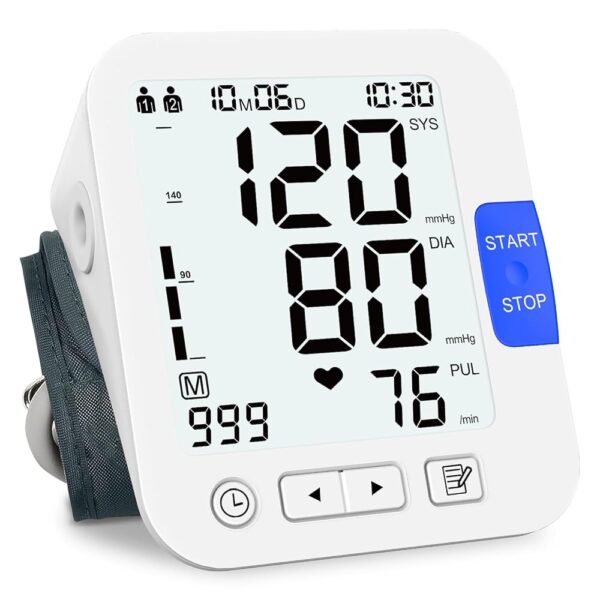
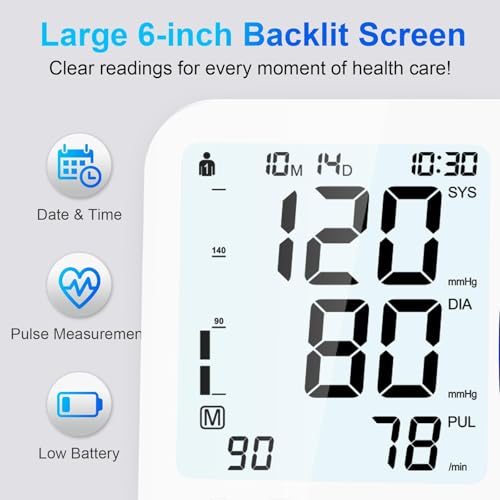
The SDUNW U80A is an upper arm blood pressure monitor built around a 6 inch backlit LCD, which is at the top end of what home monitors offer. Add a nightlight function, oversized icons, an automatic average of the last three readings and two user banks, and the target buyer is obvious: someone for whom reading a small grey screen has become the hard part.
Before the specifications, the standing point. This review describes a device and its published data. It does not interpret readings, it does not tell anyone what their numbers mean, and a home blood pressure monitor does not replace professional medical care.
The Cuff Labels Contradict Each Other
Cuff circumference decides whether this monitor can work for a given arm, because a cuff that is too small or too large produces wrong readings on hardware that is functioning perfectly, and nothing on the display warns you. The numbers here are broadly consistent; the labels attached to them are not.
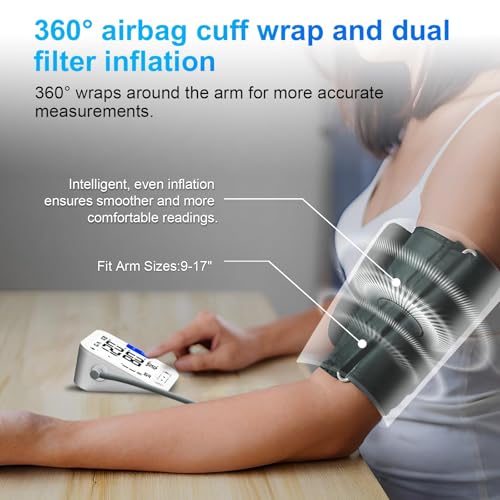
The product title advertises an XL cuff of 9 to 17 inches. The bullets repeat 9 to 17 inches and call it a standard XL cuff. The structured band size field says XL 22 to 42 cm, with 9 to 17 inches in brackets and the letters M and L attached. The stored attributes on this site describe it as medium to large, 22 to 42 cm, XL 9 to 17 inches. So the same accessory is labeled extra large, standard and medium to large in different places on one page.
There is also a small unit mismatch: 9 to 17 inches converts to roughly 23 to 43 cm, not 22 to 42, which is under a centimeter at each end but sits exactly where a borderline buyer decides.
Ignore the size labels entirely and work from the numbers. Measure the bare upper arm at the midpoint between shoulder and elbow, and if you land within about 23 to 42 cm you are inside the range on any reading of this page. Buyers above that need a genuinely oversized cuff on a monitor documented to accept one, and multi cuff kits such as the COCACIS U80BH reach to 21 inches.
What Is Documented
The 6 inch backlit LCD is the headline and it is stated consistently in the title, the display field and the size field. A nightlight function and intuitive icons are described as aids for users with impaired vision, though no digit height is published, so the character size still has to be judged from photographs.
A measurement takes 50 seconds, and the device averages the last three readings automatically, which is the most useful function on the page. Irregular heartbeat reminders are mentioned, and those should be understood as flags rather than findings: they indicate the device saw an irregularity during that measurement, without identifying what it is or separating a real result from an artifact. Note one and raise it with a clinician.
The box contains the monitor, the cuff, a manual, a user operation guide, four AAA batteries, a Type-C USB cable and a storage bag. The power source field is malformed, reading as a fragment about being powered and including four AAA batteries, while the stored attributes say corded electric. Between the two, what is certain is that AAA cells are supplied and a Type-C cable is in the box; whether the cable charges anything or simply runs the device is not stated.
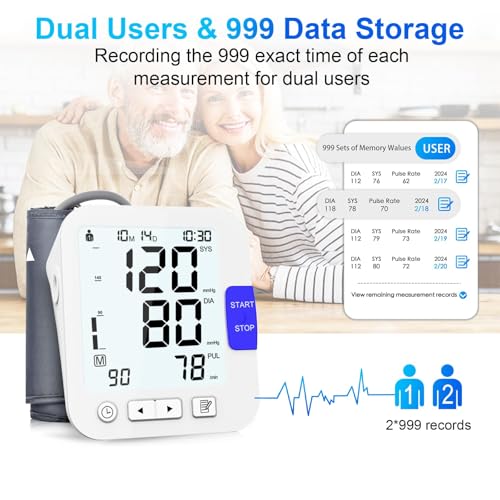
Memory is stated oddly. A bullet says two user mode with a total of 1998 entries. That is an unusual number, presumably 999 per user, but the listing never breaks it down and never says what happens when a bank fills. The unit measures 4.56 by 5.1 by 3.47 inches at 14.11 ounces, and the manufacturer of record is Shenzhen Urion Technology, which supplies many brands in this catalog under the U80 family, including the AlphaMed U80A and the AQESO U80AH.
Two Claims That Do Not Follow
The second bullet says the monitor uses the most stable chip and the most advanced technology, and then that the measurement results are classified according to a World Health Organization and International Society of Hypertension scheme, making the readings more accurate.
Classification does not make a reading more accurate. Sorting a number into a band after it has been measured changes nothing about how the number was produced. That is a logical error rather than a marketing flourish, and the classification itself needs the usual handling: a band on a home monitor compares a measured value against thresholds stored in firmware, it does not diagnose, and this review does not tell anyone what any band means. No edition or date is cited for the scheme.
The third bullet says the average of the last three measurements means the result will not be affected by breathing or movement during the measurement. That is not how averaging works. Averaging smooths the natural variation between readings, which is genuinely valuable, but movement during a measurement corrupts that measurement and pulls the average with it. Staying still still matters.
The accuracy superlatives are the seller’s and not ours. We do not test devices, and no accuracy figure, tolerance, protocol or clearance appears anywhere in the data. Validation status can be checked through the registries medical bodies maintain.
The bullet that gets it right
The final bullet is the best sentence on the page and it contradicts the third. It says readings vary with stress, timing and cuff placement, that three consecutive readings in one session give a better result, and that the user should stay calm and follow the usage guidelines before measuring. All of that is correct, and it is the guidance to follow. A device that also sells a screen this large to a buyer who needs one has earned some credit for saying it.
Using It Correctly
Fit the cuff to the bare upper arm rather than over a sleeve, with the tubing running down the inside of the arm toward the palm and the lower edge roughly an inch above the elbow crease, closed so one finger slides underneath with mild resistance. Sit with the back supported and both feet flat on the floor, rest the arm so the cuff sits level with the heart, and stay silent and still through the full sequence.
Rest for several quiet minutes before starting, take the three readings the listing recommends rather than stopping after one, and use the same arm at the same times each day. Set the user slot before the first measurement. If a huge screen is the reason you are here, compare it against the FIYES A02-E, which publishes a 5.9 inch panel with a two cuff kit.
Limits and the Statement That Matters
The description field is empty, the included components field is corrupted with raw JavaScript from the retailer’s page, and the manufacturer field contains a mangled full-width character. Nothing is published about the pressure or pulse measurement range, tolerance, digit height or battery life. The model name field contains a generic phrase rather than a designation.
This device produces numbers, averages them and sorts them into bands. It does not diagnose, it does not replace professional medical care, and nothing in this review is guidance about anyone’s health. The full selection sits in our blood pressure monitor category.
Who Should Buy It, Who Should Not
Buy it if a 6 inch screen with a nightlight is the deciding feature, your arm falls between roughly 23 and 42 cm, and automatic three reading averaging matters to you. Skip it if you need the memory split explained before committing, if the cuff being labeled XL, standard and medium to large on one page undermines your confidence, if you need documented accuracy or validation, or if you took the claim that averaging cancels movement at face value.