

Description
What this product is
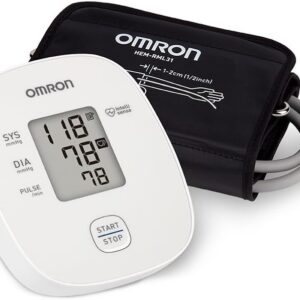
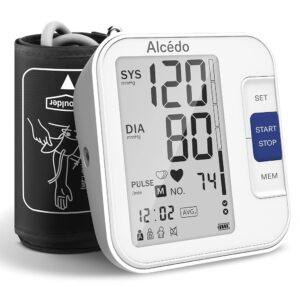
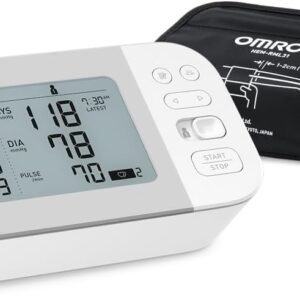
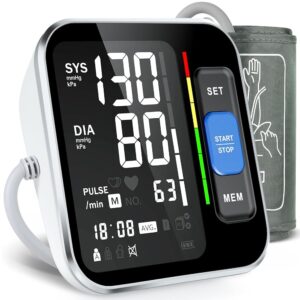
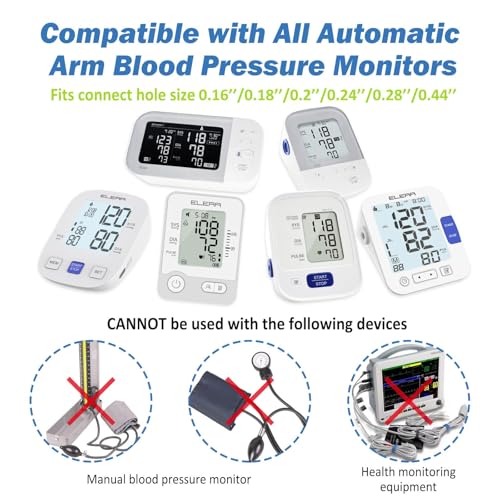
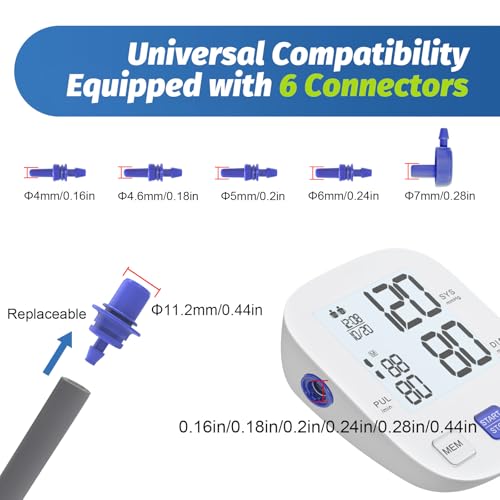
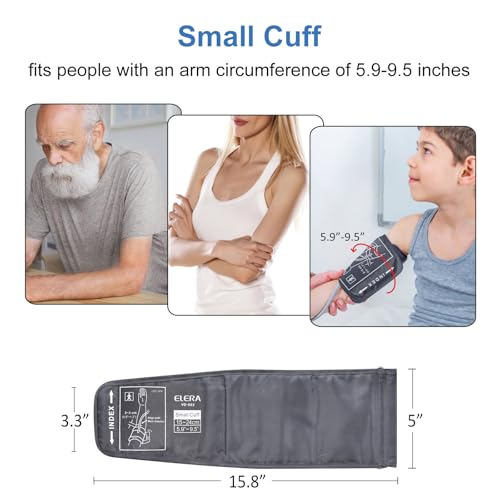
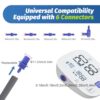
This is a replacement cuff, not a blood pressure monitor, and the listing says so plainly: the machine itself is not included. It is a small cuff intended for arms that are too slim for a standard adult cuff, supplied with six connectors so that it can be fitted to a range of automatic monitors.
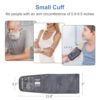
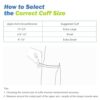
The stated range is 5.9 to 9.5 inches of upper arm circumference, given as 15 to 24 cm, and the listing describes it as suitable for children, adolescents and slim adults. The connectors are given as 0.16, 0.18, 0.2, 0.24, 0.28 and 0.44 inches in diameter.
A caution before the specifications
This cuff is marketed for use on children, and that needs addressing directly rather than being left in a feature list. Measuring a child’s blood pressure is a clinical activity, not a household one. Cuff selection in pediatrics is worked out against the child’s arm dimensions by someone trained to do it, the technique differs from adult measurement, and what a reading means in a child depends on factors including age and height in ways that have no equivalent in adult home monitoring.
Nothing on this page is instruction for measuring a child’s blood pressure and nothing here should be used to decide anything about a child’s health. If a clinician has asked you to take readings for a child at home, follow the instructions and the equipment they specified. If no clinician has asked you to, the right first step is to ask one rather than to buy a cuff.
For a slim adult, the situation is more ordinary. An adult whose arm measures below the bottom of a standard cuff range faces the same problem as an adult whose arm is too large: the cuff supplied with the monitor does not fit, and readings taken with it do not represent what a correctly sized cuff would give.
Compatibility, and what a third party cuff changes
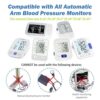
The listing states that the six connector sizes let the cuff fit major blood pressure monitor brands. That is a claim about physical fit and it is probably true, since those diameters cover the common fittings.
What the listing does not say, and what a reader deserves, is that a home blood pressure monitor is assessed as a system: the device together with the cuff it was supplied with. Fitting a cuff from a different manufacturer produces a combination that has not been assessed as a pair, even when the connector seats perfectly and the size is right. That is not a reason never to do it, because a correctly sized third party cuff is better than a manufacturer’s cuff that is far too large. It is a reason to check first whether the manufacturer of your monitor sells a small cuff of its own, and to mention the substitution if you are taking readings to an appointment.
What the record gets wrong
Several stored fields on this listing are unreliable. The age range attribute records adult, on a product whose title and feature text describe it as pediatric. The band size attribute records only 9.5 inches, dropping the lower bound. The power source attribute reads battery powered and the display type attribute reads digital, neither of which means anything on a cuff. The cuff weighs about 0.11 kilograms and is described as nylon fabric with TPU air bladders.
Using it correctly
Fit the cuff on a bare upper arm rather than over a sleeve, with the lower edge clear of the elbow crease and the tube running down the inside of the arm toward the hand. Tighten it so that it is snug rather than tight. Sit with the back supported, feet flat on the floor and the arm supported so the cuff sits at about the height of the heart, and stay quiet and still during the measurement.
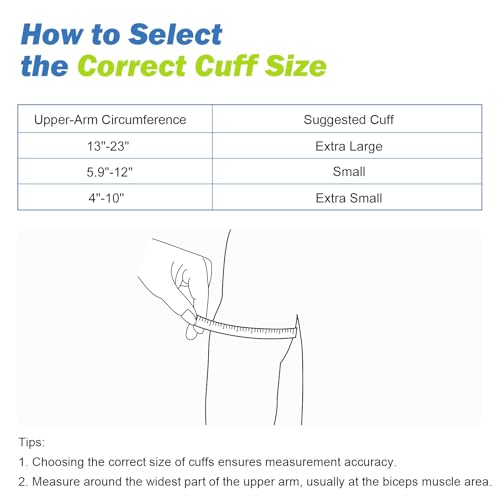
On a small cuff, check that the inflatable section actually wraps around the arm properly rather than leaving a gap or overlapping heavily on itself. Most cuffs carry index markings for exactly this purpose, and if the arm falls outside them the size is wrong regardless of what the packaging says.
Whatever monitor this is fitted to, the readings are a record. What a reading means, whether a pattern across readings is significant, and whether anything about someone’s care should change are questions for a healthcare professional who knows their history. A home blood pressure monitor does not replace professional medical care, and no reading from one should be used to start, stop or alter treatment.
Limits and gaps
No specific monitor model is named as compatible, which is a weaker position than a cuff that publishes a list. No bladder dimensions are published, which matters on small cuffs because the inflatable section has to cover an adequate proportion of a small arm. No warranty term appears in the record we hold, only a statement that quality concerns will be addressed through the retailer. And the pediatric framing, as set out above, is the part of this listing that most needs a reader to slow down.
A note on why slim adults run into this problem at all. Home monitors are sold with a cuff sized for the middle of the adult range, and manufacturers set the bottom of that range at around 8.6 or 8.7 inches. An adult whose upper arm measures below that, which is not unusual among smaller framed and older people, is outside the specification of most of the monitors on the shelf, and the fault is not obvious: the cuff will still wrap around the arm and the device will still produce a number. What has happened is that the inflatable section now covers too much of the arm circumference, which is precisely the condition a correctly sized cuff exists to avoid.
If that describes you, the sequence is worth getting right. First check whether the manufacturer of your monitor sells a small cuff for that model, because a same brand cuff keeps the pairing the manufacturer intended. Only if there is no such option does a universal replacement like this one become the sensible answer.
Alternatives worth comparing
Among other small cuffs, the Pro Comfort pediatric cuff and the CareLiving small cuff are the direct comparisons, and the same cautions apply to both. Within the same brand, the ELERA XXL cuff and the ELERA U80B monitor sit at the other end of the size range. If you need a device that ships with more than one cuff size, the CONTEC08A, supplied with three cuffs is the example in this catalog, with its own cautions. Our index of home monitors and cuffs lists sizes across the range.
Who should buy it and who should not
Buy it if you are a slim adult whose arm measures between 5.9 and 9.5 inches, your monitor’s manufacturer does not offer a small cuff, and one of the six connectors fits your machine. Do not buy it to start measuring a child’s blood pressure on your own initiative, and do not assume physical compatibility means the resulting pairing has been assessed.