



Description
Who This Monitor Is For and What It Settles
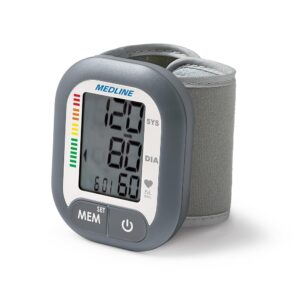
The ZIQING wrist blood pressure monitor is a small battery powered unit that clamps to the wrist rather than the upper arm, stores 99 readings for each of two users, and travels in a hard case. It is aimed squarely at people who want something that fits in a bag or a desk drawer, and at people who find an upper arm cuff awkward to fit on themselves one-handed.
The form factor is the decision this product settles, and it deserves to be stated bluntly rather than buried. Wrist monitors are not equivalent to upper arm monitors. On the wrist, the height of the device relative to the heart and the angle of the joint change the result, so positioning matters far more than it does on the arm. Upper arm devices are the usual recommendation for home monitoring, and something like the Omron BP5100 Bronze upper arm monitor is the default comparison anyone should make before choosing a wrist unit for convenience alone. This review describes a device. It does not interpret readings, and a home monitor does not replace professional medical care.
The Specifications That Matter
The cuff range is published, which is more than many listings in this bracket manage. The wrist cuff is stated at 13.5 to 19.5 cm, roughly 5.3 to 7.7 inches of wrist circumference, and that figure appears consistently in the title, the specification block and the stored attributes. Measure around the bare wrist just above the wrist bone before ordering. A wrist cuff that is loose will not seal properly and one that is too tight will not sit flat, and neither failure announces itself on the screen.
Display, memory and power
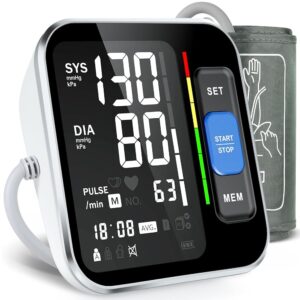
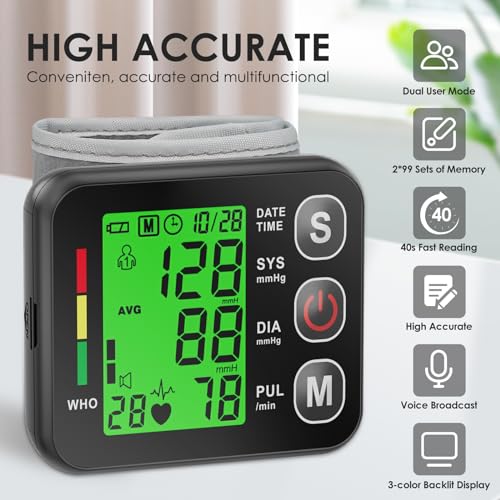
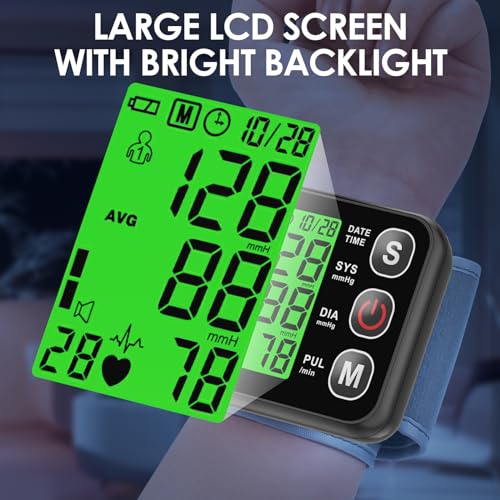
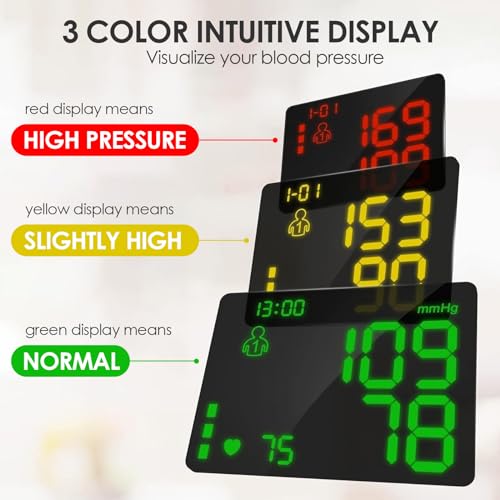
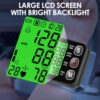
The screen is a backlit LCD, which the listing sells on low-light readability. No digit height is published, so how legible it actually is has to be judged from photographs rather than a number. Memory is two banks of 99 readings, which is deep for a device at this level and enough to hold months of twice-daily entries before anything is overwritten. The unit runs on two AAA batteries, included, and there is no USB or rechargeable option at all, which is a straightforward arrangement with no ambiguity in the data.
The body measures 3.07 by 2.95 by 2.68 inches and weighs 113.5 grams, or about 4 ounces, and those two figures agree with each other, which is not always the case in this catalog. The box contains the monitor, two AAA cells, a manual and a portable case.
What the Listing Claims, and Who Is Making the Claim
The product title includes the phrase high accuracy and the lead bullet promises precise measurements every time. Both are the seller’s claims and neither is ours. We do not test devices. No accuracy figure, no tolerance, no validation protocol and no regulatory clearance appears anywhere in the listing data, so there is nothing behind the word accuracy except the word itself. Anyone who needs a device whose performance has been independently checked should look up its validation status through the registries medical bodies maintain, and should treat an unvalidated wrist device with more caution than an unvalidated arm device, because the wrist adds a positioning variable on top of everything else.
The description field is worth flagging separately. It reads as though written by Amazon rather than the seller, closing with a line about Amazon being committed to providing high quality health products. That is a third party voice attached to a third party listing, and it should not be read as any kind of endorsement of this device by anyone. The same field also contains literal escape tokens where line breaks should be, a sign the listing text was imported carelessly.
Using It Correctly
Wrist technique is the whole game with this form factor. Rest the forearm on a table, sit with the back supported and feet flat, and raise the wrist so the device sits level with the heart, typically by supporting the elbow or placing the hand near the opposite shoulder as the manual directs. Keep the wrist straight rather than bent, keep the device against bare skin, and stay silent and still through the measurement. Do not take a reading immediately after moving around, and use the same wrist and the same time of day every session.
Assign the user bank before the first reading so the two logs stay separate. Because the memory is deep, it is worth reviewing the stored series periodically rather than reading one number and dismissing it, and worth bringing the series to a clinician rather than a single figure. If wrist positioning turns out to be a persistent nuisance, the SureLife WRS-35H classic wrist monitor and the Scian LD-737 wrist monitor are the other wrist options in this catalog to weigh against it.
Limits and Gaps in the Published Data
There is no model number anywhere in the specification block, which is unusual and makes the device hard to research independently or to match to a manual. The manufacturer field simply repeats the brand name, so there is no separate factory of record. There is no stated measurement range for pressure or pulse, no tolerance, no battery life estimate, and no mention of irregular heartbeat detection.
One contradiction is worth naming directly. The short description that previously ran on this page described a voice function providing audio feedback. Nothing in the listing title, the bullets, the specification block or the stored attributes mentions a speaker, a voice option or any audio feature at all. That claim is unsupported by the source data and is not repeated here. If a talking monitor is what you actually need, buy one that documents the feature rather than one where the feature appears only in secondhand copy.
And the point that outranks the rest: this device collects numbers. It does not replace professional medical care, it does not diagnose anything, and no reading from it should be interpreted without a clinician. If a home reading and a clinic reading disagree, that is a matter for the clinic.
Alternatives Worth Comparing
Anyone choosing a wrist device purely for convenience should price the alternative honestly first, because an upper arm monitor removes the positioning variable entirely. If the reason for a wrist unit is a large upper arm that standard cuffs will not fit, the better fix is usually a properly sized arm cuff rather than a change of form factor. ZIQING also appears in this catalog with an upper arm monitor listing if you want to stay with the same brand while changing form factor. The whole shelf, arm and wrist together, sits in our blood pressure monitor category.
Who Should Buy It, Who Should Not
Buy it if your wrist measures inside 13.5 to 19.5 cm, portability genuinely outweighs the positioning penalty for you, and deep two-user memory in a pocket-sized case is what you want. Skip it if you can use an upper arm cuff, if you need a documented accuracy or validation figure, if you need a model number you can look up, or if you came here for the voice function that this listing does not actually describe.