

Description
The ZIQING upper arm blood pressure monitor is a value priced device with a voice broadcast, a wide cuff reaching 17.3 inches, and storage for 99 readings each across two users. Its listing is unusually clear about how the device is powered and unusually vague about who recommends it. This review describes it from the published listing data. It is not medical advice, it does not tell you what any reading means, and a home monitor does not replace professional medical care. Readings belong in a conversation with a clinician who knows your history.
The cuff range, published properly and generously
Cuff fit determines whether a reading is worth recording, because a cuff too small or too large produces wrong numbers on a device that is working perfectly. Technique does not compensate for it.
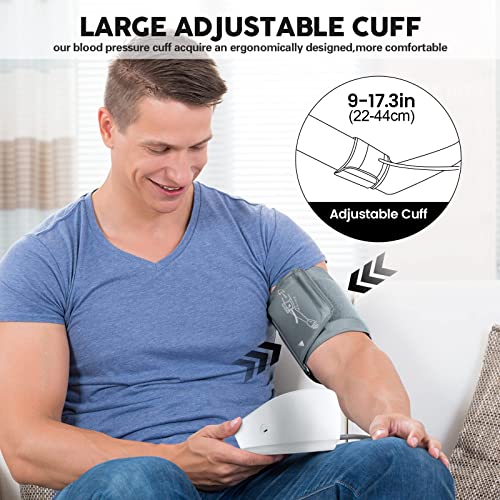
ZIQING publishes 8.7 to 17.3 inches in the product title and in the structured band size field, and a feature bullet gives the same range as 22 to 44 centimeters, which converts correctly. Three places, one answer, in both units. That is better internal consistency than most listings in the blood pressure monitor section manage, and 17.3 inches is a generous upper bound that will suit people who find a 15.7 or 16.5 inch cuff tight.
Measure your upper arm at the midpoint between shoulder and elbow before ordering. If you measure above 17.3 inches, a two cuff device reaching 21 inches is what you need rather than this one pulled tight.
The power arrangement is stated plainly, which is rare
A feature bullet is headed “Attention, Not Rechargeable” and states that the monitor is powered by a plug in connection rather than being rechargeable, that you can plug it into a laptop, a power bank or any device with a USB interface, and that four AAA batteries can be used instead.
That is the clearest statement of this arrangement anywhere in this catalog. Several competing listings describe a “charging cable” on a device with no internal cell, which reads as rechargeable and is not. ZIQING says outright what you are getting, and the power bank option is genuinely useful for travel.
The other half of that bullet matters too: the four AAA batteries are not included, which ZIQING attributes to environmental considerations. Order them at the same time, or plan to run the device from USB. A 12 month warranty is stated.
Who this monitor is for and what it settles
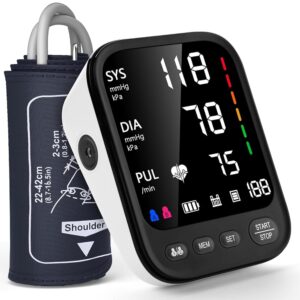
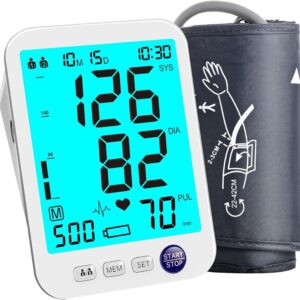
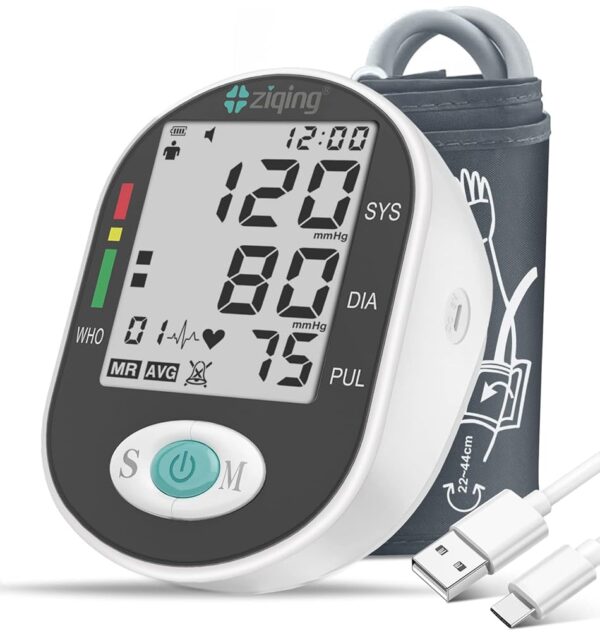
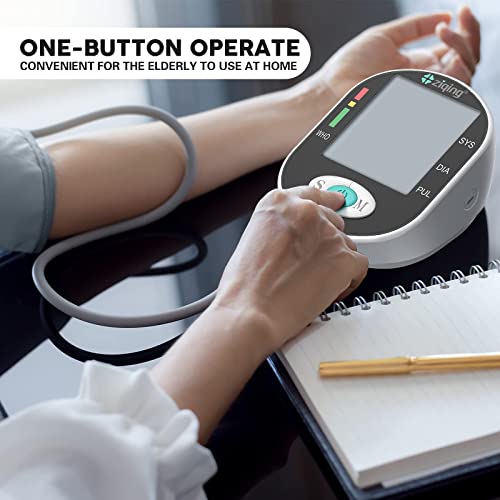
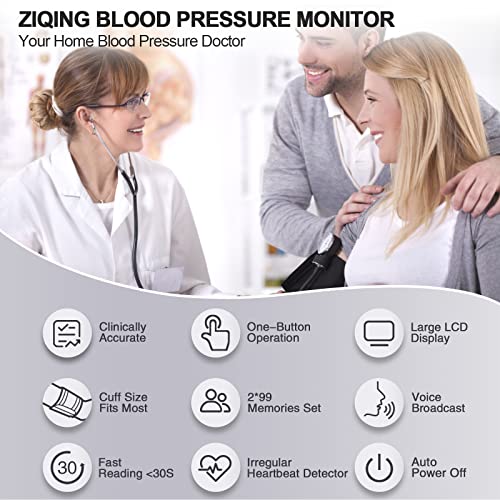
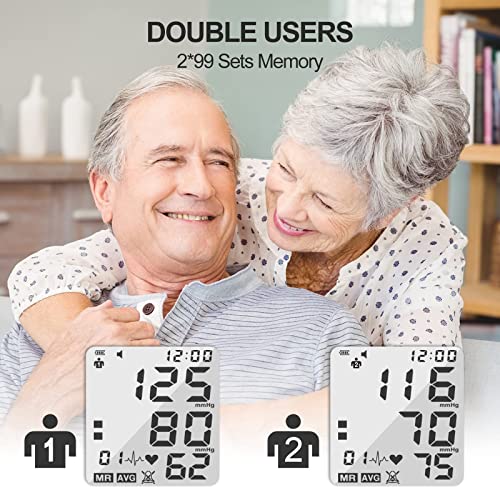
The published package is a fully automatic upper arm monitor with a large LCD, a voice broadcast that can be turned off through the manual, one button operation, a measurement stated to complete in about half a minute, and two profiles storing 99 readings each. The box contains the monitor, the arm cuff, a Type-C cable and a user manual. Published weight is 251 grams and dimensions are 5.59 by 4.44 by 2.75 inches.
Nothing in the listing describes Bluetooth or an app, so the 99 readings per user held on the device are your complete record. The voice function makes this a reasonable candidate for someone whose eyesight makes a display difficult, and being able to switch it off keeps it usable for everyone else.
Using it correctly
Home readings are useful when the routine never changes. Sit with your back supported and feet flat on the floor, rest quietly for several minutes before starting, support the arm at roughly heart level, fit the cuff on bare skin rather than over a sleeve, and stay still and silent while the measurement runs. Take readings at the same times each day so they can be compared with one another. Follow the manual for the exact fitting the device expects, and follow any protocol your clinician has given you in preference to a general routine.
With two profiles, each person must select their own before measuring, or the record becomes a mixture of two people’s numbers and is useful to nobody.
This listing publishes no irregular heartbeat detection, no hypertension indicator and no color banding. The device measures, reports and leaves the interpretation where it belongs. If irregular heartbeat flagging is something you want, devices such as the Konquest KBP-2704A publish it and this one does not.
What the accuracy claims actually say
The first bullet makes two claims and they are not equally useful.
The first is specific: ZIQING states that each product is calibrated before delivery and that, following the correct measurement method, the error is within 3 mmHg. A numerical error specification is more informative than an adjective, because it is a claim that could in principle be checked, and it is more than most listings at this price offer. What is missing is who checked it. No validation protocol is named, no independent validation body is cited, and there is no statement about FDA clearance or registration.
The second claim is not useful at all: the bullet states the device has been highly recommended by doctors and hypertensive patients. No doctor is named, no institution, no survey, no source. That is a marketing sentence with the shape of an endorsement and none of the substance, and it should carry no weight in your decision.
Compare both with the iHealth Track, which names the ESH 2010 protocol outright. If validation status matters to you, the device listings published by validation programs and the FDA’s own databases are the places to check rather than a product page. We do not test devices and we will not describe any monitor as accurate, clinically accurate or medical grade in our own voice.
Feedback is recorded at 4.3 out of 5 across 1,766 ratings, which measures buyer satisfaction rather than measurement performance. No manufacturer model number appears anywhere on the listing, so this page previously used the Amazon catalog identifier as though it were one. Quote the product title when contacting the seller. ZIQING lists other devices here including a wrist model, with the positioning caveats that apply to all wrist devices.
What the listing does not publish
Beyond validation, this listing publishes no maximum inlet or storage temperature, no expected service life and no replacement cuff option. It also gives no figure for how long a set of AAA batteries lasts, which matters on a device you may be running from batteries because none were supplied.
Who should buy it and who should not
Buy it if you want a wide cuff, spoken results and clear power options at a low price, your upper arm measures between 8.7 and 17.3 inches, and you are happy to supply your own batteries or run it from USB. Do not buy it if you need a model number for support, if you want irregular heartbeat flagging, or if a named validation protocol matters to your decision. Further options sit in the mixed shortlist section alongside unrelated pressure products.