Description
Who This Monitor Is For and What It Settles
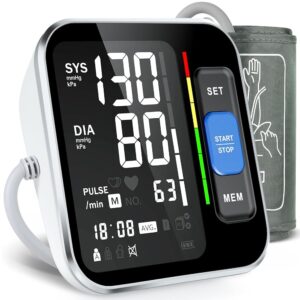
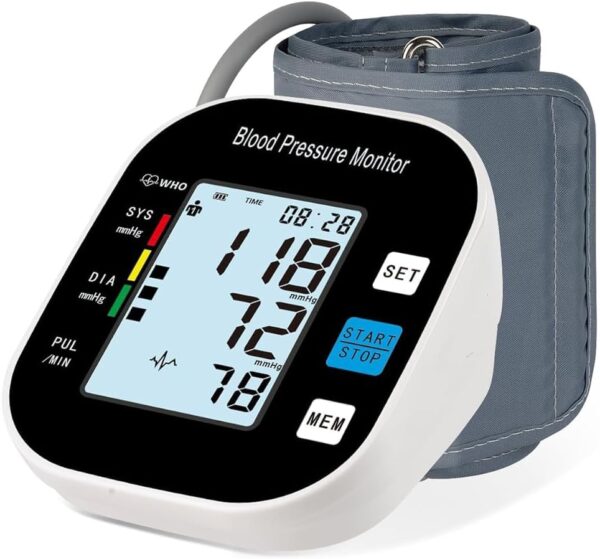
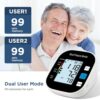
The Laukum BSX583 is an upper arm blood pressure monitor with an enlarged backlit screen, two user banks of 99 readings, an automatic shutoff and a storage bag. It is aimed explicitly at middle-aged and older users, with the display as the selling point, and it carries a stated three year warranty, which is longer than almost anything else on this shelf.
Before the specifications, the standing point. This review describes a device and its published data. It does not interpret readings, it does not tell anyone what their numbers mean, and a home blood pressure monitor does not replace professional medical care.
The Cuff Range Is Published Two Ways, Ten Centimeters Apart
Cuff circumference decides whether a monitor works for a given arm, because a cuff that is too small or too large produces wrong readings on hardware that is functioning perfectly, and nothing on the display warns you. This listing gives two answers and the gap between them is the largest in this batch.
The structured band size field says 22 to 32 cm. The final bullet says the cuff has a circumference of 22 to 42 cm. Ten centimeters is roughly four inches of arm, and it is the difference between a cuff that covers most adults and one that stops well short of average. A buyer whose arm measures 36 cm would be inside the range on one reading of this page and outside it on the other, with no way to tell which from the listing.
Measure the bare upper arm at the midpoint between shoulder and elbow and put the question to the seller in writing before ordering. Do not assume the more generous figure. If the answer does not come, buy a monitor that publishes one number, or start from a documented replacement cuff such as the Alcarefam BD42 and work back to a compatible unit.
What Is Actually Documented
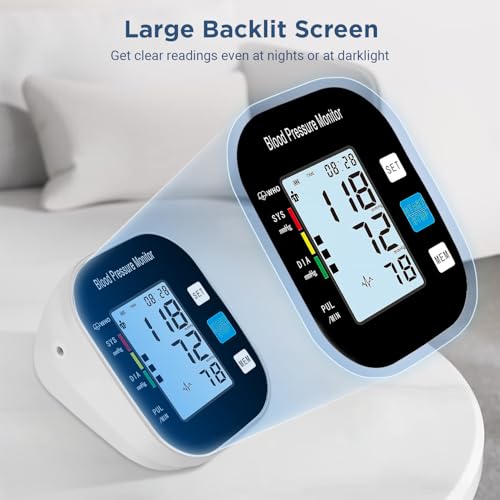
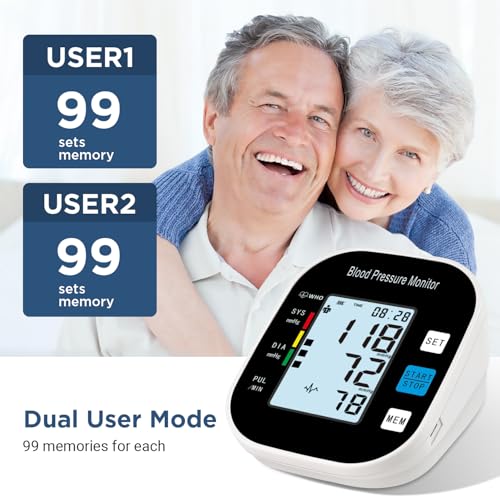
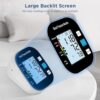
Memory holds 99 readings for each of two users. The screen is described as an extra large backlit LCD with large numbers, readable in low light, though no digit height is published so the character size has to be judged from photographs. Operation is one button, and the device powers itself off after 60 seconds of inactivity.
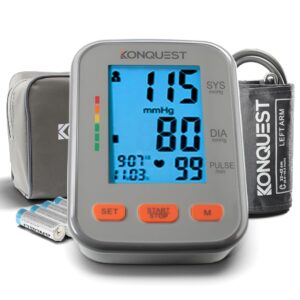
Power is four AA 1.5V batteries, included, which the packing bullet states plainly. That is worth noting because two other listings for this same model designation in this catalog describe a Type-C cable and no AA cells, so the power arrangement varies from page to page even where the model number does not.
The unit measures 5.2 by 4.41 by 2.78 inches at 1.08 pounds, and the box contains the monitor, the cuff, a manual, the batteries and a storage bag.
The cuff wrapping alert
One bullet describes an intelligent system that detects an irregular heart rate and prompts the user to adjust cuff placement. Both parts need stating precisely. A cuff placement prompt flags an application problem the sensor can see, such as a cuff that is loose or slipping, which is useful; it cannot confirm the cuff is the right size or at the right height. And an irregular heart rate indicator flags that the device saw an irregularity during that measurement. It does not identify what the irregularity is, it does not diagnose anything, and it cannot separate a genuine finding from an artifact caused by movement or a poorly placed cuff. Note it and raise it with a clinician.
The Claim That Goes Too Far
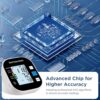
The second bullet says the monitor uses the most advanced chip technology to ensure accuracy, and that the precision of the data helps users have a more objective understanding of their health status, enabling them to take necessary measures to prevent diseases.
The last clause is the problem and we are naming it rather than repeating it. A home blood pressure monitor measures pressure and pulse and stores the numbers. It does not enable anyone to prevent a disease, it does not assess health status, and decisions about what any measurement means or what to do next belong with a clinician who knows the person. Whatever this device measures, no part of it constitutes prevention.
The accuracy language is the seller’s too. We do not test devices and we do not verify manufacturer claims. No accuracy figure, no tolerance, no validation protocol and no regulatory clearance appears anywhere in the data, and imported chip is a provenance statement rather than a performance one. Validation status can be checked independently through the registries medical bodies maintain.
Using It Correctly
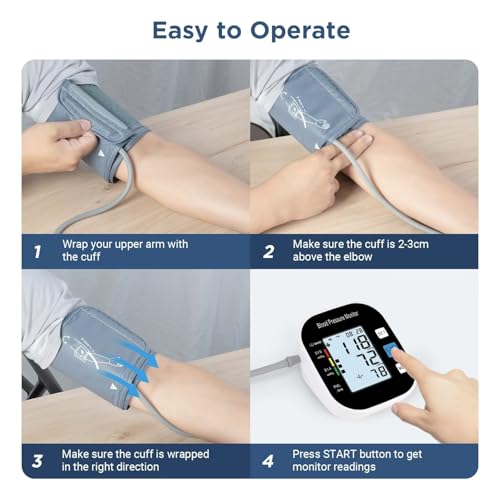
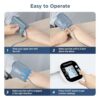
Fit the cuff to the bare upper arm rather than over a sleeve, with the tubing running down the inside of the arm toward the palm and the lower edge roughly an inch above the elbow crease, closed so one finger slides underneath with mild resistance. Sit with the back supported and both feet flat on the floor, rest the arm so the cuff sits level with the heart, and stay silent and still through inflation and release.
Rest for several quiet minutes before the first reading rather than measuring straight after activity, and use the same arm at the same times each day so the record compares with itself. Set the user bank before the first measurement so the two logs of 99 stay separate.
Duplicates and Data Quality
The description field is empty, so five bullets and a specification table carry everything. Nothing is published about the pressure or pulse measurement range, tolerance, averaging across readings, digit height or battery life.
The BSX583 designation appears repeatedly in this catalog under two brand names. Within Laukum there is a second BSX583 page and a third, and the same chassis also appears as the Maraawa BSX583. Those pages carry different bullet copy, different power arrangements and different cuff figures. One model number, several product pages, and no safe way to read a specification from one onto another.
The point that outranks the rest: this device produces numbers and stores them. It does not diagnose, it does not prevent anything, it does not replace professional medical care, and nothing in this review is guidance about anyone’s health. The full selection sits in our blood pressure monitor category.
Who Should Buy It, Who Should Not
Buy it only after the seller has confirmed the cuff range in writing and it covers your arm, and if a large backlit screen, two banks of 99 readings and a three year warranty are what you want. Skip it if you are buying blind between a 32 cm and a 42 cm cuff, if you need documented accuracy or validation, if you need averaging across readings, or if a bullet promising disease prevention is the kind of claim that should end a purchase.