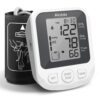
Description
Who the Alcedo ABP-2005-1 is for, and what it settles
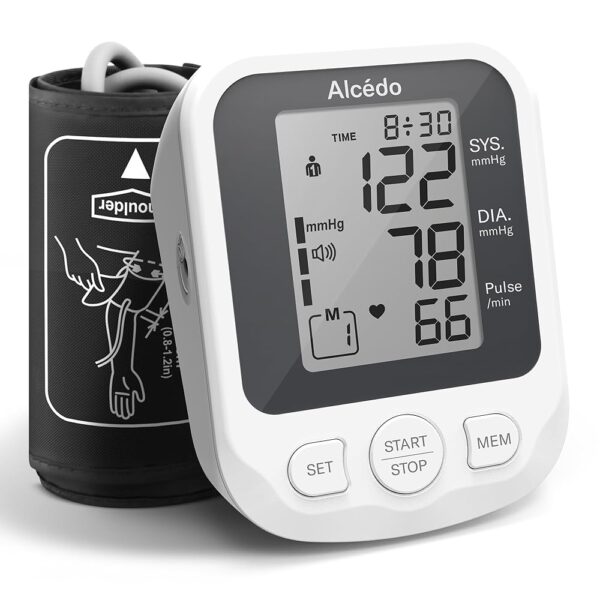
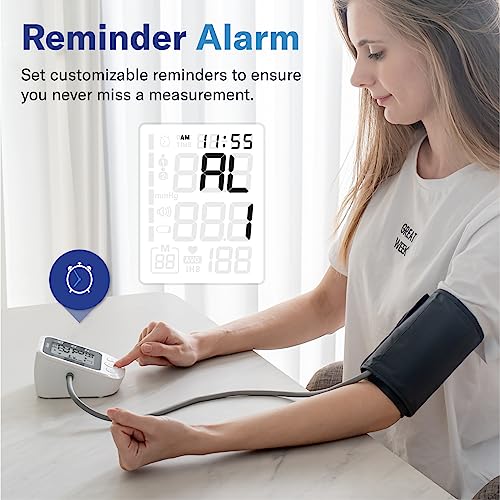
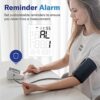
The ABP-2005-1 is Alcedo’s fuller featured upper arm monitor, and the feature that separates it from almost everything else at this level is an alarm reminder. The device can be set to prompt you to take a reading. That sounds trivial until you consider that the most common failure of home monitoring is not a bad device, it is a good device that stops being used after the second week. If a clinician has asked you for a fortnight of readings and you know yourself well enough to doubt you will remember, that alarm is the specification that matters.
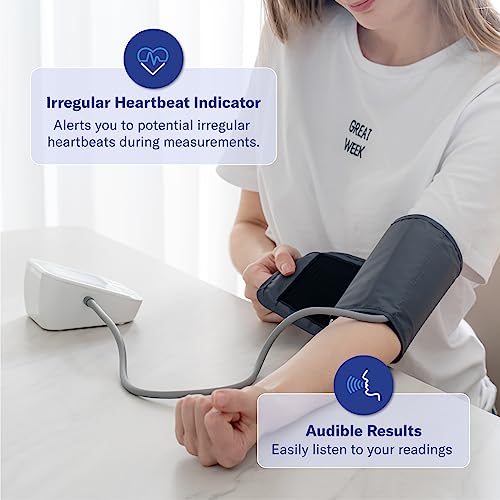
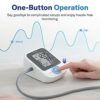
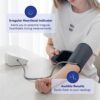
Around it sits a familiar package: two user profiles with 120 readings each, a spoken result with adjustable volume, automatic averaging of three measurements, cuff position and movement detection, and a wide range cuff. The listing also states the product is eligible for FSA and HSA purchase, which is a statement about a spending category rather than about the device.
None of that makes it a source of medical advice. The device measures and records. It does not diagnose, it does not replace professional medical care, and the readings it produces are for a clinician to interpret alongside everything else they know about you.
The specifications that matter
Cuff range
Alcedo publishes 8.7 to 16.5 inches of upper arm circumference, and the separate band size field agrees with the upper figure. That is a genuinely wide band, wider at the top than the 15.7 inch ceiling Alcedo uses on its own AE176 model, so if two models from the same brand have been confusing you, that is the difference to focus on.
Measure the midpoint of your upper arm with a soft tape, arm relaxed at your side, and buy on that number. Cuff fit is the single most consequential variable a home user controls. A band too small for the arm, or one so large it cannot be seated evenly, will change the numbers on a monitor that is working exactly as it should.
Averaging and self checking
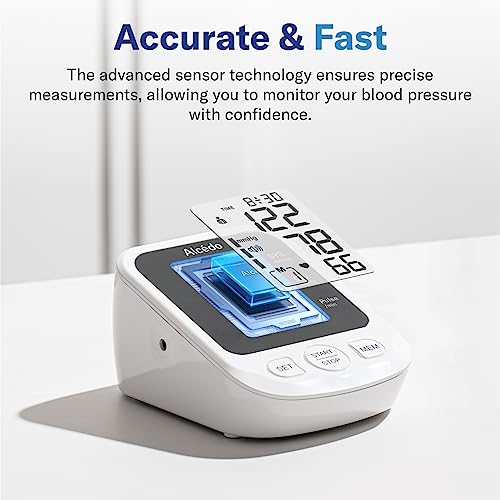
The device automatically averages three values into one result, which is a more defensible way to take a home reading than acting on a single measurement. It also carries cuff positioning and movement detection, showing a symbol on the display when either goes wrong. Those two features address the two most common causes of a strange reading at home. The listing does not state how far apart the three measurements are spaced, so if a clinician has specified a routine, confirm the interval with Alcedo.
Voice and alarm
The talking function announces systolic, diastolic and pulse after each measurement, with an adjustable volume. The listing does not name the language. The alarm is described as a reminder to measure, with no detail on how many reminders can be set or whether they differ per user profile, so treat the feature as present but unspecified.
Power and the box
Four AA batteries are specified as required and included, and the complete bundle bullet also names a Type-C cable, a cuff, a quick start guide, a full manual and a storage bag. Note that the structured included components field lists only a battery, a bag and an instruction manual, with no cuff and no cable. Those two accounts do not match. A monitor shipping without its cuff would be unusable, so the structured field is plainly incomplete rather than accurate, but if the Type-C cable is part of why you are buying, confirm it separately.
Contradictions and gaps
The published dimensions are 3.94 by 3.94 by 3.94 inches, three identical figures, which is a placeholder rather than a measurement of a device with a screen on one face. The listed weight of 1.1 pounds is plausible.
The manufacturer field names BIOLAND TECHNOLOGY LTD. The manufacturer field on the AE176 names a different company entirely. Two monitors sold under the same brand, made by two unrelated factories, is common in this category, and it means that experience with one Alcedo tells you less about another than you would assume. Our Alcedo B21 review covers a third variant in the same family.
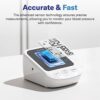
The opening feature bullet claims reliable and accurate readings from professional grade sensors. That is Alcedo’s phrasing. Professional grade is a marketing term with no fixed meaning, no validation protocol is named anywhere in the listing, no clearance number is quoted and no accuracy tolerance is published. We are not repeating any of it in our own voice. If validation status matters to your purchase, and for a device you plan to rely on it should, it can be checked independently through the lists that medical societies publish.
Using it correctly
Sit for five minutes before measuring, back supported, both feet flat on the floor, legs uncrossed. Bare the upper arm rather than rolling a sleeve, since a rolled sleeve acts as a second cuff. Put the lower edge of the band about an inch above the elbow crease with the artery marker over the inside of the arm, and tighten it until two fingers slide underneath with mild resistance. Rest the arm so the cuff sits level with your heart.
Let all three measurements in the averaging sequence complete. Stopping after one because it looks reassuring, or because it looks alarming, defeats the point of having the feature. If the positioning or motion symbol appears, reseat the cuff or sit still and start again rather than logging a spoiled reading.
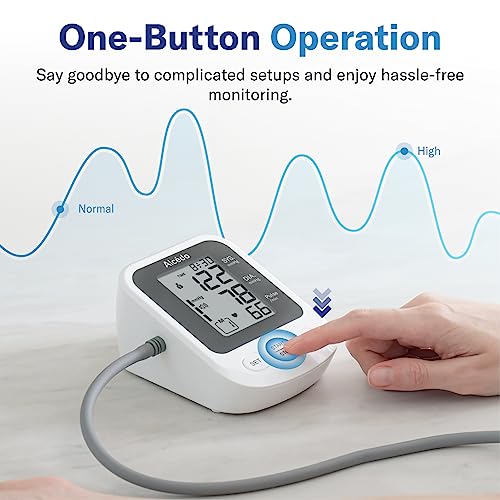
Set the alarm for a time you are reliably at home and unhurried, and use the same time every day. Confirm the correct user profile is selected before pressing start. Keep a short handwritten log with dates and times alongside the on device memory, because that is the format most clinicians want to look at, and bring it to appointments rather than reciting numbers from memory.
Alternatives worth comparing
If the spoken result rather than the alarm is what you are buying, the Abesee upper arm monitor covers the same ground with a slightly narrower cuff, and the AILE 111 offers a voice readout that can be switched off entirely. If you already own a monitor and only need a replacement band at this size, our AILE CR009 cuff review is the place to start. The wider home blood pressure monitor section puts these next to each other so cuff ranges can be compared before features are.
Who should buy it, and who should not
Buy the ABP-2005-1 if your arm measures inside 8.7 to 16.5 inches, if two people need separate timestamped records, and if a reminder alarm is the thing most likely to turn an intention into a habit. Skip it if you need app based history, if you want a listing whose packing list agrees with itself, or if the phrase professional grade sensors was doing the persuading, because no number in this listing stands behind it. What the device produces are readings, and readings are the start of a conversation with a clinician rather than the end of one.