

Description
Who This Cuff Is For and What It Settles
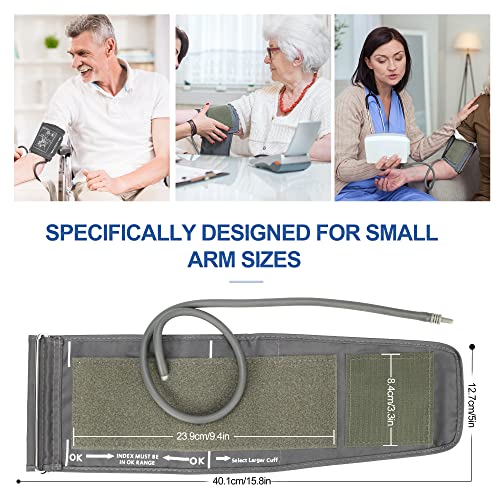
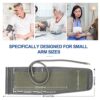
This is a replacement cuff, not a monitor, and the product title says so plainly. The AQESO small cuff fits upper arms of 5.9 to 9.5 inches, which is below the lower bound of almost every cuff supplied with a home blood pressure monitor. Most standard cuffs start around 8.7 inches. This one starts nearly three inches lower.
That is a real and underserved gap. A cuff that is too large does not squeeze enough, one that is too small squeezes harder than it should, and neither failure shows as an error. Silent failure is why cuff size outranks every other variable a home user controls, and why a slim armed person using the cuff from the box may be logging numbers a properly fitted arm would not produce.
This review describes an accessory and its published data. It does not interpret readings, and neither a monitor nor a cuff replaces professional medical care.
The Specifications That Matter
The circumference range is published consistently in four places: the product title, the structured band size field, the included components list and the lead bullet. All four say 5.9 to 9.5 inches. That kind of agreement is uncommon on this shelf and it is the main reason to trust the figure.
Measure the bare upper arm at the midpoint between shoulder and elbow before ordering. If your measurement sits between 9.5 inches and whatever your monitor’s supplied cuff starts at, neither accessory is right and a standard cuff in the middle band is what you want. The same brand also sells a two cuff set pairing this small size with an extra large, which is worth considering if a household spans both ends.
Connectors and compatibility
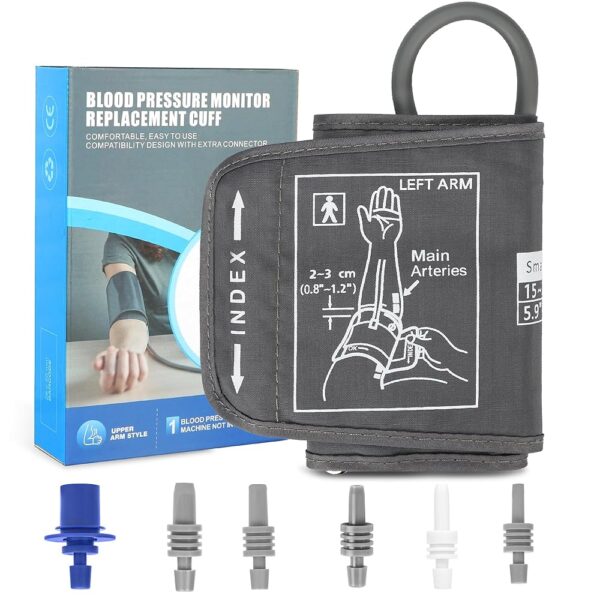
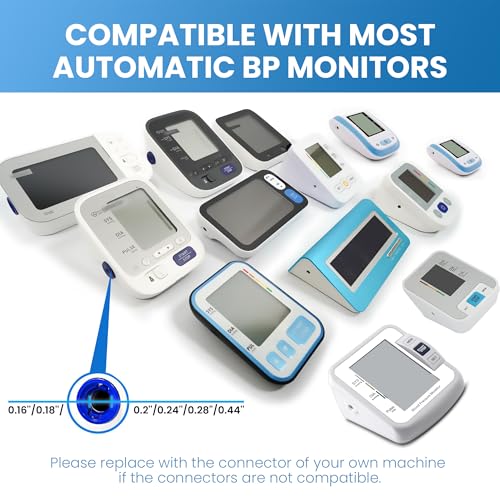
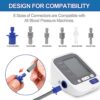
Six connector sizes ship in the box with the 5 mm fitting already installed, and the connector part is removable so the original connector from your own cuff can be transferred if none of the six matches. Six sizes is the widest connector spread among the replacement cuffs in this catalog.
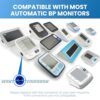
Compatibility is claimed as a universal fit for most models of upper arm automatic monitors, with the title naming Omron and other brands. Be clear about what a connector match buys you: a fitting that physically connects is not the same as a cuff a monitor manufacturer has validated with its own hardware, and a bladder with different dimensions or inflation characteristics can shift results even when the connection is mechanically correct. Check your monitor’s fitting against the six sizes, and check whether your monitor’s maker sanctions third party cuffs, before relying on readings taken with one.
Materials and the Placement Note
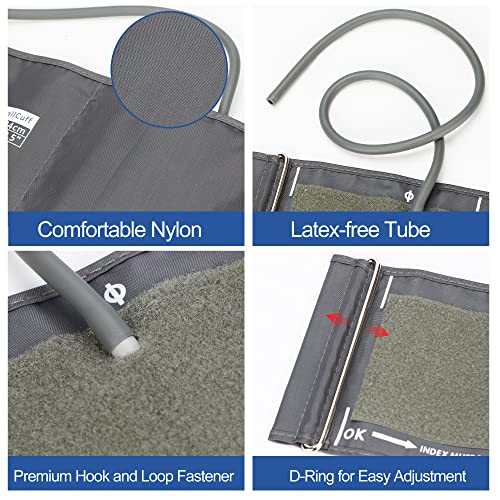
The cuff is 210 denier nylon over a hypoallergenic TPU airbag, described as latex free, abrasion resistant, non-toxic and easy to clean, with a hook and loop fastener and an integrated D-ring. It weighs 4.66 ounces and packs to 6 by 4 by 1.6 inches.
The closing bullet is the most useful content on the page. It instructs the buyer to place the cuff about one inch above the bend of the elbow, to ensure the air tube falls over the front center of the arm, to align the artery mark directly over the brachial artery, and to pull the end of the cuff so it sits evenly tight. That is correct and specific, and on a small cuff it matters more than usual, because a slim arm gives less margin for a misaligned artery marker.
One phrase in the lead bullet is the seller’s rather than ours. It says the integrated D-ring lets the cuff be self-adjusted for greater accurate readings. A D-ring genuinely does make one handed wrapping easier, which is a real benefit, but a cuff contains nothing that can be calibrated, and describing an easier wrap as an accuracy feature overstates what it is.
Who the Small Size Is Actually For
The lead bullet describes the cuff as ideal for women, children, or individuals with thinner arms. Two of those three are straightforward: adults with slim upper arms are exactly the group standard cuffs fail, regardless of who they are.
Children are a different matter and the listing should not be read as guidance there. Choosing a cuff for a child, and deciding whether to measure a child’s blood pressure at home at all, are decisions for the child’s clinician rather than something to settle from a product page. Purpose-made pediatric options such as the Elera pediatric cuff exist and are the right thing to raise with them, alongside the arm measurement itself. The structured age range field on this listing says adult, which does not match the bullet’s mention of children, and that discrepancy is worth noticing.
Using It Correctly
Fit the cuff to the bare upper arm, not over a sleeve, following the placement instructions above. Sit with the back supported and both feet flat on the floor, rest the arm so the cuff is level with the heart, and stay silent and still through inflation and release. Rest for several quiet minutes before the first reading rather than measuring straight after activity, and use the same arm at the same times each day.
After changing to a correctly sized cuff, treat the log as starting fresh rather than continuing. A different cuff is a different measurement setup, so readings taken before and after are not directly comparable, and on a slim arm the change may be noticeable. Note the date of the change and mention it to a clinician rather than folding both sets of numbers into one series.
Limits and Data Quality
The description field is empty, so six bullets and a specification table carry everything. Nothing is published about bladder dimensions, which is the figure that actually governs whether a cuff suits a given arm, and nothing about pressure rating or expected service life. There is no compatibility list naming specific monitor models.
The display type field says digital, on an item with no display of any kind, and the included components field is corrupted with raw JavaScript scraped from the retailer’s page ahead of the actual list. Both are import defects rather than hardware faults, but a cuff listing claiming a display works against its own title.
The previous copy on this page also claimed reliable accuracy tested and verified against professional medical devices. Nothing in the listing supports a comparison of that kind, we do not test devices, and that statement has been removed rather than repeated.
To restate the part that carries the most weight: a cuff is a measuring accessory. It does not diagnose, it does not replace professional medical care, and no reading taken with it should be interpreted at home. If readings shift noticeably after fitting a correctly sized cuff, that is information for a clinician rather than a conclusion to draw yourself.
Alternatives Worth Comparing
Among other small cuffs here, the CareLiving small cuff and the Medhome small arm cuff are worth comparing on published range and connector count rather than on size labels, since small means different things on different listings. The full selection of cuffs and the monitors they attach to sits in our blood pressure monitor category.
Who Should Buy It, Who Should Not
Buy it if your upper arm measures between 5.9 and 9.5 inches, your monitor’s hose fitting matches one of the six connectors or your original connector can be transferred, and you have checked that your monitor’s maker does not object to a third party cuff. Skip it if your arm is above 9.5 inches, if your monitor manufacturer sells its own small cuff, if you need published bladder dimensions, or if the cuff is for a child and you have not yet raised sizing with their clinician.