


Description
Who the BESTEK arm monitor is for, and what it settles
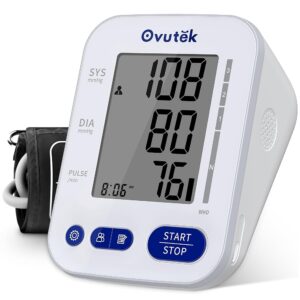
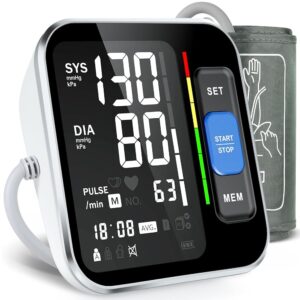
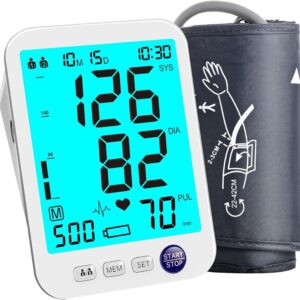
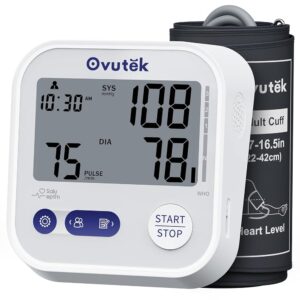
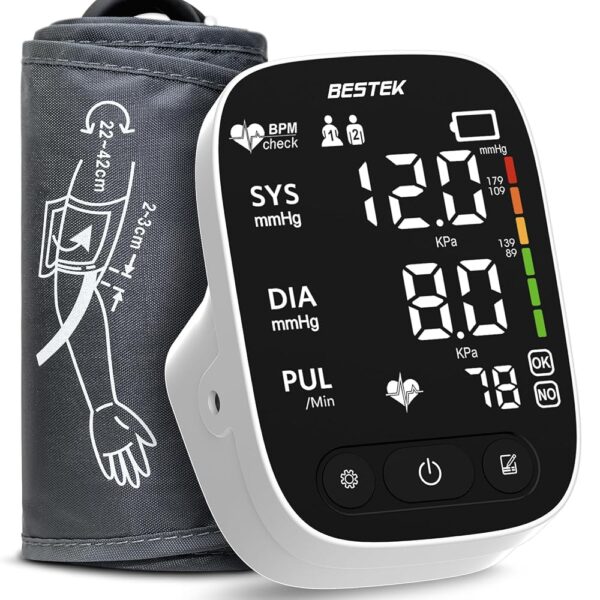
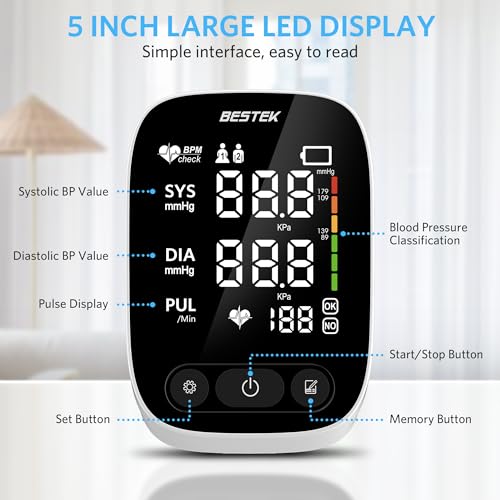
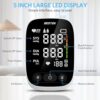
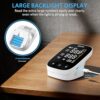
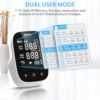
This is an upper arm monitor built around accessibility. One button starts it, a voice announces the result and gives guidance as it goes, and a high contrast LCD shows systolic, diastolic and pulse in large digits. Two user profiles keep records apart. It weighs 12.32 ounces and comes with a cable.
The intended buyer is clear enough: somebody who cannot comfortably read a small screen, or who would rather hear the result than squint at it, and a household where two people will share one machine. For that job the feature set is right.
The listing around it is another matter, and much of this review is about what it claims and what it leaves out. Before any of that: this device measures and records. It does not diagnose, it does not replace professional medical care, and its readings are one input for the clinician who manages your health.
The claims we will not repeat
The opening feature bullet states that the monitor delivers medical grade accuracy, that it has an error margin of just plus or minus 3 mmHg, and that it provides reliable, clinical grade data suitable for professional health management.
Take those apart. Medical grade and clinical grade are marketing phrases with no fixed regulatory meaning, and we are not applying either to this or any device in our own voice. The plus or minus 3 mmHg figure is a specific number and BESTEK is entitled to publish it, but it describes how closely the pressure sensor tracks a reference pressure. It is not the same thing as a validated result measured on people, which is what a validation protocol establishes and what actually determines whether a home monitor can be relied on.
No validation protocol is named anywhere in this listing. No clearance number is quoted. No study is referenced. So the sentence about professional health management rests on nothing checkable. Validation status for any home monitor can be looked up independently through the lists that medical societies publish, and if the accuracy claim is why you are considering this device, that lookup is the thing to do before ordering.
The cuff, and a range that disagrees with itself
The product title says the cuff is adjustable from 9 to 17 inches. The structured band size field says 16.5 inches, a single figure with no lower bound and half an inch short of the title.
Half an inch sounds like nothing until your arm measures 16.8 inches, at which point one published figure says the cuff fits you and the other says it does not. Cuff fit is the largest variable a home user controls: a band that has run out of adjustment, or one so oversized it cannot be seated evenly, changes the numbers on a monitor that is working correctly. Measure the midpoint of your upper arm with a soft tape, arm relaxed at your side, and if your number lands between 16.5 and 17 inches, get a written answer from the seller before ordering rather than picking whichever figure suits.
No centimeter equivalent is published anywhere, and no alternative cuff size is offered, so an arm outside the range means a different machine.
What the listing does not say
Memory depth is the gap. The listing states that two user profiles are supported and that each user’s history is stored separately, which is useful, and then never says how many readings each profile holds. Not in the bullets, not in a specification field. Competing machines in this catalog publish 90, 99, 120 and higher, and the number decides whether the device is fit for a log kept over months. Ask before ordering.
There is no model number either. Not in the title, not in a specification field, nowhere. For a device you may later need a replacement cuff or support for, that is a genuine inconvenience.
The contents field lists a cable and nothing else. Not the monitor, not the cuff, not batteries. Since a monitor shipping without its cuff would be unusable, that field is plainly incomplete rather than accurate, but it also means the power arrangement is undocumented: the power source reads battery powered, no battery type or count is given, no wall adapter is named, and the presence of a cable is never explained. Our own previous description of this product claimed dual power from battery or USB. Nothing in the listing states that, so the claim has been removed rather than carried forward.
No irregular heartbeat flag is mentioned, no averaging mode is described and no positioning check is named. Several cheaper machines in this catalog publish all three.
Where this design comes from
The manufacturer field names Alicn Medical Shenzhen, which also appears behind the machine in our Greetmed AES-U522 review, a device with a comparable feature list sold under an entirely different brand and with a fuller specification sheet. Greetmed’s other machine in this catalog, covered in our FC-BP111 review, comes from a third factory again.
Shared manufacturing is ordinary in this category and none of it reflects on the hardware. What it means practically is that BESTEK here is a label rather than a manufacturer with a record you can research, and that the difference between two listings on the same platform is often how carefully the specification form was filled in rather than what is inside the box.
Using it correctly
Rest for five minutes before measuring, sitting with your back supported, both feet flat on the floor, legs uncrossed. Bare the upper arm rather than pushing a sleeve up, since a rolled sleeve acts as a second cuff. Place the lower edge of the band about an inch above the elbow crease with the artery marker over the inside of the arm, tightened so two fingers slide underneath with mild resistance, and rest the arm on a table so the cuff sits level with your heart. Stay quiet and still until the result appears.
If the device is for someone with limited vision, sit with them once and work through the volume control and the user profile switch together, rather than leaving both to be discovered. Confirm the correct profile before pressing start.
Because the memory depth is unknown, write every reading down with the date and time from the first day. A short paper log is the format a clinician can scan in seconds, and it is the only record you can be certain the device will not overwrite.
Alternatives worth comparing
For a voice equipped machine with a published memory figure, a reminder alarm and a cuff range stated in two places, read our Alcedo ABP-2005-1 review. Our Abesee upper arm review covers a similar talking machine, and the Omron BP5100 is the conservative option from a manufacturer whose validation record is easy to look up. Our home blood pressure monitor section lists them with cuff ranges attached.
Who should buy it, and who should not
Buy the BESTEK if a spoken result and a high contrast screen are what will make a monitor usable for the person who needs one, and if their arm sits comfortably inside the range rather than near its disputed upper edge. Skip it if you need to know how many readings it stores, if you want a model number for future parts, or if the medical grade and clinical grade language is doing the persuading. Neither phrase means anything specific, and no number in this listing stands behind them.