
Description
Who the CHANI A01 is for
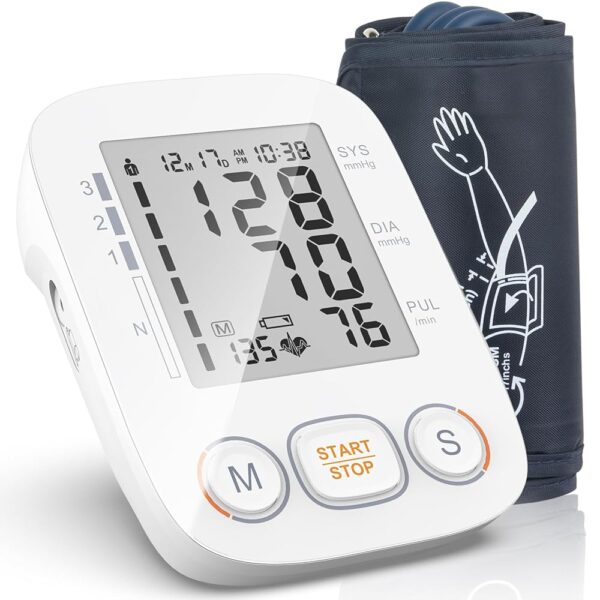
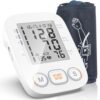
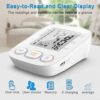
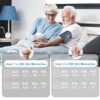
This is an upper arm automatic blood pressure monitor with a large display, one button operation and separate memories for two people. The manufacturer is recorded as ShenZhen GoodlyMed Technology, and the product is sold under the CHANI name. It records numbers for a clinician to review. It is not a diagnostic device and it does not replace professional medical care.
The decision it settles is narrow: whether a low cost device with a wide cuff and a big screen is enough for a household that wants readings written down rather than synced. There is no app and no wireless connection here, so what you see on the display is what you get.
Cuff range and the specifications that matter
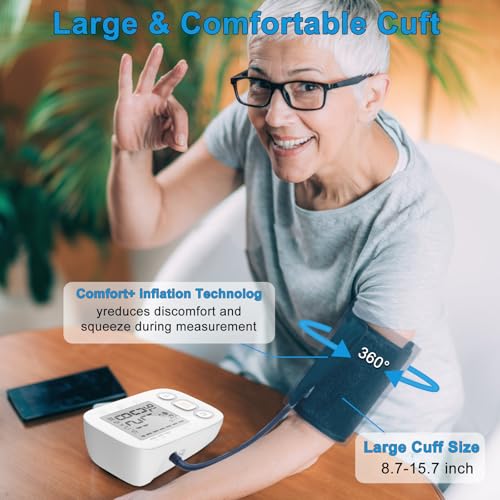
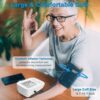
The listing states an adjustable arm cuff covering 8.7 to 16.5 inches, given as 22 to 42 cm, described as fitting most adults. That is a genuine wide range cuff and it is the most useful figure on the page. Measure your bare upper arm at the midpoint between shoulder and elbow with a tape measure and check it before ordering.
Cuff fit decides whether a reading represents anything. One that is too small or too large produces a number that does not match what the same device would record on a properly fitted arm, and nothing on the display warns you. Note that our stored attribute set for this product contains no band size field at all, so the range above comes from the listing text rather than from the specification table. If you are near either end of it, confirm with the seller.
Three different memory figures, none of which agree
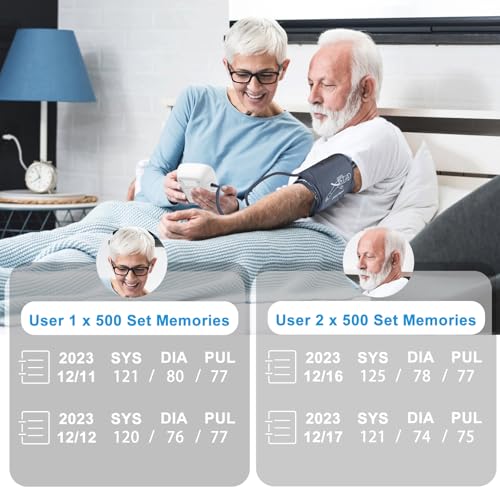
This listing cannot decide how much it stores. The product title advertises 2 times 500 readings of memory. The feature text states that each of two users can store up to 199 readings. The product description states that it stores 99 readings. Those are three separate claims about the same specification and they cannot all be true.
We are not going to pick one. If memory depth is what decides your purchase, ask the seller which figure applies to the unit currently being shipped. In practice, a monitor without an app is limited by whatever is on the device, so the difference between 99 and 500 is the difference between a few months and a few years of daily readings. It is a material question rather than a pedantic one.
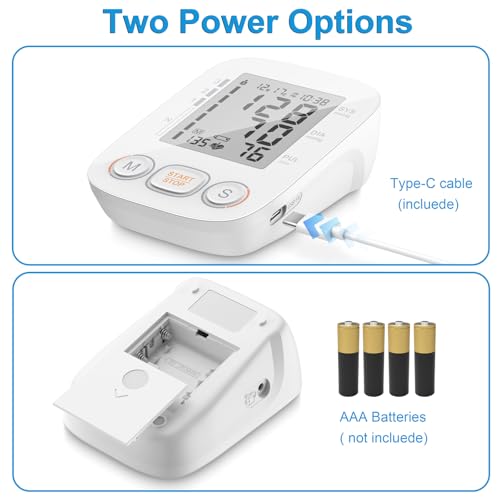
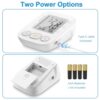
The included components are the monitor, the cuff and a USB cable. The stored power source field reads battery powered, which sits oddly with a USB cable in the box and no batteries listed, so the power arrangement is another thing to confirm. The stored product dimensions of 4 by 2 by 3 inches look rounded rather than measured.
Using it correctly, and what the readings are for
Sit with your back supported and your feet flat on the floor rather than crossed, and rest quietly for several minutes before you measure. Put the cuff on a bare upper arm, not over a sleeve, and support the arm so that the cuff sits at about the height of your heart. Do not talk during the measurement. Use the same arm at about the same time each day, because a consistent series is what makes home readings worth collecting at all.
The output is a record for someone else to read. What a reading means, whether a pattern across readings matters, and whether anything about your care should change are questions for a healthcare professional who knows your history and your medication. This device does not replace professional medical care, and no reading from it should be used to start, stop or adjust treatment on your own.
The accuracy claim, and what is behind it
The listing states that the monitor uses an upgraded chip, high precision measurement and advanced algorithms, that each unit is individually calibrated, and it describes the resulting accuracy in superlative terms. We are not repeating that description, and we do not test devices, so we will not tell you in our own voice that this or any monitor is accurate.
What is missing is the thing that would make the claim checkable. No independent validation protocol is named, no assessing body is named and no tolerance figure in mmHg is given. Home blood pressure monitors can be assessed against published protocols run by independent organizations, and where a model has been through one, the protocol is normally identified. A manufacturer stating that it calibrates its own units before shipping is not the same thing. If independent validation matters to you, check whether this model number appears on an independent validation listing before ordering.
Limits and gaps
No irregular heartbeat detection is described anywhere in this listing, so if you want a device that flags an irregular rhythm for a clinician to consider, this one does not claim to do that. There is no app, no Bluetooth and no averaging function described, so a short series of readings has to be averaged by you. Battery life is not published, no warranty term appears in the record we hold, and no display dimension is given beyond the word large.
A note on our own earlier summary of this product, which described the readings as exceptionally accurate. Nothing in the listing supports that, we did not measure anything, and we have removed it.
Two habits are worth adopting with any monitor that lacks an averaging function, and this one lacks it. First, take two or three measurements a minute apart rather than one, and write all of them down. Single readings vary for ordinary reasons and a short series is far more informative than one number. Second, note the time and the arm alongside each reading. A column of numbers with no context is much harder for a clinician to use than a short series taken the same way each day.
One more practical point about devices at this end of the market. A blood pressure monitor is a pump, a valve and a pressure sensor, and all three drift with age. Established manufacturers publish a recommended recalibration or service interval and offer a route to have it done. Nothing in this listing states an interval, names a service route or gives a warranty term, so treat the device as having an unknown working life. That is not a reason to avoid it, but it is a reason to keep the receipt, and a reason to compare its readings against a clinic measurement occasionally rather than assuming it will stay consistent for years.
Alternatives worth comparing
If the wide cuff is what attracted you, the KIKEANG monitor supplied with two cuffs and the AlphaMed U80A, which also ships with two cuffs extend the range further. For other large display devices at this level, the AILE 111 and the SDUNW upper arm monitor are comparisons. If your arm is above the range, an XL replacement cuff is worth checking for compatibility. Our index of home monitors and cuffs publishes the cuff range each listing states.
Who should buy it and who should not
Buy it if you want a simple wide cuff monitor with a large screen for two people, and you will keep your own written record. Do not buy it if memory depth matters, because the listing states three different figures, and do not buy it if you want irregular heartbeat flagging, app syncing or an accuracy claim you can check. Take your readings to a clinician.