Description
What the CONTEC ABPM50 actually is
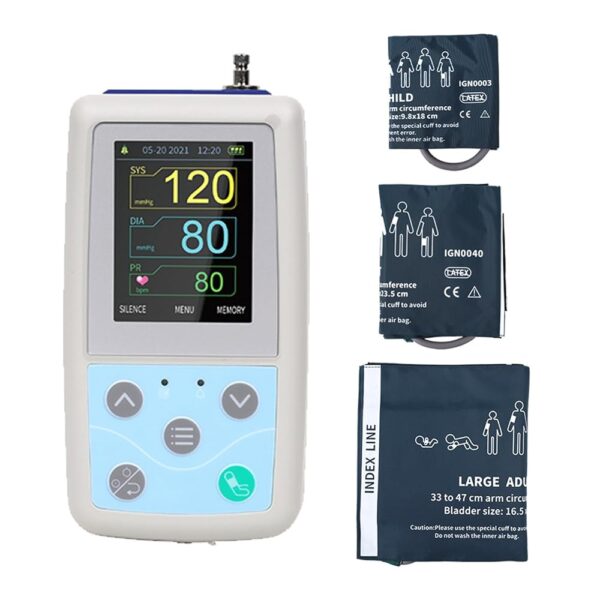
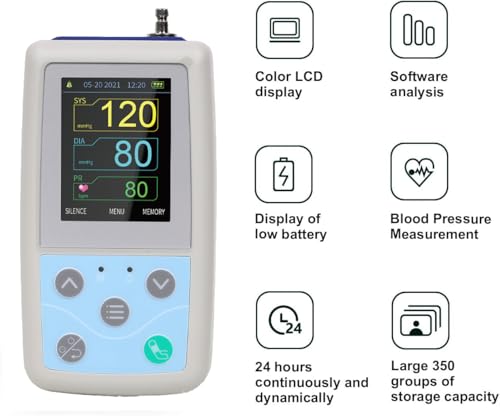
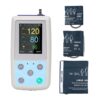
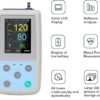
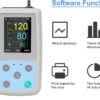
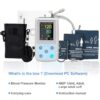
Almost everything else in this catalog is a home monitor that takes a reading when you press a button. The ABPM50 is a different class of device. It is an ambulatory blood pressure monitor, a handheld recorder worn on the body that inflates a cuff automatically on a schedule over a full day and night, storing the results for later download. CONTEC states up to 350 groups of ambulatory readings can be captured in a single session and transferred to a computer through a USB port using supplied PC software.
That is a clinical workflow, not a consumer one. Ambulatory monitoring is normally arranged by a clinician, fitted with a specific measurement schedule, and interpreted against that clinician’s own criteria, because the value of the recording lies in the pattern across a day rather than in any single number. A device sold direct to a consumer does not change how that data has to be handled. This device does not replace professional medical care, it does not tell you what your recording means, and the results it produces are only useful in the hands of someone qualified to read them.
If what you actually want is a device that takes a reading at the kitchen table each morning, this is the wrong purchase and something like the A&D Medical UA-651 is a far better fit.
The claims in the listing that need attributing
CONTEC’s own feature bullet says the device monitors blood pressure while providing an accurate basis for the diagnosis. That is CONTEC’s wording, and we are quoting it rather than endorsing it. We are not describing this device as accurate, clinically accurate or suitable for diagnosis in our own voice, and no reader should treat a home recording from it as a diagnostic result. Diagnosis is a clinical act.
The listing also states a measuring range covering adult, pediatric and neonate, and a separate field gives the age range as adult and child. Neonatal blood pressure measurement is a specialist procedure with its own cuff sizes, its own pressure limits and real risk if done wrong. That capability being advertised on a general retail listing is worth flagging plainly. Nothing in this listing constitutes instructions for measuring an infant, and nobody should attempt it based on a product description.
No validation protocol is named anywhere in the listing. No clearance number is quoted. No accuracy tolerance is published. For a device presented in clinical language, that is a notable absence, and it is checkable independently if you need an answer.
Specifications, and the contradictions among them
Cuffs
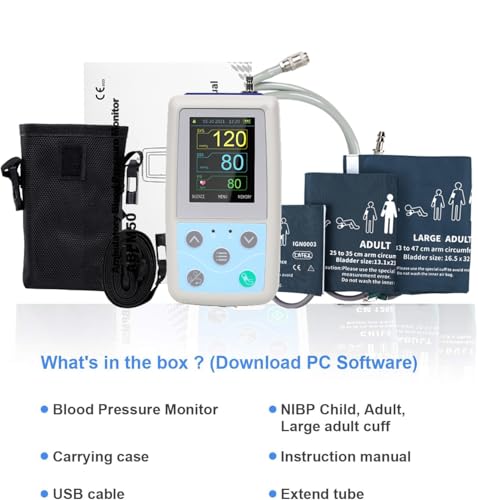
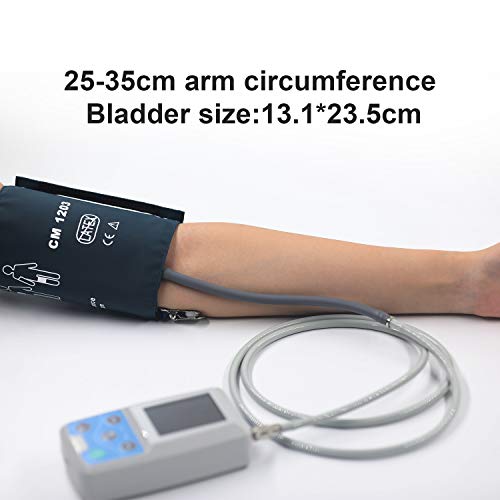
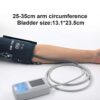
The title advertises three cuffs. The included components field lists a cable and a cuff, singular. A size field describes a four piece set. The band size field gives a single figure of 47 centimeters, which is a number rather than a range and cannot describe three differently sized cuffs. Nowhere does the listing publish a circumference range for any of them.
For a device whose entire purpose is repeated automatic measurement over 24 hours, an unpublished cuff range is a serious gap. Cuff fit is the difference between a recording worth reviewing and a day of wrong numbers. Measure the midpoint of the upper arm before ordering and require the seller to state, in writing, the circumference range of each cuff supplied. Standard adult replacement bands with published ranges, such as the ones covered in our home blood pressure equipment section, are not necessarily compatible with this device’s fittings, so do not assume a substitute will work.
Power
The power source field says corded electric. The battery field says two AAA batteries are required and included. A device designed to be worn on a belt for 24 hours cannot be corded in normal use, and the two fields describe incompatible arrangements. The listing does not state a battery life in hours or in number of measurements, which for an ambulatory recorder is the specification that determines whether a full session completes at all.
Size and weight
Dimensions appear twice and do not match: 9.65 by 2.56 by 5.63 inches in one field, and 5.04 by 1.42 by 2.72 inches in another. Weight appears as 1.87 pounds and as 1.9 pounds. The larger dimension set is likely the shipping carton and the smaller one the recorder, but the listing does not say which is which, so we are naming the discrepancy rather than assuming.
Model identity and software
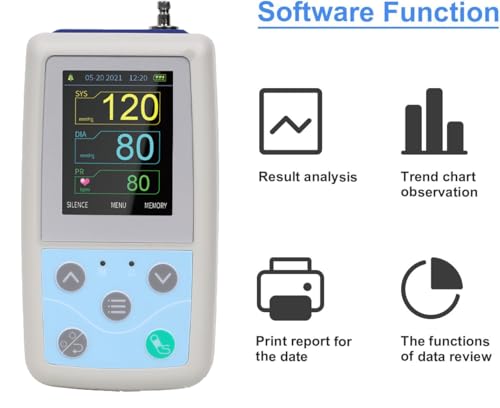
The item model number field reads BD3216 while the model name field reads CONTEC ABPM50. If you are buying to match existing software, accessories or a clinician’s instruction, confirm which identifier the seller is actually shipping. The PC software is described only as PC software, with no operating system, version or minimum requirement stated anywhere. Assume nothing about compatibility with a current Mac or a locked down work computer until the seller confirms it.
Using it responsibly
If you have been asked by a clinician to carry out ambulatory monitoring, the schedule, the arm, the cuff size and the interpretation should all come from them, not from a product page. Fit the cuff on a bare upper arm with the lower edge about an inch above the elbow crease and the marker over the inside of the arm. During each automatic measurement, stop moving, let the arm hang relaxed at your side or rest it, and stay quiet until the cuff deflates. Keep a written diary of activity and sleep alongside the recording, because that context is what makes an ambulatory trace interpretable.
Expect the cuff to wake you. Overnight readings are part of why ambulatory monitoring exists, and a night of interrupted sleep is normal for a session. If the cuff causes pain, numbness, or skin marking that does not settle, stop the session and speak to a clinician. Repeated automatic inflation on the same arm over a day is not the same load as a single morning reading.
Do not attempt to interpret the downloaded trace yourself, and do not change anything about your medication or routine on the basis of it. Hand the data to the clinician who asked for it.
Alternatives worth comparing
Within the same brand, the CONTEC CONTEC08A is the conventional desktop sibling and a more sensible purchase for spot readings. Buyers who want a professional style upper arm unit for repeated in room measurement rather than 24 hour wear should read our Omron HEM-907XL review, which covers a device built for that job. If you want to capture more than blood pressure at home, the Omron BP7900 with its EKG function is a different answer to the same underlying wish for richer data. And for a manual alternative used under supervision, the McKesson aneroid sphygmomanometer kit is the traditional route.
Who should buy it, and who should not
This device makes sense only for someone who has a clinical reason for ambulatory monitoring and a clinician ready to interpret the output, or for a professional buyer who already knows what an ABPM session involves. Do not buy it as a first home monitor, do not buy it to investigate a reading that worried you, and do not buy it for use on a child or an infant on the strength of a line in a product description. The listing’s own language about providing a basis for diagnosis is exactly the reason to route this one through a clinician rather than around them.