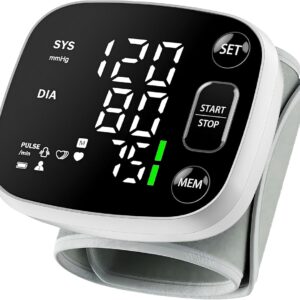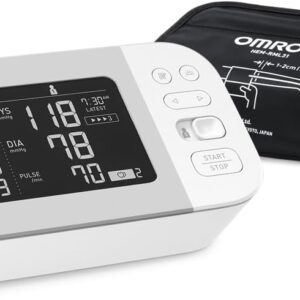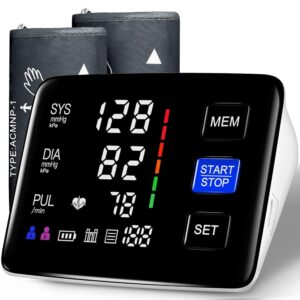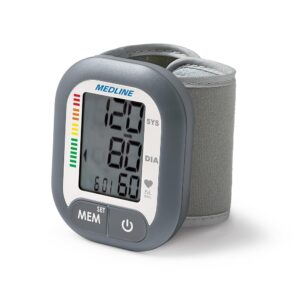




Description
What we can and cannot tell you about this product
This page is going to be unusually short on specifications, and the reason is worth stating at the top rather than burying. The listing record we hold for this Coverich monitor is very nearly empty.
Here is the entirety of what the retailer feed returned: a product title reading blood pressure monitor with portable storage bag, a single feature bullet reading multi user memory, and a description consisting of the same three words. The stored product attributes add a brand, a size recorded as medium, packed dimensions of about 3.2 by 3.6 by 3.7 inches, a manufacturer recorded as Shenzhen Jamr Technology, and a barcode. That is all of it.
There is no cuff circumference range. There is no statement of whether this is a wrist device or an upper arm device. There is no memory figure, no user count, no display type, no power source, no measurement time, no warranty term and no accuracy statement. Our own catalog describes this as a wrist monitor, and the page address reflects that, but nothing in the listing data confirms it. We are not going to fill any of those blanks with assumptions.
Why the missing cuff range is the serious part
Of everything absent here, the cuff range matters most, and it is not a close call. A blood pressure monitor works by compressing a limb, and the cuff has to be sized to that limb. A cuff that is too small or too large produces a reading that does not reflect what the same device would record on a correctly fitted limb, and nothing on any display will warn you that it has happened. The reading looks entirely normal. It is simply not representative.
Without a published range you cannot check the fit before ordering, and you cannot check it afterward either unless the packaging carries it. For reference, the devices in this catalog that do publish figures vary widely: upper arm cuffs commonly run from about 8.7 inches to somewhere between 12.6 and 17 inches, while wrist cuffs run from about 5.3 inches to between 7.7 and 8.5 inches. Those are not interchangeable numbers, and the difference between the narrow and wide options excludes a great many people.
The practical step is simple. Measure the limb you intend to use, either the bare upper arm midway between elbow and shoulder or the bare wrist just above the wrist bone, and then ask the seller which the device is for and what circumference range the cuff covers. Compare the answer against your measurement before ordering, not after.
A correction to what this page previously said
Our earlier summary of this product described a large clear LED display, a 120 reading memory for two users, an adjustable wrist strap fitting a variety of wrist sizes, and results described as accurate and consistent and as matching traditional monitors in reliability.
None of that is supported by the listing data we hold. There is no display specification, no memory figure, no cuff range and no accuracy information in the record, and we do not test products, so no comparison of this device against any other is something we are in a position to make. All of it has been removed. The single feature the listing does state is multi user memory, which tells you that more than one person can store readings and nothing about how many readings or how many people.
What to do if you are considering it anyway
If the price or the appearance appeals and you want to proceed, treat the purchase as one where you ask questions first. Establish the measurement site, the cuff range, the memory capacity and the number of user slots from the seller. Ask whether batteries or a cable are included, since the record does not say. Ask about the warranty.
Then, whatever device you end up with, use it properly, because technique changes a reading more than the gap between two reasonable monitors. Sit with your back supported and your feet flat on the floor rather than crossed, and rest quietly for several minutes before measuring. Fit the cuff on bare skin rather than over a sleeve. Support the limb so the cuff sits at about the height of your heart, which matters most of all on a wrist device. Stay quiet and still during the measurement. Use the same limb at about the same time each day, and write the readings down rather than relying on a memory whose size you do not know.
What you collect is a record. What a reading means, whether a pattern across your readings is significant, and whether anything about your care should change are questions for a healthcare professional who knows your history and your medication. A home blood pressure monitor does not replace professional medical care, and no reading from one should be used to start, stop or alter treatment on your own.
Limits and gaps
Everything in this section has already been said, and that is the point. No cuff range, no measurement site, no memory, no user count, no display specification, no power source, no accuracy figure, no validation protocol, no assessing body and no warranty term. No independent validation is named, which is unsurprising given that the listing does not name anything else either.
One observation from the record rather than the copy. The barcode on this listing sits in the same block as two other products in our catalog from different brand names, and the manufacturer field matches one of them. That pattern normally indicates hardware built by one company and sold under several labels, which means a better documented listing from the same family may describe the same device.
Alternatives worth comparing
A second Coverich device appears in our catalog as the Coverich blood pressure monitor under a different listing code, which is the first place to look for the missing detail. From the same manufacturer, the DOUHAO C02, which publishes a 22 to 40 cm cuff range and a 240 reading memory is far better documented, as is the Abesee AOJ-30C. The Ever Ready LD-737 is the other listing in this catalog with no published cuff range, for comparison, while the Omron BP6350 shows what a fully specified wrist device looks like. Our index of home monitors and cuffs lists what each publishes.
Who should buy it and who should not
Do not buy it on the strength of this listing. There is not enough published information to establish whether it will fit you, which is the one thing that has to be right on a device of this kind. If the seller will confirm the measurement site, the cuff circumference range, the memory and what is in the box, and those answers suit you, then reconsider. Until then, a monitor that publishes its cuff range is the safer purchase at any price.