


Description
Who the Glucoracy one piece monitor is for, and what it settles
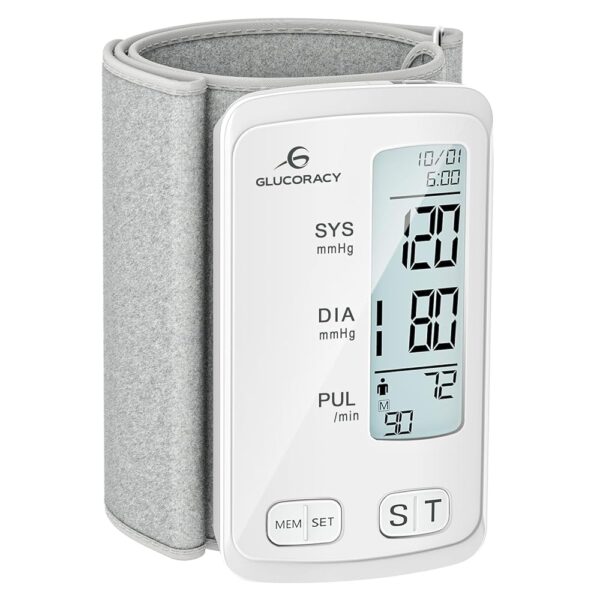
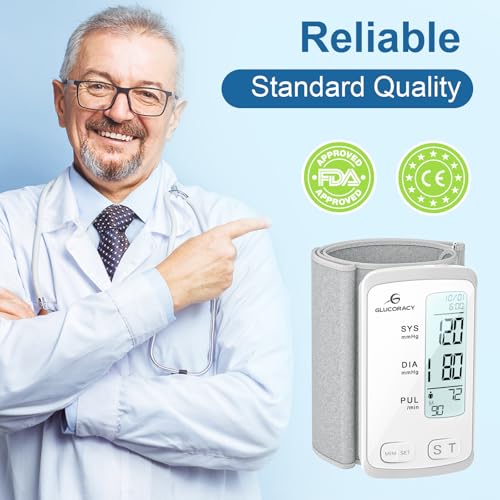
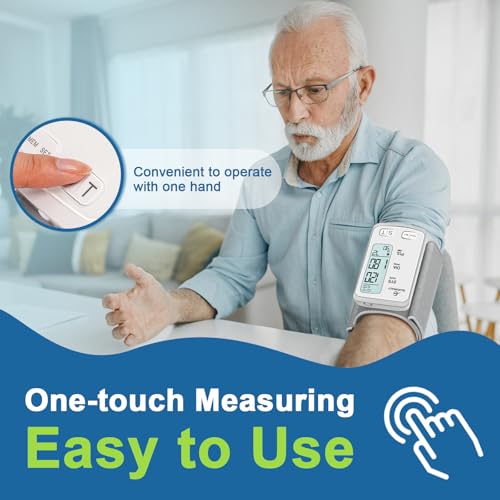
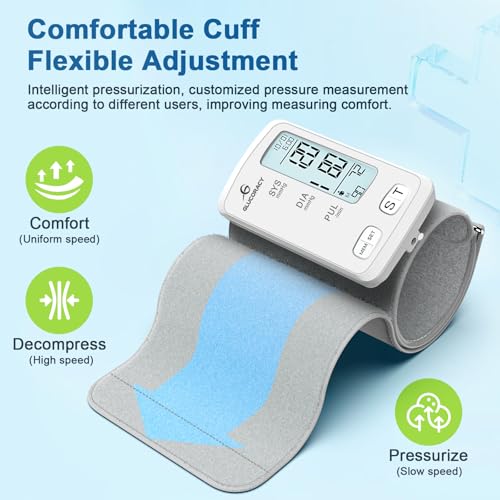
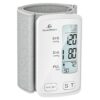
Most upper arm monitors are two objects joined by a hose: a base unit that sits on a table and a cuff that wraps the arm. Glucoracy has put the whole thing into the cuff. There is no separate box, no tube, and nothing to knock off the table. The listing describes a barrel shaped band that wraps fully around the arm and can be operated with one hand.
That is the entire proposition, and it suits a specific buyer: someone measuring their own arm without help, someone short of counter space, or someone who has given up on a monitor because assembling it each time was the obstacle. It also has a real cost, covered further down, because in a one piece design the cuff and the monitor fail together.
Nothing here is medical advice. The device records numbers. It does not diagnose, it does not replace professional medical care, and its readings belong in a conversation with the clinician who manages your health.
The specifications that matter
Cuff range
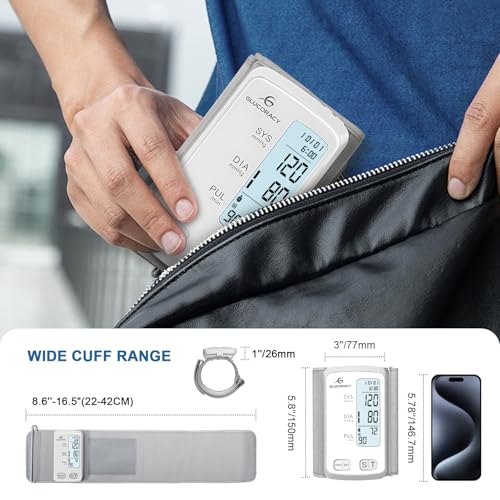
The structured band size field gives 22 to 42 centimeters. A feature bullet gives 8.6 to 16.5 inches. Those convert correctly to each other, so this is one of the listings in this catalog where the two figures agree, and 22 to 42 centimeters covers most adult arms.
Measure the midpoint of your upper arm with a soft tape, arm relaxed at your side, and buy on that number. Cuff fit is the largest variable a home user controls, and a band that has run out of adjustment or one too large to lie flat changes the reading on a device that is working correctly. In a one piece design this matters twice over, because there is no option to buy a different cuff later. If your measurement is outside that range, this is not the machine, and a two piece design with replaceable bands such as the one in our Omron wide range cuff review is the more sensible route.
Memory
Two user profiles hold 90 sets each, and the listing is unusually clear that the oldest reading is discarded once a profile passes 90. That is honest and useful. Ninety readings is roughly six weeks of twice daily measurements, so if you are keeping a longer log, plan to write results down rather than relying on the device.
Power
The product title advertises a built in battery. The power source field says battery powered, no capacity is published, no runtime is given, and no charging cable appears in the contents field, which lists only a cuff and an instruction manual. For a device sold on being self contained and rechargeable, a missing cable is worth confirming before ordering rather than after.
Weight and shape
Listed weight is 8.11 ounces, which is light and consistent with a one piece unit. The dimensions are published twice and do not match: 5.24 by 3.01 by 0.83 inches in one field and 6.42 by 3.74 by 2.56 inches in another. The first describes a flat object of the kind a wraparound cuff would fold into, the second describes a box. We are not choosing between them.
More contradictions worth naming
The product title advertises a large backlit LED display. The display type field says LCD, and the feature bullets describe an LCD screen. LED and LCD are different technologies and the listing uses both. It is a small thing, but if you are buying specifically for screen legibility, it is worth asking which the device actually has.
The listing text itself is damaged. One feature bullet breaks off mid sentence while stating the cuff range, and the following bullet begins with a stray comma and quotation mark where the import failed. That is why the cuff figure appears here as 8.6 to 16.5 inches with the closing mark missing from the source. We have read it against the centimeter field and the two agree, which is why we are confident quoting it, but the state of the data is worth knowing.
No model number appears anywhere in this listing. Not in the title, not in a specification field. Combined with the one piece design, that means there is no part to order and no model to quote if something goes wrong.
No validation protocol is named, no clearance number is quoted and no accuracy tolerance is published. The listing does not lean heavily on accuracy language, which is to its credit, but it also gives nothing to check. We make no accuracy claim about this device in our own voice, and validation status can be looked up independently through the lists that medical societies publish. Note also that Glucoracy is a name more commonly seen on blood glucose meters, so if you are buying on brand familiarity, be sure you know which product line you are in.
The trade you are making with a one piece design
Convenience now, disposability later. In a conventional monitor, a worn out cuff is a modest replacement and the base unit carries on. Here the cuff is the monitor. When the fabric stretches, the closure stops gripping or the bladder leaks, the whole device is finished. The Beurer BM81 makes the same trade at a higher price, and the Withings BPM Connect takes the tubeless idea further with app based history. Weigh the convenience against the fact that you are buying a consumable. Buyers who want a conventional two piece machine with a big screen instead should read our Cosmama monitor review.
Using it correctly
Rest for five minutes before measuring, sitting with your back supported, both feet flat, legs uncrossed. Bare the upper arm rather than pushing a sleeve up. Wrap the barrel cuff so its lower edge sits about an inch above the elbow crease with the marker over the inside of the arm, snug enough that two fingers slide under with mild resistance. Rest the arm on a table so the cuff is level with your heart, and stay quiet and still.
One piece designs invite a particular mistake, which is twisting the arm to look at the screen while the measurement runs. Set the device so you can read it without moving, or wait and read the result afterwards. Movement partway through affects the result on any oscillometric monitor.
Select the right profile before starting, and write readings down with dates and times, because with 90 slots per user and a rolling overwrite, the device is a short term memory rather than a record.
Who should buy it, and who should not
Buy this monitor if a single object you can put on one handed is what will get you measuring, if your arm measures inside 22 to 42 centimeters, and if you accept that the cuff and the machine will reach the end of their lives together. Skip it if you want a device you can service, if you need a model number, or if the disagreements between LED and LCD and between two sets of dimensions leave you unsure what is actually arriving. The alternatives sit in our home blood pressure monitor section, and the ones with replaceable cuffs are the longer lived purchase. Whichever you choose, the number on the screen is one input for a clinician rather than a conclusion.