Description
Who the LongevousiOO AES-U382 is for, and what it settles
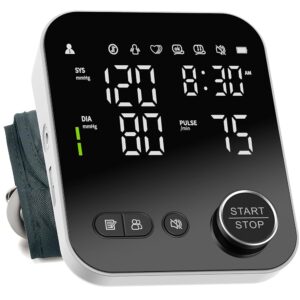
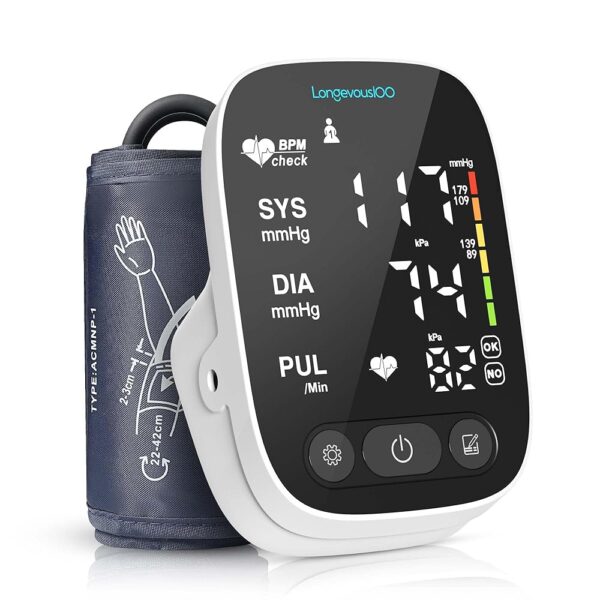
This is a small, light upper arm monitor that runs from either three AA cells or a USB Type-C source, with an LED display and a wide range cuff. At 14.29 ounces with a cable and a bag in the box, it is built to be carried rather than to sit permanently on a counter. If what you want is a second machine for a bag or a holiday home, the shape is right.
What it settles is fit. The cuff range is published consistently in three places, in both inches and centimeters, and the figures agree. That sounds like a low bar, and it is, but a surprising number of listings in this catalog cannot clear it, and cuff fit is the variable that most often turns a working monitor into a source of wrong numbers.
The device itself does not diagnose anything and does not replace professional medical care. Every reading is one input for the clinician who manages your health.
The specifications that matter
Cuff range
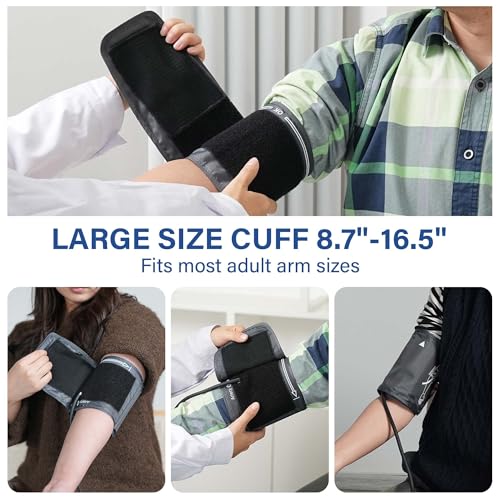
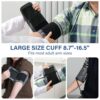
The published range is 8.7 to 16.5 inches, given as 22 to 42 centimeters. The product title, the structured band size field and the feature bullets all carry the same figures, and the conversions are correct. That covers most adult upper arms.
Measure the midpoint of your upper arm, halfway between shoulder and elbow, with the arm relaxed at your side and a soft tape held snug. Buy on that number. A band that has run out of adjustment, or one so oversized it will not lie flat against the arm, changes the reading on a monitor that is working exactly as designed. No alternative cuff is offered in this listing, so a measurement outside 22 to 42 centimeters means a different machine, and the extra large options in our home blood pressure monitor section are the place to start.
Power, and an unusual battery count
The listing states three AA batteries or a Type-C interface. Three AA is uncommon. Most monitors at this level take four AA or four AAA cells, so if you keep a supply at home, note that a four pack will leave you with a spare rather than the usual pair. The structured power source field just reads battery powered and adds nothing. A cable is listed among the contents. No wall adapter is named, so assume you supply your own plug if you intend to run it from the mains.
Display, size and contents
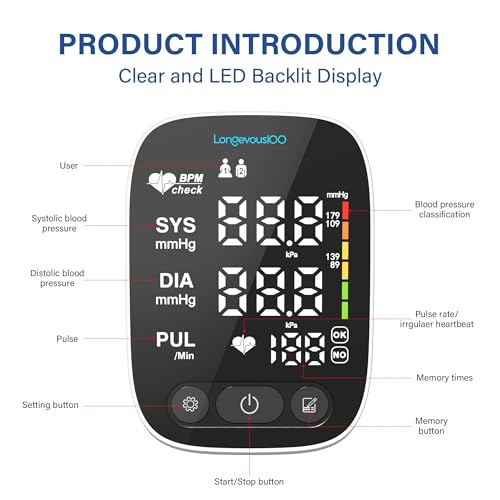
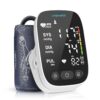
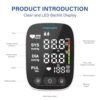
The display type field reads LED. No screen size is published. Listed weight is 14.29 ounces, which the same listing also gives as 405 grams, and the two agree. Listed dimensions are 4.9 by 3.5 by 2.1 inches. The contents field names a cable, a cuff, a tube and a bag.
What the listing does not tell you
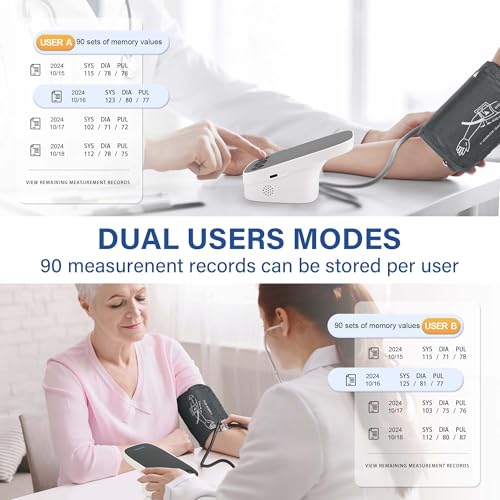
Memory is the gap, and it is a significant one. Nowhere in this listing is there a figure for how many readings the device stores, or whether it supports more than one user. Not in the title, not in the bullets, not in a specification field. Our own previous description of this product claimed two users with 90 readings each. Nothing in the listing supports that figure, so we have removed it rather than carry an invented number forward. If storage depth matters to you, and for anyone keeping a log over months it should, ask the seller before ordering.
There is no irregular heartbeat flag mentioned, no averaging mode described, and no positioning check named. Several cheaper machines in this catalog publish all three. Their absence from the listing may mean the features are absent from the device, or it may mean the listing is simply thin. We are naming the uncertainty rather than filling it in.
LongevousiOO describes precision readings every time from an intelligent chipset. That is the manufacturer’s phrasing. No validation protocol is named, no clearance number is quoted, and no accuracy tolerance is published. There is nothing here for us to attribute and nothing we will assert in our own voice. Validation status is checkable independently through the lists that medical societies maintain, and that check is worth more than any marketing sentence.
A note on where this design comes from
The manufacturer field names Shenzhen Ailicon Medical. The AES model prefix runs across several unrelated brand names in this catalog, including the machines covered in our Greetmed AES-U522 review, our KIKEANG AES-U131 review, our Guaever AES-U131 review and our Erdpaa AES-U231 review. Several of those name subtly different manufacturers with similar names.
Shared platforms are ordinary in this category and none of it is a criticism of the hardware. The practical consequence is worth internalizing though: the brand name on a box like this carries very little information, a claim made under one label does not transfer to another, and a review of one AES machine is not a review of the next. Compare the published figures rather than the names.
Using it correctly
Rest for five minutes before measuring. Sit with your back supported, both feet flat on the floor, legs uncrossed. Bare the upper arm rather than pushing a sleeve up, since a rolled sleeve acts as a second cuff. Place the lower edge of the band about an inch above the elbow crease with the artery marker over the inside of the arm, tightened so two fingers slide underneath with mild resistance. Rest the arm on a table so the cuff sits level with your heart, then stay quiet and still until the result appears.
Because the memory depth is unknown, write every reading down with the date and time from the first day. If it turns out to hold thirty readings, a paper log will be the only complete record you have, and it is the format a clinician can scan in seconds anyway.
Take readings at consistent times rather than whenever you remember. A log taken at scattered times is much harder to read as a pattern, and the pattern is the thing your clinician is looking for.
Alternatives worth comparing
If you want a machine on the same platform with a published memory figure and a rechargeable battery, the Greetmed review linked above is the closest comparison. For a plainer machine with a stated storage depth and a similar cuff, read our SDUNW upper arm monitor review.
Who should buy it, and who should not
Buy the AES-U382 if your arm measures inside 22 to 42 centimeters, if the dual power arrangement suits how you will use it, and if you are content keeping records on paper because the device’s own capacity is unknown. Skip it if you need a stated memory figure, if you want an irregular heartbeat flag or an averaging mode confirmed before ordering, or if three AA cells is an awkward format for your household. And whatever the display shows, the reading is the start of a conversation with a clinician rather than the end of one.