

Description
Who the Microlife BPM2 is for
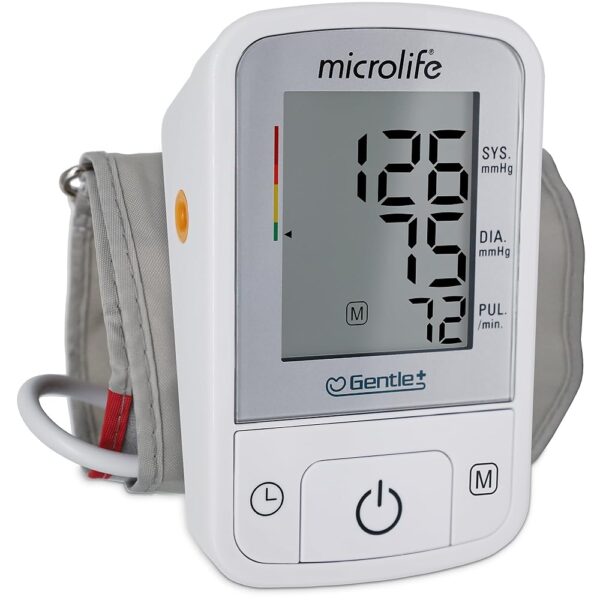
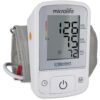
This is an upper arm automatic blood pressure monitor sold under the model name BPM2, with the item model number BP3MC1-PC printed on the device. Both designations refer to the same product, which is worth knowing because you will see each of them used. It runs on four AA batteries, stores 60 results and has no app and no wireless connection. It records numbers for a clinician to review, and it does not replace professional medical care.
The decision it settles is whether you want a straightforward device with a named validation claim rather than a connected one. This is a single purpose instrument: large buttons, one touch to start, a large display and a stored history you read on the device.
Cuff range, and the one specification to check first
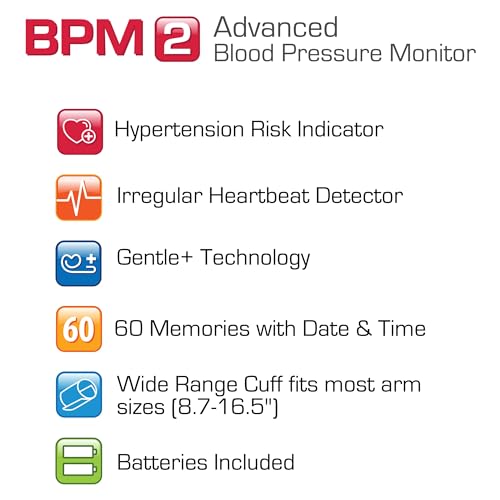
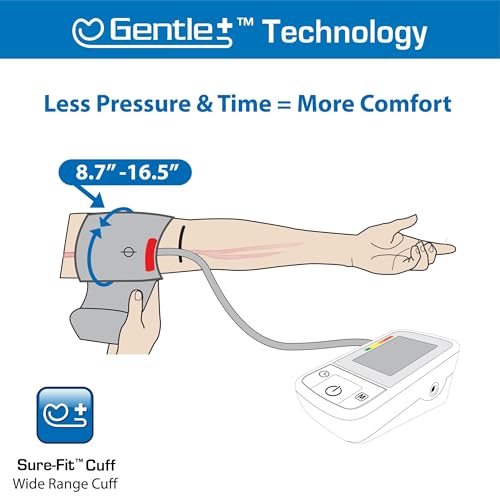
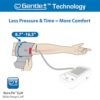
The supplied cuff is a contoured wide range cuff covering upper arm circumferences of 8.7 to 16.5 inches, given as 22 to 42 cm, and described as medium to large. An XL cuff is available separately and the listing states it fits arms under 20.5 inches. Measure your bare upper arm at the midpoint between shoulder and elbow before ordering.
Cuff fit governs whether a reading represents anything. A cuff that is too small or too large produces a reading that does not match what the same device records on a correctly fitted arm, and nothing on the display tells you this has happened. The listing also describes what Microlife calls Gentle+ technology, which it says uses less pressure in less time. Inflation comfort is a real factor in whether someone keeps using a monitor, so it is worth noting, but it is a comfort feature rather than a measurement feature.
Memory and what is in the box
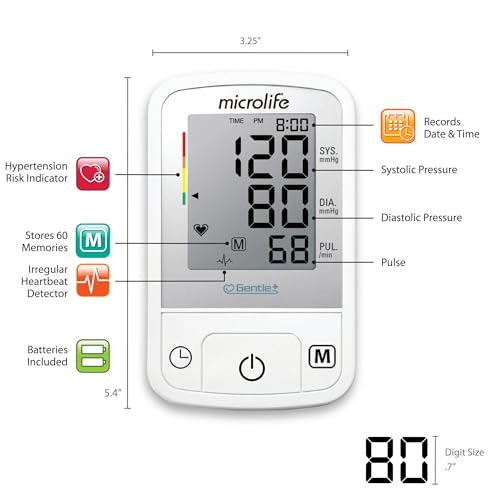
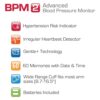
The monitor stores the last 60 results and displays an average based on all stored measurements. Note that this is an average across the whole stored memory rather than an average of a short series taken in one sitting, which is a different thing from the three reading averages other monitors offer. The box contains the monitor, the upper arm cuff, a storage bag, four AA batteries and a manual in English and Spanish. An AC adapter is compatible but sold separately. The unit measures about 5.35 by 3.22 by 2.28 inches and weighs 346 grams.
The validation claim, which is unusually specific
Most listings in this category make accuracy claims that name nothing. This one is different and it deserves to be reported precisely. Microlife states that the monitor has been clinically tested for blood pressure measurement and awarded the highest rating for accuracy, rated AA by the BIHS, which is the British and Irish Hypertension Society. That is a named independent body and a named rating scale, which is materially more checkable than an unattributed claim to be accurate.
Two qualifications belong with that. First, it is Microlife’s statement rather than something we have verified, and we do not test devices, so we will not tell you in our own voice that this monitor is accurate. Second, validation listings are maintained independently and they are updated, and validation attaches to a specific model and cuff combination rather than to a brand. If this matters to your decision, look up this exact model on an independent validation listing and confirm the current status yourself. That takes a few minutes and it is the right way to use a claim like this one.
Using it correctly, and what the readings are for
Sit with your back supported and your feet flat on the floor rather than crossed, and rest quietly for several minutes before you start. Put the cuff on a bare upper arm, not over clothing, and support the arm so the cuff sits at about the height of your heart. Stay silent during the measurement. Use the same arm at roughly the same time each day, because a consistent series is worth more than scattered single readings.
The readings are a record to hand over. What any number means, whether a pattern in your readings is significant, and whether anything in your care should change are questions for a healthcare professional who knows your history and your medication. This device does not replace professional medical care. Do not adjust treatment on the basis of a home reading.
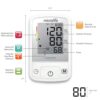
The listing describes a hypertension risk indicator and an irregular heartbeat detector alongside the pulse and pressure figures. Both are prompts rather than findings. The irregular heartbeat detector flags that the device noticed an irregularity during that measurement, and it does not identify or diagnose anything. The risk indicator is a category display driven by manufacturer thresholds, and we are not reproducing those thresholds here as targets, because interpreting a number for a particular person is clinical work.
Limits and gaps
There is no app, no Bluetooth and no multi user memory described, so 60 results is the whole history unless you write readings down. Battery life is not published. The AC adapter is an extra purchase and so is the XL cuff, which matters if anyone in the household measures above 16.5 inches. The listing does not state the display dimensions, only that it is large.
One catalog note. This same item model number, BP3MC1-PC, also appears in our catalog under a different brand name, which is common with monitors built on a shared platform. Compare the two listings on what is in the box rather than assuming a difference in the device.
One further ownership point. Automatic blood pressure monitors drift over time, and manufacturers generally specify a recalibration or service interval measured in years. Nothing in this listing states one for this model, so if you intend to keep the device for a long period it is worth asking Microlife what the interval is and whether servicing is offered in your country. The storage bag in the box is more useful than it sounds for the same reason, since a monitor rattling loose in a drawer takes knocks that a padded bag prevents.
Alternatives worth comparing
The most direct comparison is the Vaunn listing carrying the same BP3MC1-PC model number, which is worth pricing against this one. Within Microlife, the Microlife BP3GY1-2N is the sibling model, and a Microlife replacement cuff is the thing to check before assuming a fit problem rules the monitor out. For a multi user alternative, the A and D UA-767FAC with four user memory covers a similar cuff range. Our index of home monitors and cuffs lists the published ranges together, and a larger replacement cuff is worth comparing if you measure near the top.
Who should buy it and who should not
Buy it if you want a simple device with a validation claim that names an independent body, your arm measures between 8.7 and 16.5 inches, and one person will use it. Do not buy it if you want app syncing or separate memories for several people, and do not treat the AA rating as something we have confirmed. Check it yourself and take your readings to a clinician.