

Description
Who This Monitor Is For and What It Settles
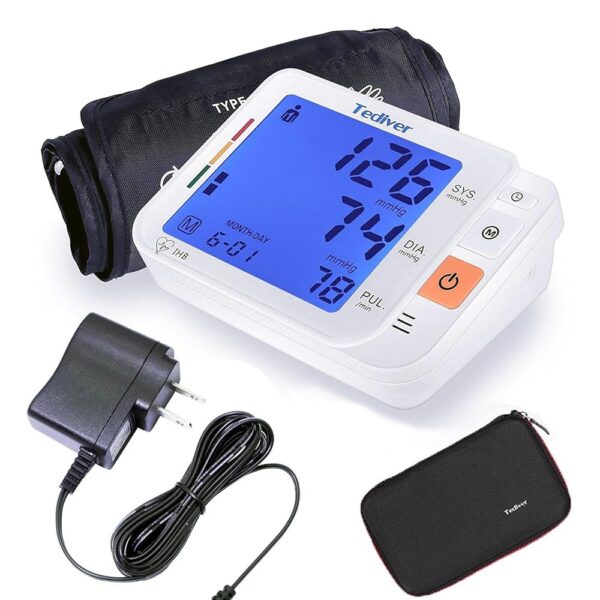
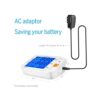
The Tediver BP366A is an upper arm blood pressure monitor that runs from the wall and nothing else. There is no battery compartment: the listing states plainly that no battery is required and that the unit plugs in through a corded DC6V adapter. That single decision defines the product. If the monitor will sit permanently on a bedside table or a desk near an outlet, mains power removes the recurring nuisance of dead cells at the worst moment. If you want to take readings anywhere else, this is the wrong device.
Before the specifications, the standing point. This review describes a device and its published data. It does not interpret readings, it does not tell anyone what their numbers mean, and a home blood pressure monitor does not replace professional medical care.
The Cuff Range Is Published Twice, in Two Different Units
Cuff circumference decides whether a monitor can work for a given arm, because a cuff that is too small or too large produces wrong readings on hardware that is functioning perfectly, and nothing on the display warns you. This listing gives two answers.
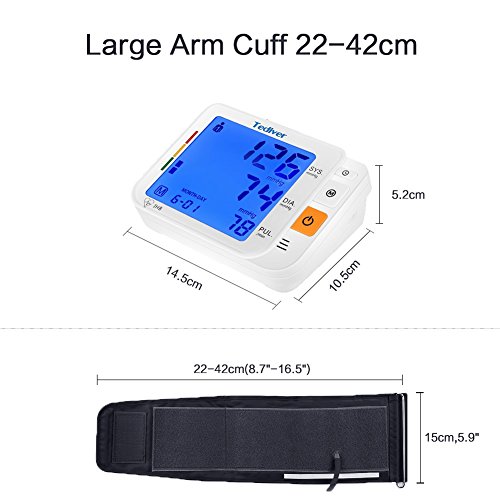
The structured band size field and a bullet both state 22 to 42 cm, which converts to roughly 8.7 to 16.5 inches and is a standard wide range adult cuff. The product title, however, advertises a large cuff of 0.7 to 1.3 feet. Converted, that is about 8.4 to 15.6 inches, which is not the same range: it starts lower and, more importantly, stops nearly an inch short at the top. Feet are also an unusual unit for an arm circumference, which is a fair hint that the title was assembled rather than measured.
Work from the centimetre figure, which appears twice and in the fields where a specification belongs. Measure the bare upper arm at the midpoint between shoulder and elbow before ordering, and if your measurement is near 42 cm, confirm the cuff with the seller rather than trusting either version. Buyers outside the range should look at a documented replacement cuff such as the Alcarefam BD42 fitted to a compatible monitor.
What Is Actually Documented
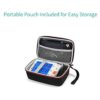
Memory holds 120 readings in a two-user arrangement with a date and time stamp on each entry, which is enough for a couple of months of twice daily logging per person. Operation is one button. The box includes the monitor, the cuff, an AC adapter, an instruction manual and a hard carrying case, and the listing puts a two year warranty on it.
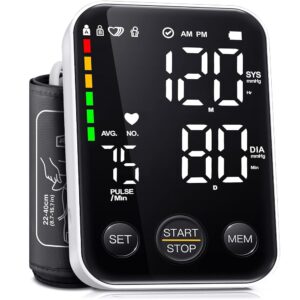
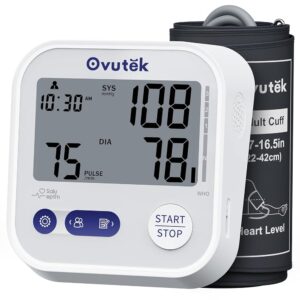
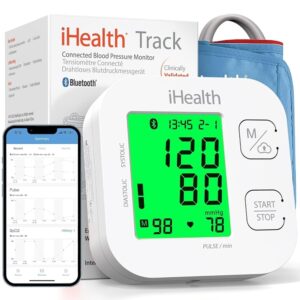
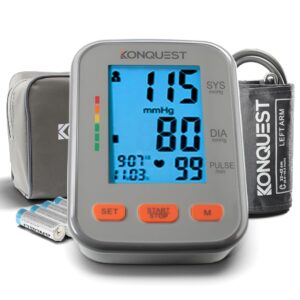
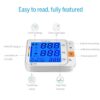
The display is described in the product title as a backlit LCD screen while the structured display field says LED. Those are different technologies and the listing does not settle which is fitted. No digit height is published either, so legibility has to be judged from photographs.
The unit measures 5.7 by 4.13 by 1.96 inches and weighs 1.62 pounds, matching the 735 gram figure elsewhere in the record. That is heavy for a monitor of that footprint, which is consistent with a mains powered device but is worth knowing if you expected something you could pack.
One field is simply wrong
The structured use-for field says this device is for hands. It is an upper arm monitor with an upper arm cuff, as the title, the bullets and the cuff range all make clear. A field that misidentifies the body part a medical device attaches to is worth naming rather than quietly ignoring, because it is the kind of error that leads someone to buy the wrong form factor entirely.
The Alert Claims
The fifth bullet describes two features under a heading about abnormal alerts, and both need precise handling.
The first is a blood pressure level bar, which the listing says shows how a reading compares to normal blood pressure measurements. A bar of that kind compares a measured value against thresholds stored in firmware. It does not know anything about the person being measured, it does not diagnose, and it is not an assessment. This review does not tell anyone what any bar position means, and the sensible response is to record the numbers and disregard the bar.
The second is an irregular heartbeat detector, which the listing says alerts the user if an irregular heartbeat is detected. That is a flag, not a diagnosis. It indicates the device saw an irregularity during that measurement. It does not identify what the irregularity is, and it cannot separate a real finding from an artifact caused by movement, talking or a poorly placed cuff. If the indicator appears, note it and raise it with a clinician.
Separately, a bullet claims the newest monitoring technology provides the most accurate readings. That is the seller’s superlative and not ours. We do not test devices. No accuracy figure, no tolerance, no validation protocol and no regulatory clearance appears anywhere in the listing data, and validation status can be checked independently through the registries medical bodies maintain.
Using It Correctly
Fit the cuff to the bare upper arm rather than over a sleeve, with the tubing running down the inside of the arm toward the palm and the lower edge roughly an inch above the elbow crease, closed so one finger slides underneath with mild resistance. Sit with the back supported and both feet flat on the floor, rest the arm so the cuff sits level with the heart, and stay silent and still through inflation and release.
Rest for several quiet minutes before the first reading rather than measuring straight after activity, and use the same arm at the same times each day so the record compares with itself. Because the device is mains powered, position it where the cord reaches without pulling the monitor toward the edge of the table, since a tug mid measurement is exactly the kind of interruption that spoils a reading.
Limits and the Wider Picture
The description field is empty, so five bullets and a specification table carry everything. Nothing is published about the pressure or pulse measurement range, tolerance, averaging across readings, or digit height. The size field reads 1 count, pack of 1, which is packaging metadata rather than a specification. The listing dates from 2017, which makes this one of the older products in this catalog.
Mains-only operation is the real constraint. If a power cut or a trip away from home would leave you without a reading, that is a reason to prefer a battery capable device. Among alternatives here, the Medline MDS4001 and the Contec CONTEC08A are the closer comparisons for a plain, screen-first monitor. Clinical-style units such as the Omron HEM-907XL are a different class again and are worth a look if a permanently sited device is what you actually want.
The point that outranks the rest: this device produces numbers. It does not diagnose, it does not replace professional medical care, and nothing here is guidance about anyone’s health. The full selection of upper arm monitors, wrist units and replacement cuffs sits in our blood pressure monitor category.
Who Should Buy It, Who Should Not
Buy it if the monitor will live permanently beside an outlet, your arm falls inside 22 to 42 cm, and never changing a battery is genuinely worth losing portability for. Skip it if you need to measure away from mains power, if the cuff range being published in two disagreeing units bothers you, if you need documented accuracy or validation, or if you want the level bar to mean something, because it does not.