

Description
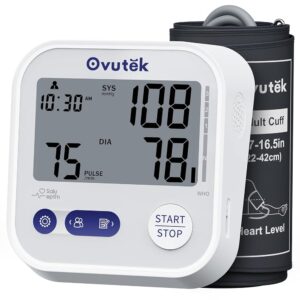
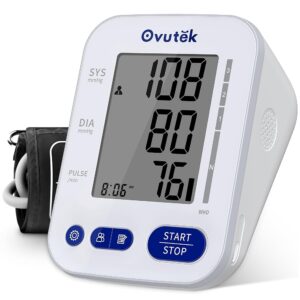
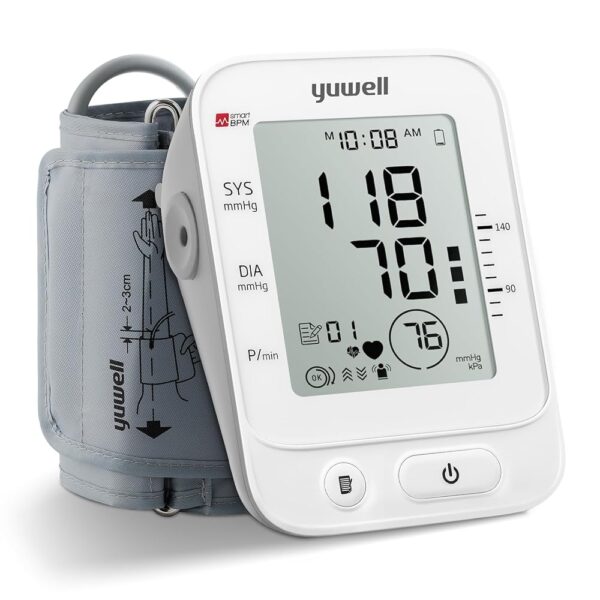
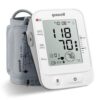
The yuwell upper arm blood pressure monitor is a value priced device with a voice broadcast, a wide cuff, an included mains adapter and 99 readings in memory. Its listing uses one word that a home device should never use, and this review starts there. Everything here comes from the published listing data. It is not medical advice, it does not tell you what any reading means, and a home monitor does not replace professional medical care. Readings belong in a conversation with a clinician who knows your history.
The listing says the device performs a diagnosis. It does not.
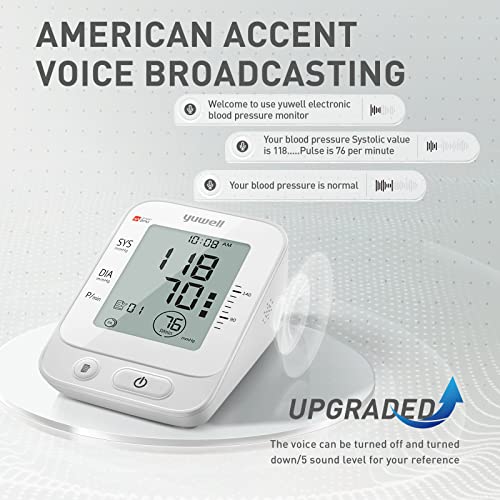
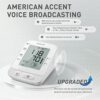
The first feature bullet describes the voice broadcast and then states that an intelligent diagnosis will remind you whether your blood pressure is normal or not at the end of the measurement.
That word is wrong and it is not a small thing. A home blood pressure monitor takes a measurement and compares it against a threshold the manufacturer programmed into it. It has no knowledge of your history, your medication, your symptoms, the time of day, which arm you used or how long you had been sitting. It performs no examination and considers no other information. Diagnosis is something a clinician does, using far more than one number from one cuff at one moment.
We are naming this rather than paraphrasing it away, because a device that announces a verdict aloud is more likely to be believed than one that shows a colored bar. Treat the spoken result exactly as you would any other reading: as a number to record and take to a clinician. This page will not tell you what any reading means, and neither should the device.
The same bullet set mentions a hypertension indicator and an irregular heartbeat alert. Both are flags. The indicator sorts a reading against a fixed threshold; the alert says the device saw something irregular in the pulse while measuring. Neither identifies anything, and neither diagnoses.
The cuff range, and where the listing publishes it
Cuff fit determines whether a reading is worth recording, because a cuff too small or too large produces wrong numbers on a device that is working perfectly. Technique does not compensate for it.
A feature bullet states the soft wide range cuff fits upper arms from 8.6 to 17.7 inches. That is one of the widest single cuff ranges in the blood pressure monitor section, reaching further than the 16.5 and 17 inch cuffs on most competitors, and it will suit many people who find standard cuffs tight. The structured band size field, however, reads only “17.7 inches”, giving the maximum with no minimum. Work from the bullet figures and measure your upper arm at the midpoint between shoulder and elbow before ordering.
Who this monitor is for and what it settles
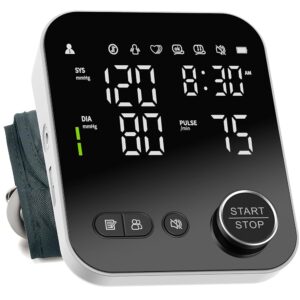
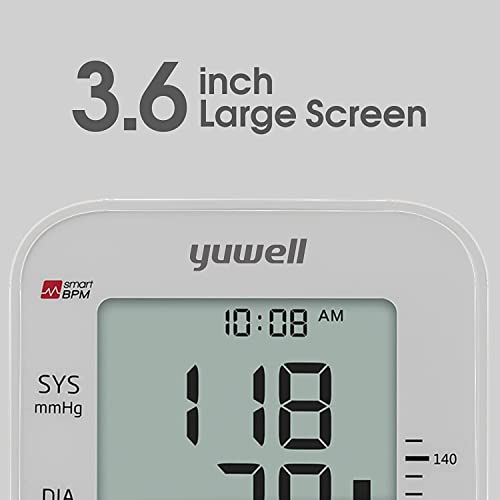
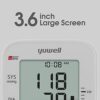
The yuwell settles the accessibility question at a low price. It has a voice broadcast that follows the whole measurement, one button operation, a large display, and a mains adapter included in the box alongside AA batteries, which is unusual at this level and means the device can live plugged in beside a chair.
Three features address measurement quality directly, and they are the reason to prefer this over a plain budget device. yuwell publishes intelligent pressurization intended to reduce discomfort from over inflation, a self test function and a misoperation reminder to catch incorrect use, and body movement capture that reminds you to correct your posture. It also displays the average of the latest three measurements, which is what most measurement routines call for.
Memory is 99 records. The listing describes it as internal storage without naming user profiles, so assume a single shared bank unless yuwell confirms otherwise. Nothing describes Bluetooth or an app, so those 99 records are your complete history. Published weight is 360 grams and the box is stated to contain the monitor, the cuff, the power adapter, a manual, a storage bag and packaging.
Using it correctly
Home readings are useful when the routine never changes. Sit with your back supported and feet flat on the floor, rest quietly for several minutes before starting, support the arm at roughly heart level, fit the cuff on bare skin rather than over a sleeve, and stay still and silent while the measurement runs. Take readings at the same times each day so they can be compared. Follow the manual for the exact fitting the device expects, and follow any protocol your clinician has given you in preference to a general routine.
Use the self test and movement reminders rather than ignoring them. A device that tells you a measurement was disturbed is only useful if you retake it.
What the accuracy claim actually says
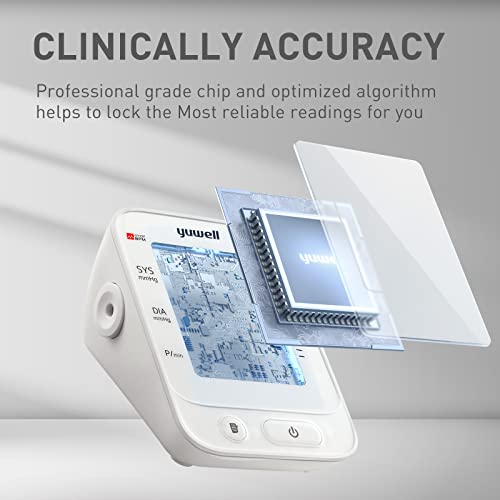
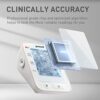
yuwell’s accuracy bullet is better than most in this catalog and still incomplete. It states that the monitor meets the standard of ESH, the European Society of Hypertension, and that the algorithm was developed using clinical data from tens of thousands of patients.
Naming ESH is meaningful, because ESH publishes real protocols for testing automated blood pressure devices and those protocols can be looked up. What the listing does not give is which protocol or which revision. The iHealth Track listing names ESH 2010 specifically, which is a checkable statement; “meets the standard of ESH” without a year or a document reference is a step less precise. No independent validation body is cited either, and there is no statement about FDA clearance or registration.
If validation status matters to your decision, the device listings published by validation programs and the FDA’s own databases are the places to check. We do not test devices and we will not describe any monitor as accurate, clinically accurate or medical grade in our own voice. Feedback is recorded at 4.4 out of 5 across 7,956 ratings, which measures buyer satisfaction rather than measurement performance.
Two smaller notes. The model name field reads “arm blood pressure monitor”, which is a description rather than a model number, so there is nothing to quote when contacting support. And one bullet contains the phrase “irregular heartbeat alert for fitness tracker”, which appears to be text imported from an unrelated product. yuwell’s other devices here include the YE8800CR, which does carry a proper model designation.
Alternatives in this catalog
If a wide cuff is what brought you here, the ZIQING upper arm monitor publishes 17.3 inches with the range stated in three places, and the two cuff devices reaching 21 inches are the option beyond that. If you want a mains adapter in the box from an established brand, the Greater Goods complete kit includes one and publishes its cuff range in full.
Who should buy it and who should not
Buy it if you want a wide cuff, spoken results, a mains adapter in the box and measurement quality checks at a low price. Do not buy it if two people need separate records, if you need a model number for support, or if you would take a spoken verdict at face value, because the device is comparing a number against a threshold and calling that a diagnosis. Further options sit in the mixed shortlist section alongside unrelated pressure products.