


Description
Who This Monitor Is For and What It Settles
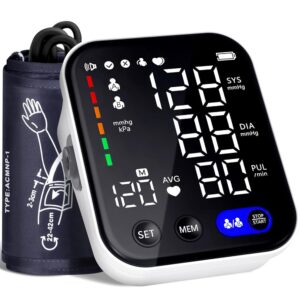
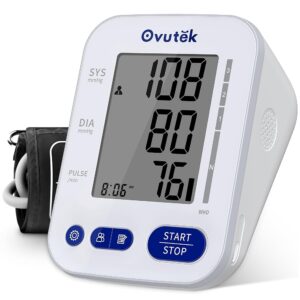
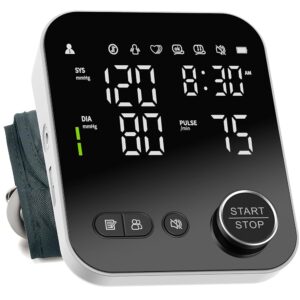
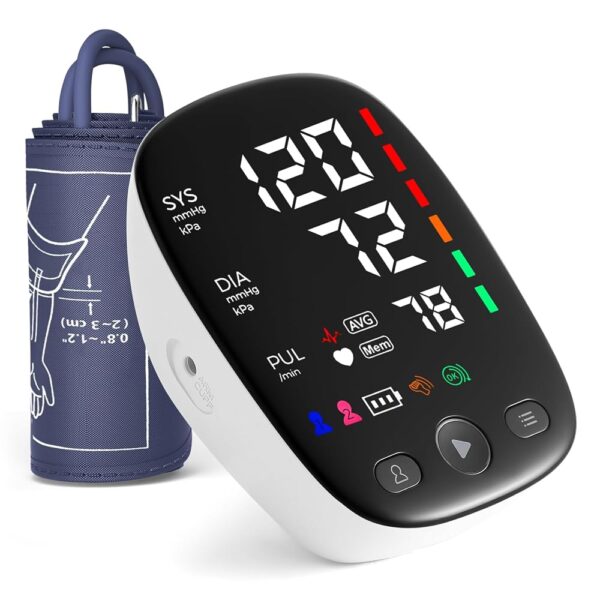
The ZIXCARE FC-BP106 is an upper arm blood pressure monitor with a color LED backlit display, one button, automatic arm detection and a wide cuff. It is aimed at the buyer who wants big, bright numbers and nothing else: no app, no pairing, no setup beyond pressing a button.
What it settles, and what it does not settle, are both worth stating up front. It settles the display question well. It leaves several practical questions unanswered, including how many readings it stores and how it is powered, and those gaps are the subject of most of this review. As always: this describes a device and its published specifications, it does not interpret readings, and a home blood pressure monitor does not replace professional medical care.
The Specifications That Matter
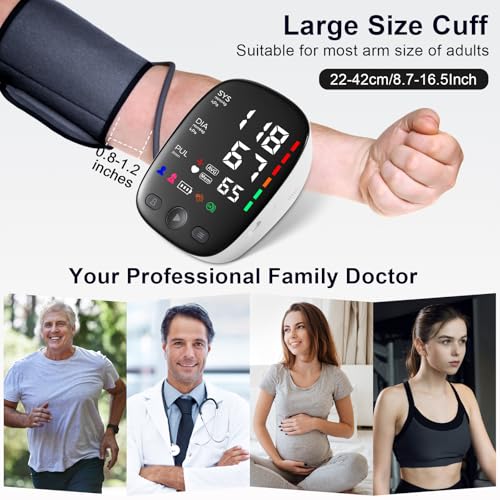
Cuff circumference decides whether the monitor works for a given arm, because a cuff that is too small or too large produces wrong readings on hardware that is functioning perfectly, and nothing on the display warns you it is happening. Here the range appears in exactly one place, the fourth bullet, which gives 22 to 42 cm, or 8.7 to 16.5 inches. There is no band size field in the specification block at all, and no size field either.
One mention in one marketing bullet is thin documentation for the single most consequential number on the page. Measure the bare upper arm at the midpoint between shoulder and elbow before ordering, and if your measurement is near either end of that span, confirm the actual cuff with the seller rather than trusting a bullet. Buyers outside the range should look at a documented replacement cuff and a monitor known to accept it.
Display, timing and the arm detection
The display is the strongest part of this listing. It is described as a large LED color screen with an HD backlight, with large characters and colored patterns intended to remain readable at night, and the structured display field agrees that it is LED rather than the plain grey LCD used on most budget monitors. No digit height is published, so the actual character size has to be judged from photographs.
A measurement completes within 40 seconds according to the listing, and the monitor powers itself off after two minutes without a button press. The automatic arm detection function shows an on-screen pattern if the cuff is applied wrongly. That is a convenience rather than a guarantee, because a detection icon can confirm the cuff has found an arm but cannot confirm the cuff is the correct size, at the right height, or aligned over the inside of the arm, and those are the errors that distort readings.
What Is Not Published
Two omissions matter more than the rest.
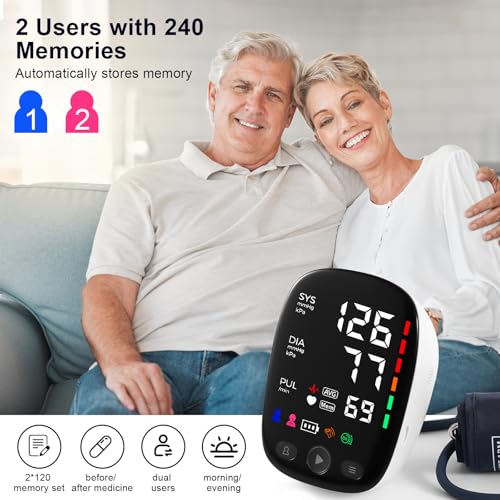
Memory capacity does not appear anywhere. No reading count, no user count, no averaging function. The short description that previously ran on this page described a reliable memory function storing multiple readings for tracking and discussion with a healthcare provider; nothing in the listing data supports a memory specification of any kind, so that claim has been removed rather than repeated. If a stored log matters to you, ask the seller before buying or plan on writing readings down.
Power is worse. The power source field says battery powered, but no battery type, count or life is stated anywhere, and the included components field contains a single untranslated Chinese word meaning adapter. So the only component the listing names is an adapter, on a device it describes as battery powered, with no batteries mentioned. The previous copy on this page claimed dual power with battery and USB-C charging, and a storage case; none of that appears in the source data either. What actually arrives in the box is genuinely unclear from this listing, and that is a question to settle with the seller before ordering.
What the Listing Claims, and Who Is Making the Claim
The lead bullet states that advanced automatic measurement technology and an intelligent chip provide better readings at all times, and that the device detects an irregular heart rate during the measurement. Both statements are the seller’s and not ours.
On accuracy, we do not test devices and we do not verify manufacturer claims. No accuracy figure, no tolerance, no validation protocol and no regulatory clearance appears anywhere in the data. Validation status for home monitors can be checked independently through the registries medical bodies maintain.
On the rhythm feature, precision matters. An irregular heart rate indicator flags that the device saw an irregularity during that measurement. It does not identify what the irregularity is, it does not diagnose anything, and it cannot separate a real finding from an artifact caused by movement, talking or a poorly fitted cuff. If the indicator appears, note it and raise it with a clinician rather than drawing any conclusion from it.
Using It Correctly
Fit the cuff to the bare upper arm rather than over clothing, with the tubing running down the inside of the arm toward the palm and the lower edge roughly an inch above the elbow crease, closed so one finger slides underneath with mild resistance. Sit with the back supported and both feet flat on the floor, rest the arm so the cuff sits level with the heart, and stay silent and still through the inflation and the release.
Rest for several quiet minutes before the first reading rather than measuring straight after activity, and use the same arm at the same times each day so the record compares with itself. Since no memory capacity is documented, keep a written log rather than assuming the device will hold one.
Limits and Data Quality
The stored product title for this item is a generic string of category words rather than a proper product name, and the description field is empty, so four bullets carry the entire technical case. Nothing is published about the pressure or pulse measurement range, tolerance, or digit height. Weight is given as 6.74 ounces against dimensions of 6.69 by 3.8 by 4.7 inches, which is very light for an arm monitor containing an inflation pump.
The manufacturer of record is Shenzhen Finicare, which supplies several brands in this catalog under the FC model prefix. Its ZIXCARE FC-BP102 sibling carries word for word identical bullet copy, including the same spelling error, and the FC-BP102 specification block actually contains this model’s dimensions alongside its own, which is a straightforward case of one listing’s data bleeding into another. Related pages here include the KIKEANG FC-BP201 and the Greetmed FC-BP111, both from the same factory under different brand names.
The point that outranks the rest: this device produces numbers. It does not diagnose, it does not replace professional medical care, and nothing in this review is guidance about anyone’s health.
Alternatives Worth Comparing
If a bright legible screen is what you are shopping for, compare a monitor that publishes its memory capacity and its power arrangement alongside its display, because those are what determine whether the device is usable day to day. A documented alternative such as the Omron BP5100 Bronze answers all three on its own page. The wider selection sits in our blood pressure monitor category.
Who Should Buy It, Who Should Not
Buy it only after the seller has confirmed how it is powered and what ships in the box, and if your arm falls inside 8.7 to 16.5 inches and a bright color display is the deciding feature. Skip it if you need documented memory capacity, if you need documented accuracy or validation, if the cuff range appearing in a single bullet is too thin for you, or if a components list consisting of one untranslated word is not a basis on which to buy a medical device.