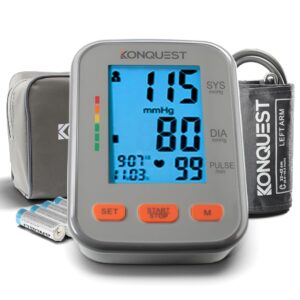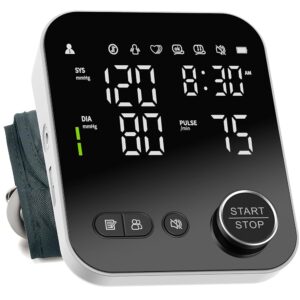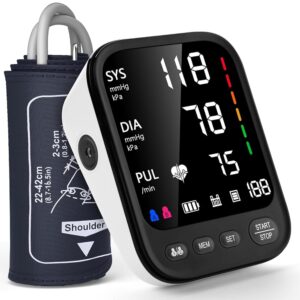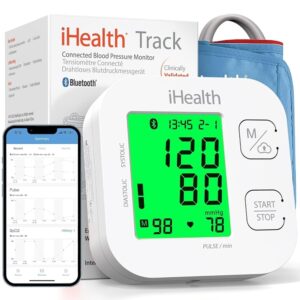



Description
Who the Medline MDS7001B is for, and what it settles
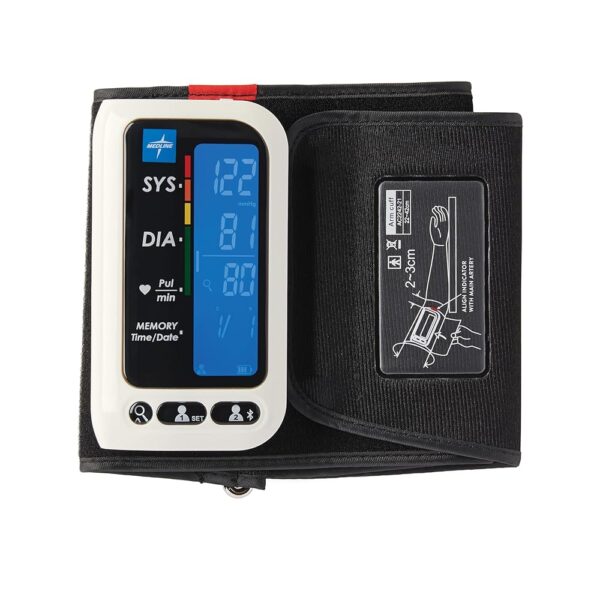
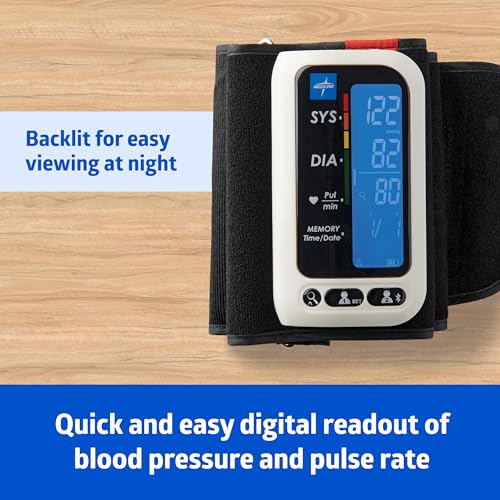
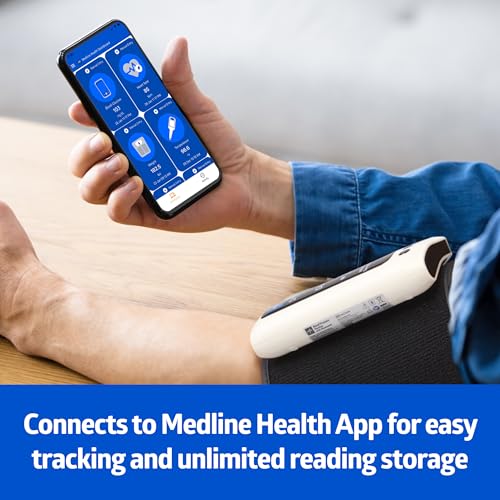
Medline is a supplier most people meet without noticing, because its equipment sits in clinics and care homes rather than in advertising. The MDS7001B is its consumer facing Bluetooth monitor: an upper arm unit with a universal size cuff, a rechargeable lithium battery, a backlit LCD, and a link to the Medline Health app that lifts readings off the device and stores them without limit.
What it settles, more than most listings in this catalog, is the documentation question. This is one of very few products here that names a specific validation listing rather than simply asserting that its readings are good. That deserves a careful reading rather than a repetition, which is what the next section is for.
None of it changes the basic position. This is a home device. It does not diagnose, it does not replace professional medical care, and a reading it produces is one input into a conversation with the clinician who manages your health.
What the validation claim actually says
Medline’s own description states that the monitor meets the Validated Device Listing criteria as listed on validatebp.org, for validation of clinical accuracy, based on the independent review and acceptance of documentation submitted by the manufacturer. Every clause in that sentence is Medline’s, and the qualification at the end is Medline’s too.
Read it precisely. The claim is that a listing body reviewed documentation the manufacturer submitted and accepted it. That is a meaningful step, and it is more than most listings in this catalog offer, which is nothing at all. It is not the same thing as an independent laboratory testing the device on a population and publishing the result, and the specific validation protocol used is not named anywhere in the listing. Because the listing points to a public register, you can check the entry yourself rather than taking a retail description at its word, and we would encourage that over relying on this review.
Medline’s description also states that readings taken are equivalent to those obtained by a trained observer using the cuff and stethoscope auscultation method, and separately calls the product a hospital grade monitor. Both of those are Medline’s statements. We are not repeating either in our own voice, and no reader should treat a home reading as equivalent to a clinical measurement taken and interpreted by a professional. Hospital grade in particular is a marketing phrase with no fixed regulatory meaning.
The listing also advertises a colored World Health Organization indicator that shows whether a readout falls in an optimal band. That is a hardware feature that sorts a number into a color. It is not an assessment of your health, and what a reading means for you is a question for your clinician rather than for a colored bar.
The specifications that matter
Cuff range
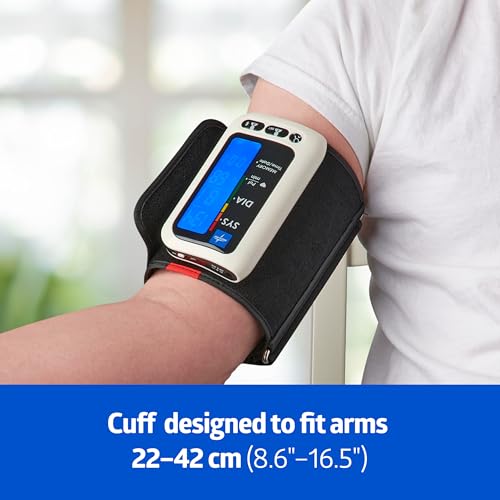
The description publishes a universal cuff of 8.75 to 16.5 inches, given as 22 to 42 centimeters, and the two conversions agree with each other, which is more than several listings in this catalog manage. That is a wide band covering most adult arms. The separate band size specification field gives only 16.5 inches, a single figure with no lower bound, so use the description’s full range rather than that field. Measure the midpoint of your upper arm with a soft tape before ordering, because cuff fit changes readings on a device that is otherwise working correctly.
Connectivity and memory
The device stores 120 measurements on board, split as 60 each for two users, with unlimited history in the Medline Health app over Bluetooth. Sixty per person is enough for about a month of twice daily readings before anything is overwritten, and the app is the intended long term store. Note the dependency: without a phone and the app, this is a 60 reading device per user.
Power
A built in rechargeable lithium battery with a charger, rather than disposable cells. The listing does not publish a capacity, a runtime or a number of measurements per charge, so there is no way to judge how often it needs plugging in. The included components field lists only a charger.
Display and measurement method
The LCD is given as 3.38 by 0.94 inches with a backlight. Medline describes measure during inflating technology, which takes the reading on the way up rather than on the way down, and states this shortens the measurement. That is a description of a mechanism.
Contradictions in the listing
The product title describes an attached universal upper arm cuff. The description describes a wireless cuff. Those are opposite arrangements, and for a buyer the difference is whether there is a hose across the table or not. The listed dimensions of 7 by 2.5 by 4.5 inches suggest a conventional base unit, but we are not resolving the contradiction on that basis. Ask before ordering.
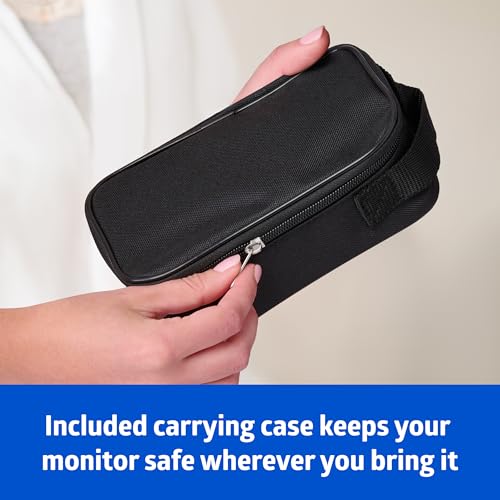
The title also states that a carrying case is included, while the structured components field lists a charger alone, with no cuff and no case. As elsewhere in this catalog, that field appears to be incomplete rather than accurate, but it is worth a packing list from the seller if the case matters.
Using it correctly
Rest for five minutes before you measure. Sit with your back supported, both feet flat, legs uncrossed, and bare the upper arm rather than pushing a sleeve up. Place the lower edge of the cuff about an inch above the elbow crease with the artery marker over the inside of the arm, snug enough that two fingers slide under with mild resistance, and rest the arm so the cuff sits level with your heart. Stay quiet and still until the result appears.
Because history lives in the app, decide early how you will share it. A monitor whose readings can be exported is genuinely more useful at an appointment than one whose numbers have to be read off a screen, but only if you have set the app up and know how to produce the summary. Confirm which user profile is active before each measurement, since a mixed record cannot be untangled afterwards.
Charge it on a routine rather than waiting for it to go flat, and keep a short written log with dates and times as a backup. Apps change, accounts expire, and a paper record does neither.
Alternatives worth comparing
Medline sells several simpler monitors without the app, and our MDS4001 review and MDS3001U review cover the two most relevant, with the MDS4003 sitting between them. If the connected experience is the point, the Withings BPM Connect is the more polished implementation, and the Greater Goods Bluetooth monitor is the closest priced comparison with a similar cuff range. Our home blood pressure monitor section lists all of them with their cuff ranges attached.
Who should buy it, and who should not
Buy the MDS7001B if you want a monitor whose maker points at a public validation register rather than simply asserting quality, if your arm measures inside 22 to 42 centimeters, and if you will actually use the app. Skip it if you want nothing to do with a phone, if you need a device that keeps more than 60 readings per person on its own, or if the hose question decides your purchase and you are not willing to ask the seller first. And when you do have a run of readings, take them to your clinician rather than reading the colored bar and drawing your own conclusion.