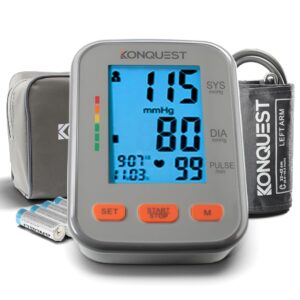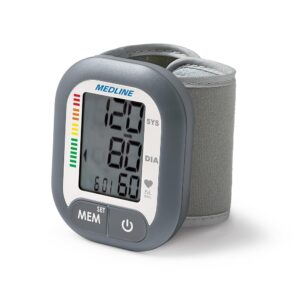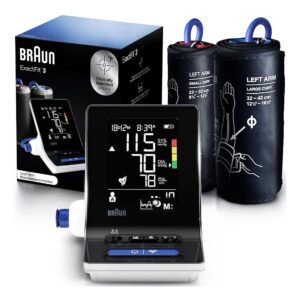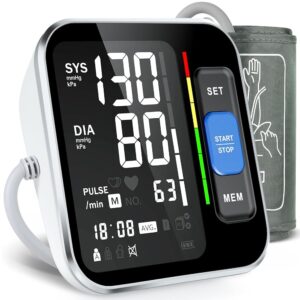

Description
Who This Monitor Is For and What It Settles
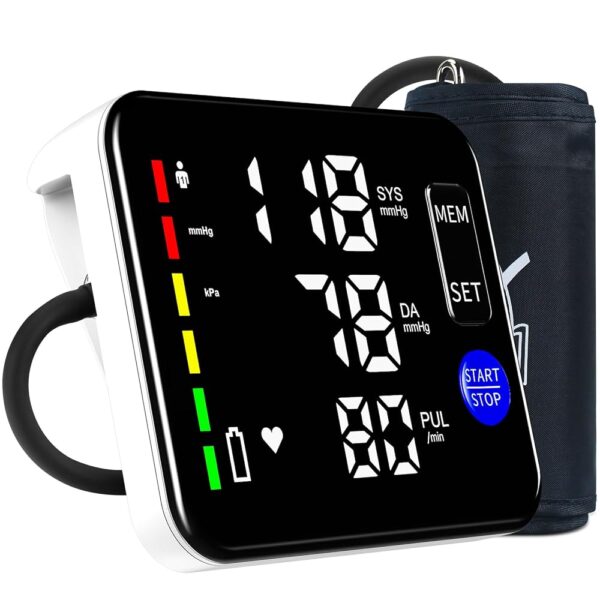
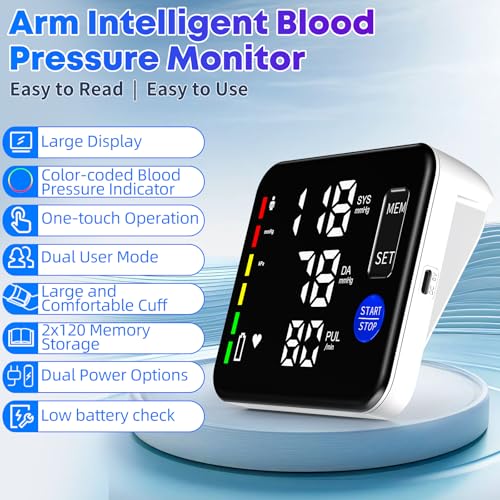
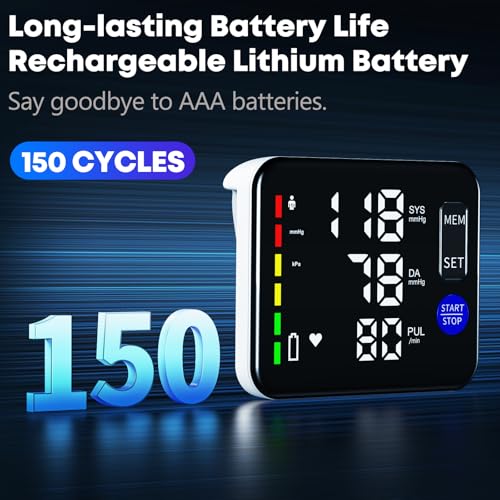
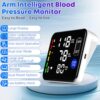
The GUAEVER BP351A is an upper arm blood pressure monitor with a built-in rechargeable lithium cell, a large LED screen, full voice guidance that can be switched off, and 240 stored readings across two users. It is the answer to a specific irritation: a household device that never needs a battery drawer and can be charged like a phone.
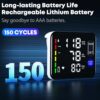
The listing puts battery life at up to 150 uses per charge, which for someone measuring twice a day is a couple of months between charges. Before the specifications, the standing point: this review describes a device and its published data, it does not interpret readings, and a home blood pressure monitor does not replace professional medical care.
The Specifications That Matter
Cuff circumference decides whether this monitor works for a given arm, because a cuff that is too small or too large produces wrong readings on hardware that is functioning perfectly, and nothing on the display warns you. The range is published in the product title and in a bullet as 22 to 42 cm, or 8.7 to 16.5 inches, which covers most adult arms. The structured band size field records only 16.5 inches, dropping the lower bound.
Measure the bare upper arm at the midpoint between shoulder and elbow before ordering. If your measurement falls outside that span, a documented replacement cuff such as the Alcarefam BD42 fitted to a compatible monitor is the sounder route than hoping an adjustable cuff stretches far enough.
Power, voice and memory
The rechargeable arrangement is documented consistently, appearing in the product title, in a bullet and in the stated 150 use figure. No charge time and no charge cycle count is published, so how long a full charge takes and how many years the cell lasts are both unknown. The previous copy on this page described up to a week of use per charge, which does not match the listing’s 150 use figure at all, so that claim has been removed rather than repeated.
The voice function is documented properly. The listing says the screen and full voice guidance work together so measurements can be understood day or night, and states that the voice can be turned off if preferred. It does not say whether volume is adjustable or what language it speaks, both worth confirming before buying for someone who will depend on it.
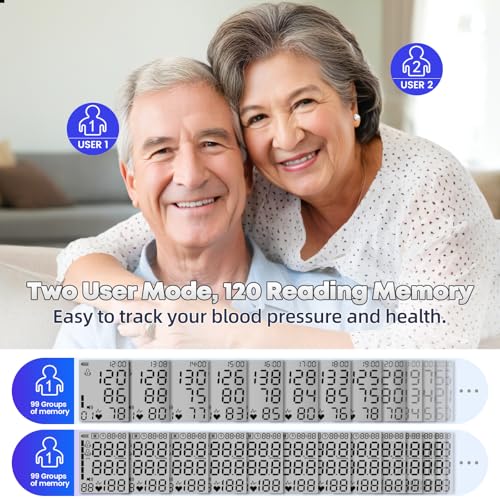
Memory is 120 readings for each of two users, 240 in total. The display is described as a large LED screen; no digit height is published, so the character size has to be judged from photographs.
What the Listing Claims, and Who Is Making the Claim
The lead bullet says the monitor uses the latest chip technology and an advanced algorithm trained on more than 1,000 test subjects, ensuring highly accurate readings, and that it monitors heart rate and alerts the user if an abnormal heartbeat is detected.
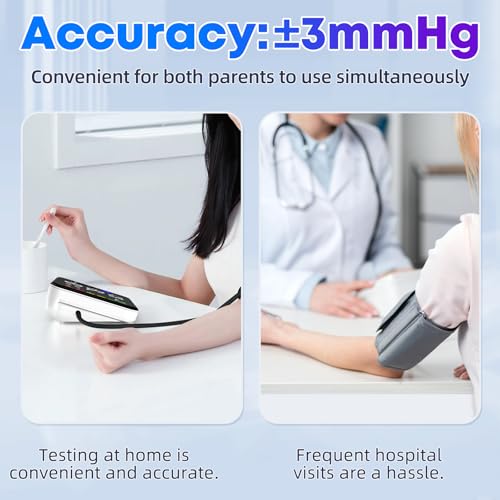
That is the seller speaking, not us. We do not test devices and we do not verify manufacturer claims. No accuracy figure, no tolerance, no validation protocol and no regulatory clearance appears anywhere in the data. A count of test subjects is not a protocol, and it is worth knowing that comparable listings across this catalog cite 1,000, 2,000 and 3,000 testers for the same style of claim under different brand names, which suggests the number is a marketing figure rather than a study parameter.
The heartbeat alert needs stating precisely. It is a flag, not a diagnosis. It indicates the device saw an irregularity during that measurement, without identifying what the irregularity is and without separating a genuine finding from an artifact caused by movement, talking or a poorly placed cuff. If it appears, note it and raise it with a clinician, who is the only party able to assess it. Validation status for the device itself can be checked independently through the registries medical bodies maintain.
Using It Correctly
Fit the cuff to the bare upper arm rather than over a sleeve, with the tubing running down the inside of the arm toward the palm and the lower edge roughly an inch above the elbow crease, closed so one finger slides underneath with mild resistance. Sit with the back supported and both feet flat on the floor, rest the arm so the cuff sits level with the heart, and stay silent and still through inflation and release.
Rest for several quiet minutes before the first reading rather than measuring straight after activity, and use the same arm at the same times each day so the record compares with itself. Charge the device fully before starting a run of measurements rather than partway through one, and set the user slot before the first reading so the two banks stay separate.
Limits and Data Oddities
The description field is empty, so five bullets and a specification table carry everything, and one of those bullets is about customer service. Nothing is published about the pressure or pulse measurement range, tolerance, averaging across readings, charge time or digit height.
Three fields do not stand up. The product dimensions read 3.7 by 3.7 by 3.7 inches, a perfect cube, which looks like a placeholder rather than a measurement; the same pattern appears on several other listings in this catalog. The age range field says teen, on a device whose cuff is sized for adult arms and whose entire marketing addresses older users. And the included components field lists only a cuff, despite the previous copy on this page describing a carrying bag, which is not documented anywhere in the source data.
One more thing worth knowing about the brand. The manufacturer of record here is Shenzhen Jiacom Technology, while GUAEVER’s AES-U131 upper arm monitor is made by Alicn Medical in Shenzhen. The same brand name sits on hardware from at least two different factories, so specifications and build quality on one GUAEVER page should not be assumed to carry across to another, including the brand’s wrist models such as the GUAEVER wrist monitor.
The point that outranks the rest: this device produces numbers and speaks them. It does not diagnose, it does not replace professional medical care, and nothing in this review is guidance about anyone’s health.
Alternatives Worth Comparing
If spoken results matter and you would rather have disposable cells than a sealed battery, the yuwell YE680B documents its voice volume levels and reaches a 17.7 inch cuff. The full selection of upper arm monitors, talking models and replacement cuffs sits in our blood pressure monitor category.
Who Should Buy It, Who Should Not
Buy it if your arm falls inside 22 to 42 cm, a rechargeable device that never needs cells is what you want, and spoken guidance with an off switch suits your household. Skip it if you need volume control or a specific language confirmed first, if you need documented accuracy or validation, if a sealed battery that cannot be swapped worries you over a long ownership, or if you expected a carrying bag, because none is documented.