

Description
Who the HoMedics BPW-O300 is for, and the wrist question first
This is a wrist blood pressure monitor. Before the features, the category itself needs stating plainly: wrist devices and upper arm devices are not interchangeable. On the wrist, the height at which you hold your arm relative to your heart changes the reading, and the measurement site is smaller and more variable than the upper arm. Upper arm devices are the usual recommendation for home monitoring, and a wrist device is normally chosen for a particular reason, most often that an arm cuff cannot be fitted or tolerated.
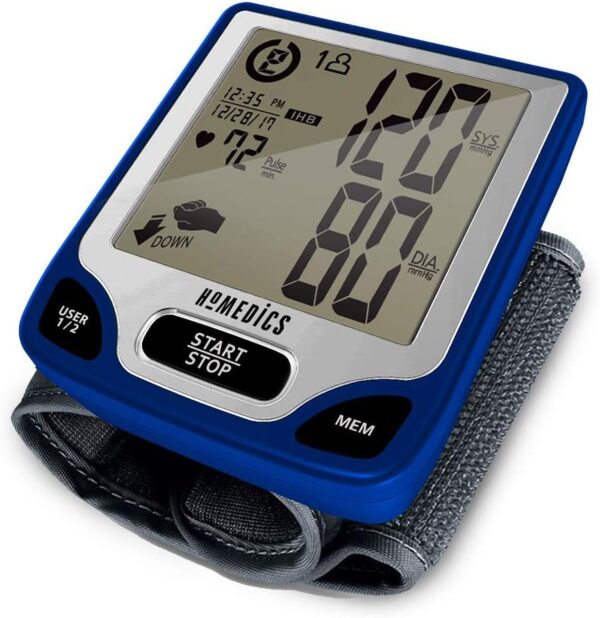
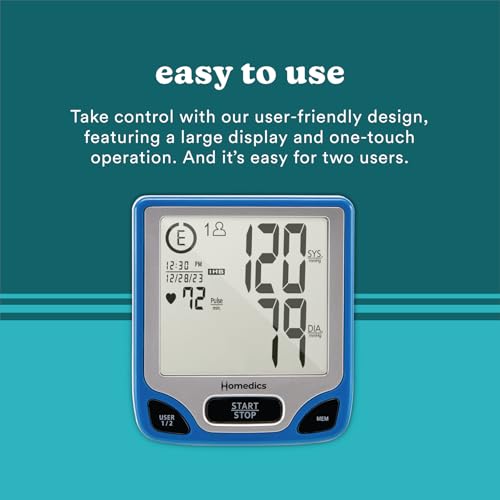
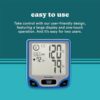
Where a wrist device is right for you, this one is a two user machine with a case, one touch operation and a five year warranty stated in the listing. It produces numbers for a clinician to review. It is not a diagnostic device and it does not replace professional medical care.
Wrist size and the specifications that matter
The stored band size records a range of 5.3 to 7.7 inches. That upper limit is narrower than several competing wrist monitors, which commonly reach 8.5 inches, and it is the first thing to check. Measure the wrist you intend to use, just above the wrist bone, with a tape measure. If you are near or above 7.7 inches this is the wrong device, and the fit problem is not something you can work around by pulling the cuff tighter.
Fit governs the result on a wrist monitor as much as on an arm monitor. A cuff that cannot close properly around the wrist will not compress the artery as the device expects, and the display will show a number rather than an error.
Memory, features and power
The device holds memory for two users and stores up to 120 readings, 60 per user, and each user can view an average of their last three readings. That short series average is a useful function, because single readings vary and three consecutive measurements give a steadier figure to write down. The listing describes what HoMedics calls Smart Measure Technology, which inflates and deflates to a level judged appropriate rather than to a fixed pressure.
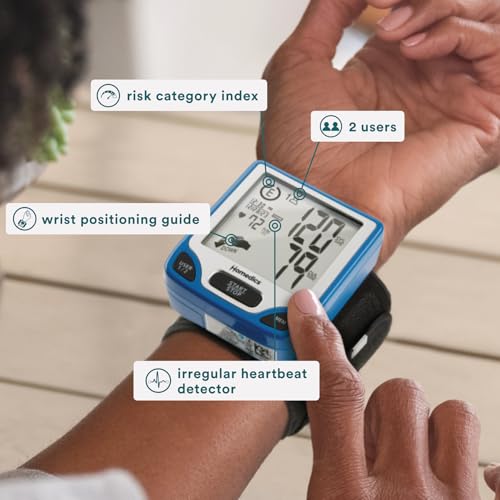
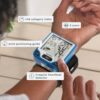
Other listed features are an irregular heartbeat detector, excessive body motion detection, a risk category index, date and time stamping and auto shutoff. Body motion detection is worth having on a wrist device specifically, because movement during inflation is one of the more common causes of an unreliable measurement. The box contains the monitor with the wrist cuff attached, a storage case and two AAA 1.5 volt batteries. The unit weighs 9.59 ounces and measures about 3.07 by 2.72 by 1.12 inches.
Using it correctly, and what the readings are for
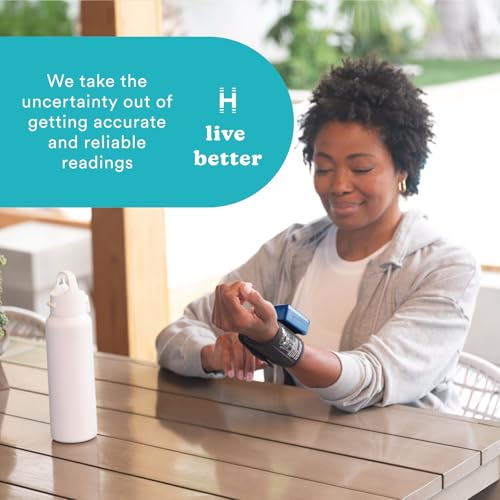
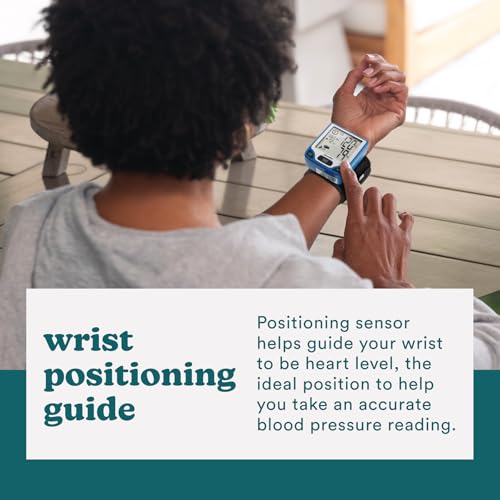
Wrist technique is the whole game. Sit with your back supported and your feet flat on the floor, and rest quietly for several minutes before you begin. Fit the cuff on a bare wrist, snug but not tight, and then support your forearm with your other hand or on a cushion so the device sits at about the height of your heart. Hold still and stay silent while it inflates, and let the motion detection do its job rather than trying to talk over it. Use the same wrist at about the same time each day.
The readings are a record to take to an appointment. What any number means, whether a pattern across your readings is significant, and whether anything about your care should change are questions for a healthcare professional who knows your history. This device does not replace professional medical care, and no reading from it should be used to start, stop or alter treatment on your own.
Two of the listed features need reading in that light. The irregular heartbeat detector flags that the device noticed an irregularity during a measurement. It does not identify what it was and it does not diagnose anything, and the right response is to mention it to a clinician. The risk category index is a band display driven by thresholds the manufacturer has programmed. We are not reproducing those thresholds here as targets, because what a number means for one person depends on their history and their treatment.
Claims, and what the listing does not name
The feature text describes the measurement as personalized, accurate and comfortable, and states that the one touch operation ensures accurate readings. Those are the manufacturer’s descriptions. We do not test products and we will not describe any monitor as accurate in our own voice.
No independent validation protocol and no assessing body is named anywhere in this listing. Where a home monitor has been assessed against a published protocol, the protocol is normally identified. If that assurance matters to you, and on a wrist device it reasonably should, check whether this model number appears on an independent validation listing before ordering.
Limits and gaps
The 7.7 inch upper wrist limit is the main constraint and it rules the device out for a proportion of adults who would fit a competing wrist monitor. There is no app and no wireless connection, so 120 readings across two users is the complete history unless you write them down. Battery life is not published, no AC adapter is described, and no display dimension is given.
Unlike some competing wrist monitors, nothing in this listing describes a heart level positioning aid or a cuff tightness indicator, which means the accuracy of your positioning is entirely down to your own discipline. That is the recurring weakness of the wrist category and it is not solved here.
Alternatives worth comparing
Within the same brand, the HoMedics BPW-O200 is the sibling wrist model and the HoMedics upper arm monitor is the same feature set on the arm, with a 9 to 17 inch cuff. The HoMedics BPA-O200 upper arm model is another. Among competing wrist devices, the Omron BP6350, which adds heart level guidance and a cuff wrap guide covers wrists to 8.5 inches, and the Konquest KBP-2910W is another two user option. Our index of home monitors and cuffs shows which listings are wrist devices.
Who should buy it and who should not
Buy it if a wrist device suits your situation, your wrist measures between 5.3 and 7.7 inches, two people will share it, and you will be disciplined about holding the device at heart level. Do not buy it if your wrist is near the top of that range, do not buy it as a first monitor if an upper arm cuff would fit you, and do not treat the on screen category display as a substitute for a clinician’s assessment.