Description
Who This Monitor Is For and What It Settles
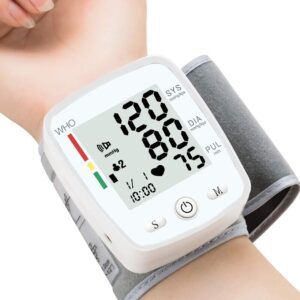
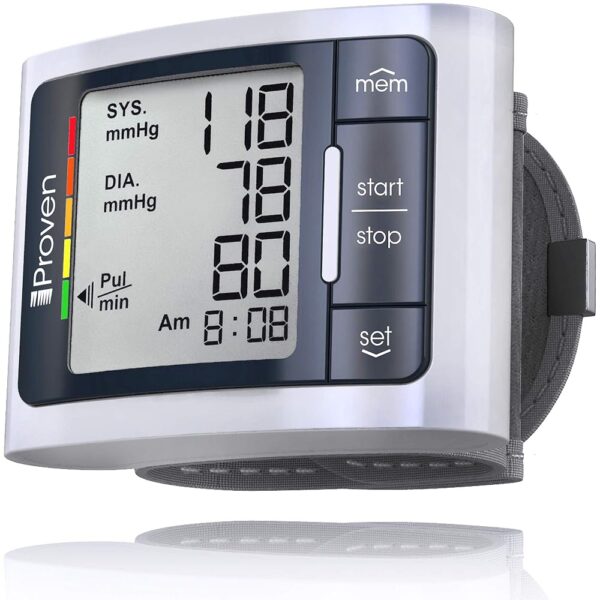
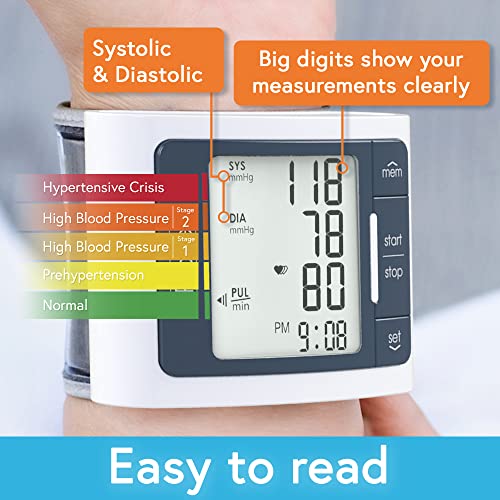
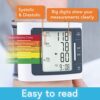
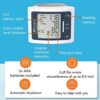
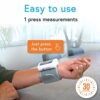
This iProven monitor is a wrist device with a large LCD, a 60 reading memory, a heart rate readout and a colored indicator on the display. It is small, at 3.2 ounces, and it is sold on portability and on a wrist cuff that is larger than the norm for the form factor.
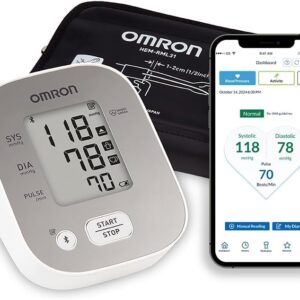
The form factor is the first thing to settle. Wrist monitors are not equivalent to upper arm monitors. On the wrist, the angle of the joint and the height of the device relative to the heart both change the result, so positioning carries far more weight than it does on the arm, and upper arm devices remain the usual recommendation for home monitoring. A documented arm unit such as the Omron BP5100 Bronze is the honest comparison before choosing a wrist device for convenience. This review describes a device; it does not interpret readings, and a home monitor does not replace professional medical care.
The Specifications That Matter
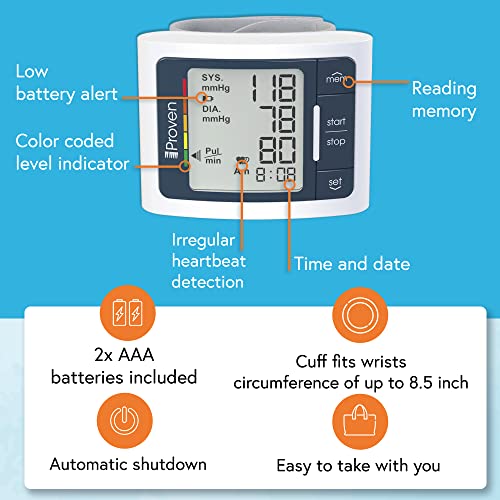
The cuff figure published for this device is a single number: a band size of 8.5 inches. That is unusual in two ways. It gives an upper bound with no lower bound, so a slim wrist has nothing to check against. And 8.5 inches is generous for a wrist, well above the 7.6 or 7.7 inch ceiling most wrist monitors quote, which is consistent with the product title describing a large wrist cuff. If a standard wrist monitor has not closed comfortably for you before, that extra reach is the reason to look at this one.
Measure around the bare wrist just above the wrist bone before ordering. If your measurement is well under 8.5 inches, ask the seller for the lower bound rather than assuming the strap will tighten far enough, because a wrist cuff that closes loosely will not seal against the skin and the display gives no warning when that happens.
Memory, power and the measurement method
Memory holds 60 readings and the listing describes a single set rather than separate user banks, so this is a one person device in practice. If two people need separate records, this is the wrong purchase and something with dual banks is the better fit. Power is battery, included, though no battery type, count or life is published anywhere.
One bullet makes a technical claim worth noting: that the device measures during inflation rather than after it. Some monitors do work that way and it can shorten a measurement. It is worth flagging that the same brand’s upper arm BPM-35 listing makes the opposite claim, stating that measuring during deflation is what makes that device accurate. Both cannot be the reason a device is accurate, and one brand publishing both arguments on different products suggests the sentence is marketing rather than engineering.
The Indicator, the Alerter, and What They Are Not
Two features on this listing need careful handling, and both are about the same thing: the device offering an opinion rather than a number.
The product title advertises a colored AHA indicator. AHA is the American Heart Association, and naming a medical body on a display feature implies an association that nothing in the listing evidences. There is no statement of endorsement, no reference document, no protocol and no permission cited anywhere in the source data. A colored band on a home monitor compares a measured value against thresholds stored in firmware. It is not an assessment by any organization, whatever name is printed beside it.
A bullet then describes a high blood pressure alerter, stating that warning symbols appear if your blood pressure is beyond a normal level. That is the seller’s framing and we do not adopt it. A device does not know what is normal for an individual, it does not diagnose, and a symbol on a screen is not a warning about a person’s health. A further bullet suggests comparing stored readings so that you can take steps to prevent unpleasant surprises, which nudges toward self-directed action on the strength of home numbers. Nothing on this page tells anyone what a reading means or what to do about one. Record the numbers, take the log to a clinician, and let the interpretation happen there.
What the Listing Claims About Accuracy
Two bullets describe accurate data readings in 30 seconds and swift, precise results. Those are the seller’s claims and not ours. We do not test devices. No accuracy figure, no tolerance, no validation protocol and no regulatory clearance appears anywhere in the listing data. Validation status for home monitors can be checked through the registries medical bodies maintain, and that check carries extra weight on a wrist device, which adds a positioning variable on top of whatever the hardware does.
Using It Correctly
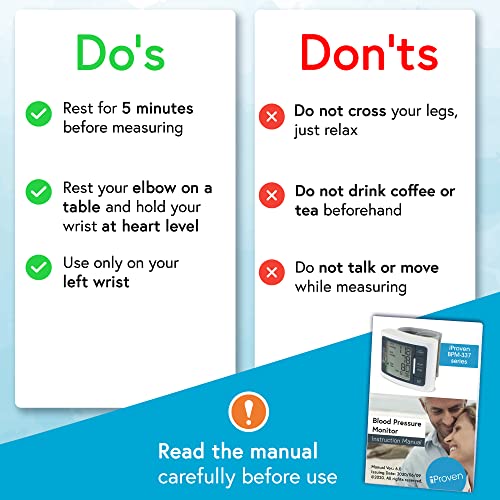
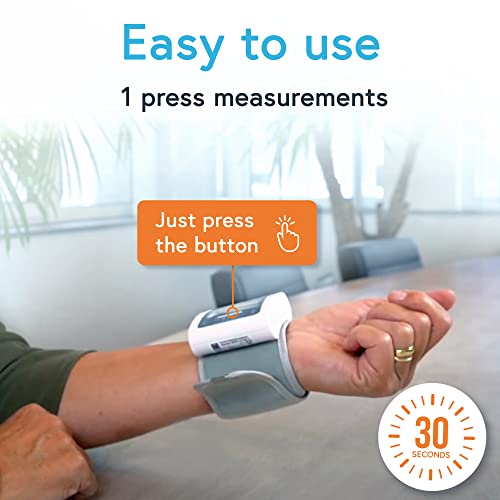
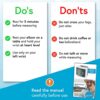
Rest the forearm on a table, sit with the back supported and both feet flat on the floor, and raise the wrist so the device sits level with the heart, supporting the elbow as the manual directs. Keep the wrist straight rather than bent, keep the device against bare skin with the sleeve pushed clear, and stay silent and still through the measurement.
Rest for several quiet minutes before the first reading rather than measuring straight after moving around. The listing itself closes with a sensible instruction, that measurements should be taken at the same time each day so the data can be compared meaningfully, and that is the single most useful sentence on the page. Use the same wrist every time as well.
Limits and Gaps in the Published Data
The description field is empty and no model number is published anywhere; the model name field simply repeats the brand. That makes the device hard to look up independently or match to a manual. The brand name itself is stored inconsistently across the record, appearing with a mangled accented character in several fields, which is an import defect rather than a product fault but tells you how much the data has been through.
Nothing is published about the pressure or pulse measurement range, tolerance, averaging across readings, irregular heartbeat detection, digit height, or battery specification. The listing states FSA and HSA eligibility, which is the seller’s statement about payment eligibility and worth confirming with your own plan.
To restate the point that outranks all of it: this device produces numbers. It does not diagnose, it does not warn anyone about their health, it does not replace professional medical care, and nothing in this review is guidance about a condition or a treatment.
Alternatives Worth Comparing
Buyers who need a large wrist cuff should compare wrist ranges directly, since this is one of the few that publishes a figure above 8 inches. Those whose arms rather than wrists are the constraint would do better with an oversized arm cuff such as the iProven BPC-901 XL cuff on an upper arm monitor. Among wrist alternatives, the Care Touch digital wrist monitor and the SureLife WRS-35H are worth weighing. The full shelf sits in our blood pressure monitor category.
Who Should Buy It, Who Should Not
Buy it if a standard wrist monitor has been too small for you, one person will use it, and 60 stored readings covers your record keeping. Skip it if you can use an upper arm cuff, if two people need separate banks, if you need a model number you can research, if you need documented accuracy or validation, or if the colored indicator and the alerter were the features that attracted you, because neither is what the listing implies.