

Description
Who This Monitor Is For and What It Settles
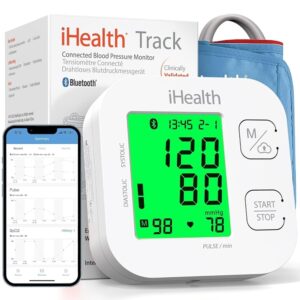
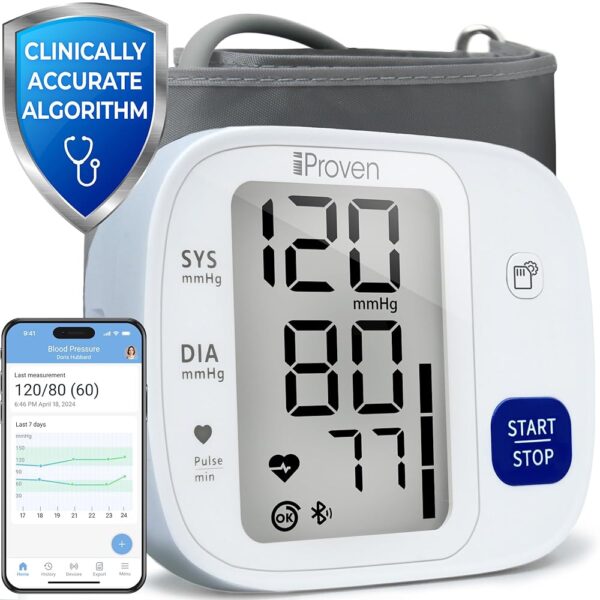
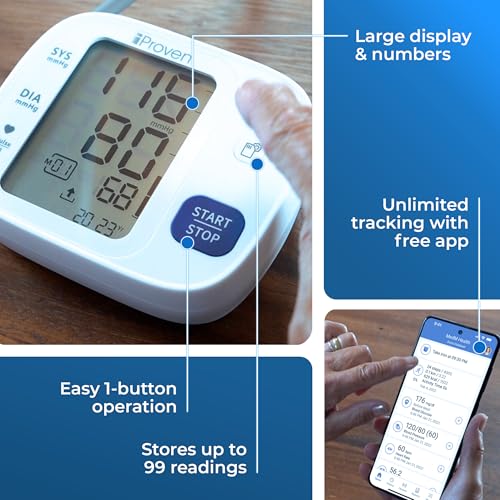
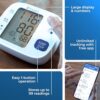
The iProven BPM-35 is an upper arm blood pressure monitor with one button, a large backlit display, Bluetooth to a companion app, and measurement reminders. The listing is explicit that the app is optional rather than required, which is the useful part: you get a phone log if you want one and a standalone device if you do not.
What it settles is whether a connected monitor has to be complicated. This one is a single press, a big screen and an app that stores an unlimited history in the background. Before going further: this review describes a device and its published specifications. It does not interpret readings, it does not tell anyone what their numbers mean, and a home blood pressure monitor does not replace professional medical care.
The Specifications That Matter
Cuff circumference is the figure that governs whether this device can work for a given arm, because a cuff that is too small or too large produces wrong readings on hardware that is functioning perfectly, and the display gives no warning when it happens. This listing publishes the range in exactly one place, the last bullet, and it does so in fractions rather than decimals: 8 and three quarter inches to 16 and a half inches. In decimal that is 8.75 to 16.5 inches, which covers most adult arms.
There is no band size field in the specification block at all, and no size field either. One mention in one bullet, written in a format nobody else in the category uses, is thin documentation for the most consequential number on the page. Measure the bare upper arm at the midpoint between shoulder and elbow before ordering, and if your measurement is near either end, confirm the figure with the seller. Buyers above 16.5 inches should look at an oversized cuff such as the iProven BPC-901 XL cuff, which the same brand publishes properly.
The app, memory and reminders
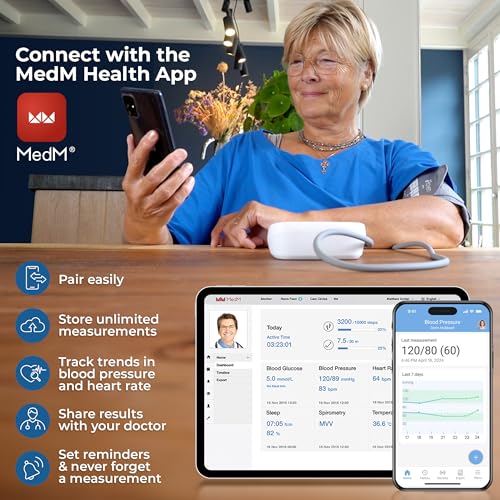
Connectivity runs through the MedM app rather than an app of the brand’s own, which is worth knowing because it means the software roadmap sits with a third party. The listing says the app works on iOS and Android and allows unlimited storage of measurements, and that the monitor can be used without it.
What is not published anywhere is the on-device memory capacity. If you use the device without the app, the listing never says how many readings it holds or whether it separates users. For a monitor sold on the app being optional, that omission undercuts the selling point. Ask the seller, or plan on the app being effectively mandatory for record keeping.
The reminder function is a genuine addition. Scheduled prompts to measure are the kind of feature that makes a home log consistent, and consistency is what makes a log worth anything. The listing frames this as staying proactive about wellbeing, which is the seller’s language; the practical value is simply that readings taken at irregular times are harder to compare.
The Precision Guarantee
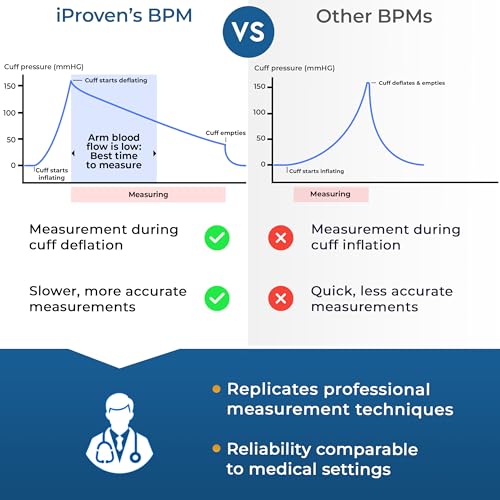
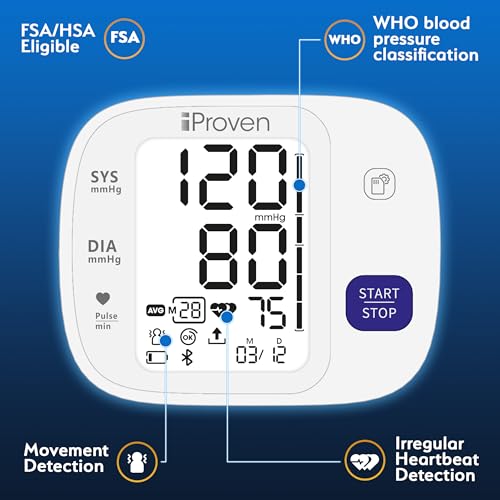
One bullet needs naming rather than summarizing. It states that the device measures during deflation, making it accurate and reliable, and that built-in movement detection alerts you to interruptions during measurement, guaranteeing precision every time.
We do not repeat that. A guarantee of precision every time is not a claim any home blood pressure monitor can support, and nothing in this listing backs it: no accuracy figure, no tolerance, no validation protocol and no regulatory clearance appears anywhere in the source data. Movement detection is a useful feature, because motion during a measurement genuinely does distort it, but flagging movement is not the same as guaranteeing a result. We do not test devices and we do not adopt manufacturers’ performance guarantees.
There is a further wrinkle worth flagging for anyone comparing within the brand. This listing argues that measuring during deflation is what makes the device accurate. The same brand’s wrist monitor listing argues the opposite, that measuring during inflation is what delivers precise results. Both cannot be the reason a device is accurate, and one brand publishing both arguments on different products suggests the sentence is written to sell rather than to describe. Independent validation status can be checked through the registries medical bodies maintain, and that is the only check that settles anything.
Using It Correctly
Fit the cuff to the bare upper arm rather than over a sleeve, with the tubing running down the inside of the arm toward the palm and the lower edge roughly an inch above the elbow crease, closed so one finger slides underneath with mild resistance. Sit with the back supported and both feet flat on the floor, rest the arm so the cuff sits level with the heart, and stay silent and still through the inflation and the release. The movement detection will flag gross motion, but it will not tell you the cuff is the wrong size or sitting too low.
Rest for several quiet minutes before the first reading rather than measuring straight after activity, and use the same arm at the same times each day. Set the reminders and the app pairing up at the start rather than after a run of readings has accumulated, since on-device capacity is unknown.
Limits and Data Quality
The description field is empty, and there is no item model number field anywhere in the specification block; the BPM-35 designation appears only inside a bullet. The brand name is stored inconsistently across the record, appearing with a mangled accented character in the specifications and with a differently mangled version in the stored attributes, which is an import defect rather than a product fault but is a fair signal of how much this data has been through.
Nothing is published about the pressure or pulse measurement range, tolerance, irregular heartbeat detection, averaging across readings, digit height, or battery type and count, though batteries are listed as included. The unit measures 6.37 by 4.05 by 2.87 inches at 15.84 ounces. The listing states FSA and HSA eligibility, which is the seller’s statement about payment eligibility and worth confirming with your own plan rather than a product page.
The point that outranks the rest: this device collects numbers. It does not diagnose, it does not guarantee anything about a reading, it does not replace professional medical care, and nothing in this review tells anyone what a measurement means.
Alternatives Worth Comparing
If the app is the reason you are here, the Withings BPM Connect and the Greater Goods Bluetooth monitor are the natural comparisons, both built around their own software rather than a third party app. If you want on-device user slots so the phone is genuinely optional, the Omron BP7350 publishes what this listing leaves out. The full shelf sits in our blood pressure monitor category.
Who Should Buy It, Who Should Not
Buy it if your arm measures between 8.75 and 16.5 inches, you want scheduled reminders and an app log, and you are content for the app to carry the history. Skip it if you need to know the on-device memory before you commit, if a third party app is not something you want your record depending on, if you need a published validation protocol, or if a bullet guaranteeing precision every time is the kind of claim that should end a purchase rather than start one.