


Description
Who the Meraw Cedar TMB-2084-T is for
This is an upper arm automatic blood pressure monitor with Bluetooth, a wide range cuff and a companion app, listed as FSA and HSA eligible. It records numbers for a clinician to review. It is not a diagnostic device and it does not replace professional medical care.
The decision it settles is whether you want a connected monitor whose value sits in the app rather than in on device features. Meraw’s proposition is a straightforward machine that hands the history to a phone, where you can view trends and share a report with a clinician. If you will not set the app up, read the memory section below carefully, because this listing does not publish an on device memory figure at all.
Cuff range and the specifications that matter
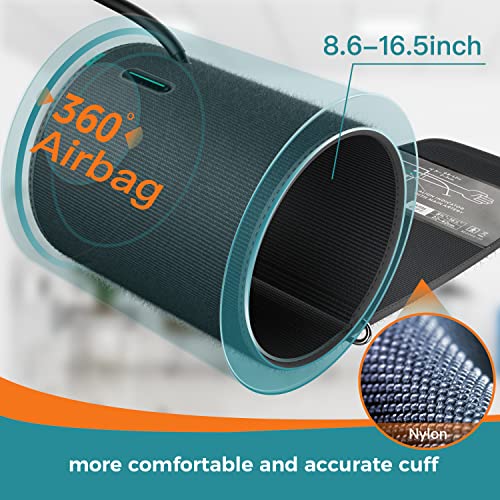
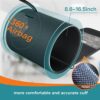
The listing states a wide range cuff fitting upper arms of 8.7 to 16.5 inches, given as 22 to 42 cm. Our stored band size attribute records only 16.5 inches, dropping the lower bound, so use the full range. Measure the circumference of your bare upper arm with a cloth tape, midway between elbow and shoulder, before ordering.
Cuff fit is what decides whether a reading represents anything. One too small or too large produces a number that does not match what the same monitor would record with a correctly sized cuff, and there is no warning on the display. At 16.5 inches this is a standard wide range cuff rather than an extra large one, so anyone above that should look elsewhere.
Two specifications worth having
Two figures in this listing are more useful than the usual marketing. The first is a maximum inflation pressure of 400 mmHg, which is a genuine engineering specification and one that most listings in this catalog omit entirely. The second is a description of the cuff inflating through the full 360 degrees around the arm rather than pressing on one side.
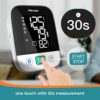
The listing also describes cuff detection and a movement notice, both of which flag the two commonest causes of a bad home reading, and an intelligent pressurization system which it contrasts with the fixed pressurization used elsewhere, on the grounds that a fixed approach can leave the cuff too loose or too tight during measurement. Those are design descriptions rather than measurement claims, but they address real problems.
Memory, the app, and what is not published
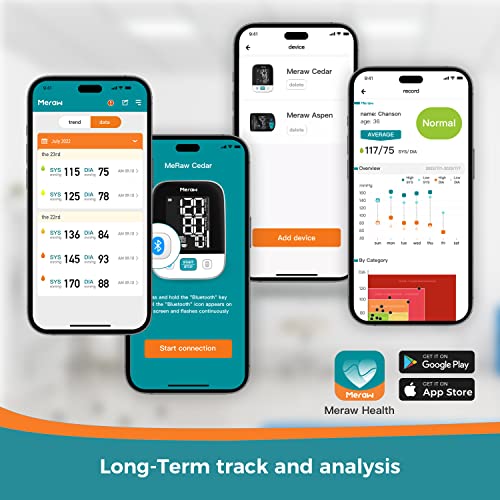
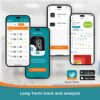
The app is the storage here. Bluetooth connects to the free Meraw Health app, where you can view historical measurements, track trends and share reports with family or a clinician. Data export is the genuinely useful part, because a clean report is far easier for a clinician to read than a page of handwritten figures.
What the listing does not publish is any on device memory capacity. There is no figure anywhere in the feature text or the description, and our stored size attribute contains the words one user, which suggests a single user device but does not confirm a number. That is a real gap. If you intend to use the monitor without the app, or you want a second person to keep separate records on the device itself, ask the seller for the on device memory and user count before ordering.
The box contains the monitor, the cuff, four alkaline AAA batteries and a manual, with a stated twelve month warranty. The unit weighs 18 ounces.
The ESH claim, and what to do with it
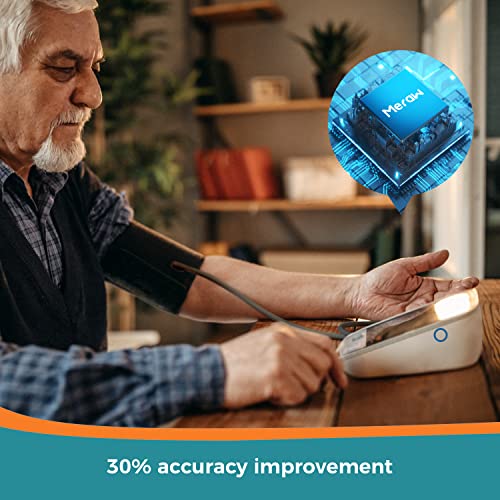
This listing states that the monitor meets ESH performance standards for home use, and it heads two features with the phrase clinical accuracy. ESH refers to the European Society of Hypertension, which publishes a protocol for assessing blood pressure monitors, so naming it is more specific than most claims in this catalog.
Two qualifications belong with that. It is Meraw’s statement rather than a test we have performed, and we do not test products, so we will not describe any monitor as accurate or clinically accurate in our own voice. And the listing names the body without naming the protocol version, the study, the population or where the result was published, so there is nothing in it a reader can follow directly.
What to do with a claim like this is straightforward: look up this model number on an independent validation listing and confirm the current status yourself. Validation attaches to a specific device and cuff combination and listings are updated over time. That check takes a few minutes and it converts a marketing sentence into something you can rely on or set aside.
Using it correctly, and what the readings are for
Sit with your back supported and your feet flat on the floor rather than crossed, and rest quietly for several minutes before measuring. Fit the cuff on a bare upper arm rather than over a sleeve, and support the arm so the cuff sits at about the height of your heart. Do not talk during the measurement, and let the movement notice do its job rather than fidgeting through it. Use the same arm at about the same time each day.
What you collect is a record for a conversation. What a reading means, whether a pattern across your readings is significant, and whether anything about your treatment should change are questions for a healthcare professional who knows your history. This monitor does not replace professional medical care, and no reading from it should be used to adjust medication on your own.
Irregular heartbeat monitoring appears in the product title. Where such a function appears it is a flag: it reports that the device noticed an irregularity during a measurement, it does not identify a rhythm and it does not diagnose anything.
Limits and gaps
The missing on device memory figure is the clearest gap. Beyond that, no averaging function is described, no display dimension is given, and no AC adapter is listed. Bluetooth carries the usual conditions: check that your phone runs a supported version of iOS or Android, and remember the history lives on a service the manufacturer maintains.
A note on our own earlier summary of this product, which said the readings match professional equipment. Nothing in the listing supports that comparison, we did not measure anything, and it has been removed.
Alternatives worth comparing
Within the same brand, the Meraw TMB-2085-K, which is the wrist version with a fuller indicator set is the sibling. The TMB prefix recurs across other brands, including the Etekcity TMB-1583-BS and the Checkme TMB-2266. For connected monitors that do publish their on device memory, the RENPHO RP-BPM001S with 240 readings and the Microlife BP3GY1-2N with 120 per user and a guest mode are the comparisons. Our index of home monitors and cuffs lists what each publishes.
Who should buy it and who should not
Buy it if you want a connected monitor with a wide range cuff and a published inflation pressure, your arm falls between 8.7 and 16.5 inches, and you will use the app for your history. Do not buy it if you need a stated on device memory or separate records for two people, since neither is published, and do not read the ESH reference as a validation you have seen. Check it yourself and take your readings to a clinician.