

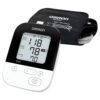

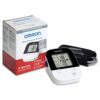
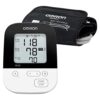
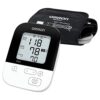
Description
Who the Omron 5 Series BP7250 is for
This is an upper arm automatic blood pressure monitor with a Bluetooth connection, positioned by Omron as the wireless version of its 5 Series. The listing states that it includes the features of the non wireless 5 Series model, the BP7200, and adds a connection to the free Omron Connect app. It records numbers for a clinician to review. It is not a diagnostic device and it does not replace professional medical care.
The decision it settles is about how you intend to keep a history. If you want a running record on a phone that you can show at an appointment, and only one person will be using the device, this is the shape of product that does that. If two or more people need separate records on the device itself, look elsewhere, and the reason is in the memory section below.
Cuff range and the specifications that matter
The cuff is a soft, wide range, D ring contoured cuff, and the listing states that it fits standard and large adult arms from 9 to 17 inches in circumference. The stored attribute records the same figure. Measure your bare upper arm at the midpoint between shoulder and elbow with a tape measure before ordering and check it against that range.
This is the specification that decides whether anything else matters. A cuff that is too small or too large for the arm produces readings that do not reflect what the same monitor would record on a properly fitted arm, and there is no warning on the display when it happens. The D ring is a fitting aid, designed so that one person can thread and tighten the cuff single handed, which is a genuine practical benefit if you are measuring your own non dominant arm.
Memory, and a limit that catches people out
The device stores 60 readings for one user, with date and time stamps. That is one user, not two, and it is the difference between this model and several others in the range. Where the memory becomes unlimited is in the Omron Connect app, which also supports more users and produces trend graphs you can share. The description names iOS and Android compatibility and an Amazon Alexa integration through the Omron Health skill. If the phone connection is not something you will set up, treat this as a 60 reading single user device.
The stored attributes record the power source as corded electric and battery powered, while the only listed included component is the cuff. No AC adapter appears in the components list. Read that as battery operation out of the box, with mains operation possible only if you source the adapter separately.
Using it correctly, and what the readings are for
How the reading is taken changes the reading. Sit with your back supported, feet flat on the floor and not crossed, and rest quietly for several minutes first. Fit the cuff on a bare upper arm rather than over a sleeve, and support the arm so that the cuff sits at about the height of your heart. Do not talk while the measurement runs. Use the same arm at about the same time of day each occasion. The listing carries its own note that blood pressure varies constantly because of factors including stress, time of day and how the cuff is wrapped, and that is worth reading twice before you draw conclusions from any single number.
The output here is a record, not an answer. What a reading means, whether a pattern across readings matters, and whether anything about your treatment should change are questions for a healthcare professional who knows your history. This monitor does not replace professional medical care, and no reading from it should be used to start, stop or adjust treatment on your own.
The indicators and the claims
Two on screen features need describing carefully. The enhanced Irregular Heartbeat Counter displays the number of irregular heartbeats the device detected during a measurement, up to three. That is a flag. It tells you the device noticed something in the rhythm. It does not identify what it was and it does not diagnose any condition, and the right response is to mention it at your next appointment. The hypertension indicator is a symbol that appears when a reading crosses a threshold programmed by the manufacturer. We are not reprinting that threshold as a target, because what a number means for one person depends on their history and their treatment, and that is a clinical judgment rather than something a device decides.
On accuracy, the listing states that Omron is the home blood pressure monitor brand recommended by doctors and pharmacists for clinically accurate home monitoring, and the leading selling manufacturer in the category for over forty years. Those are Omron’s claims. We do not test devices and we will not describe any monitor as accurate in our own voice. No independent validation protocol is named in this listing, and where a model has been assessed against a published protocol the protocol is normally identified. A reader who wants that assurance should check an independent validation listing for this specific model number.
Limits and gaps
The single user device memory is the main limit and it is easy to miss when the box says 5 Series. Bluetooth compatibility is stated for iOS and Android but Omron maintains a compatibility page, which means older handsets may not connect. Battery life is not published, no AC adapter is included, and the unit weighs 0.75 pounds. Nothing in the listing describes a carrying case.
A note on our own earlier summary of this product, which claimed that the accuracy of the readings rivals professional medical devices. Nothing in the listing data supports a comparison of that kind, we did not measure it, and we have removed it.
Alternatives worth comparing
Within the same range, the Omron 5 Series BP742N, which stores 50 readings for each of two users is the model to look at if the single user memory is the problem, and the Omron 7 Series BP7350 combines two user memory with the app. Higher up, the Omron Gold BP5350 and the Omron Platinum add memory and features, while the Omron BP5100 Bronze is the simpler end. Our index of home monitors and cuffs lists the cuff range and memory each listing publishes.
Who should buy it and who should not
Buy it if one person will use it, your arm measures between 9 and 17 inches, and you want readings to accumulate in an app rather than a notebook. Do not buy it if two people need separate records on the device, if your phone may not be supported, or if you need mains power without buying an adapter separately. Take the readings you collect to a clinician rather than interpreting them yourself.