Description
Who This Monitor Is For and What It Settles
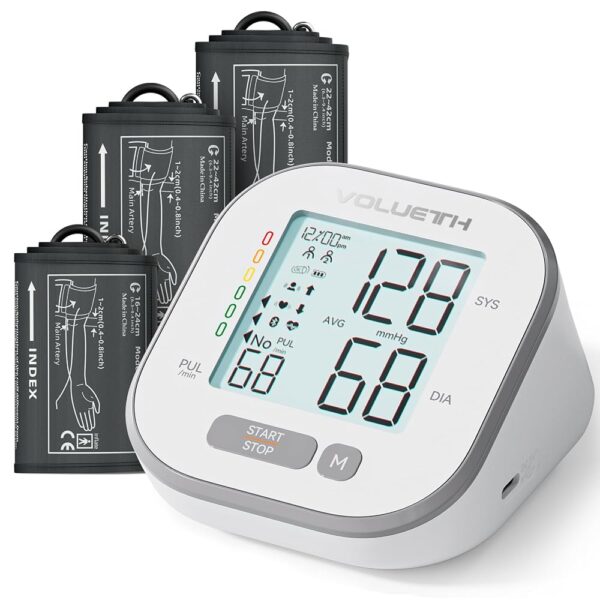
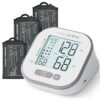
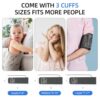
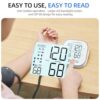
The VOLUETH DBP-62A1B is an upper arm blood pressure monitor sold as a three cuff kit rather than a single device. That is the whole proposition. One household, one monitor, three cuffs in small, medium and large, so a small-armed adult and a large-armed adult do not need two machines. The listing title leads with pediatric use and markets the kit for family health monitoring, and the age range field lists both adult and child.
That framing needs a plain caveat before anything else. Measuring a child’s blood pressure is a matter for the child’s clinician to direct, including which cuff and which technique are appropriate. This review describes a device and its published specifications. It does not advise anyone on measuring a child, it does not interpret any reading, and a home monitor does not replace professional medical care. Numbers collected at home belong in a conversation with a clinician.
The Specifications That Matter
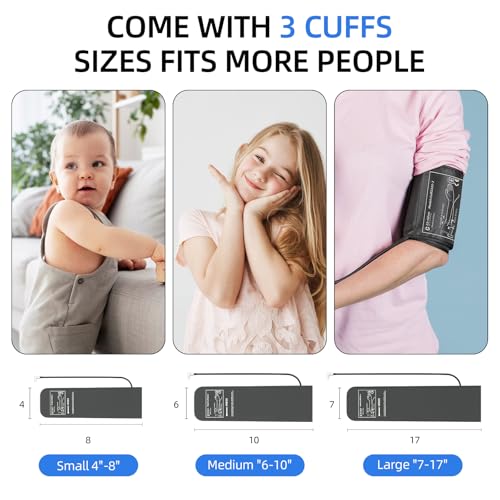
Cuff fit is the reason this kit exists, so the cuff ranges deserve the closest reading. The listing gives three sizes: small at 4 to 8 inches, medium at 6 to 10 inches, and large at 7 to 17 inches. Read those numbers together and two oddities appear. The three ranges overlap heavily rather than tiling cleanly, with 6 to 8 inches covered by both the small and the medium cuff and 7 to 10 inches covered by both the medium and the large. More striking, the large cuff is claimed to span 7 to 17 inches, a ten inch range on a single bladder, which is a far wider span than a standard adult cuff normally covers. The listing does not explain how one cuff achieves that, and we are not going to resolve it on the manufacturer’s behalf. Measure the bare upper arm at the midpoint between shoulder and elbow and choose the cuff whose middle sits closest to that measurement rather than one whose extreme end merely reaches it.
Power, memory and what is in the box
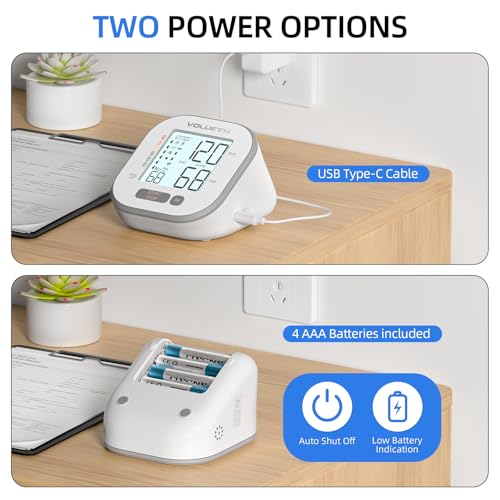
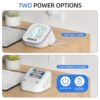
Power is offered two ways, and here the listing contradicts itself. One bullet says the monitor takes two AAA batteries, described as included, plus USB Type-C power. The structured included-components field instead lists three cuffs, the monitor, a carry bag, a USB Type-C cable and a battery entry that arrived garbled in the import as a four-battery token. Two AAA cells and four cells are different things when you are stocking a drawer. The listing also states that a 5V 1A USB adapter is not included, so the Type-C option requires a plug you already own.
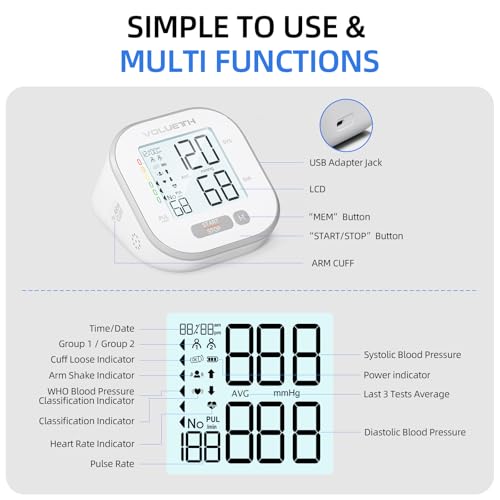
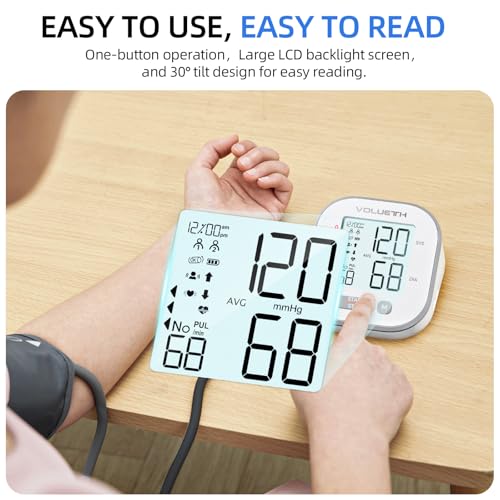
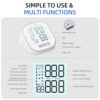
Memory holds up to 300 readings split across two users, with a date and time stamp on each, plus an average of the last three readings. The display is described only as a large LCD with a backlight; no digit height is published, so legibility has to be judged from photographs. Body size is 3.9 by 3.6 by 2.5 inches at a listed 1.39 pounds, which is heavy for a unit that small and probably reflects the full kit rather than the monitor alone.
What the Listing Claims, and Who Is Making the Claim
The lead bullet is the strongest claim in the source data and it needs attributing carefully. VOLUETH states that the device uses upgraded accurate signal processing technology, that more than 100,000 data points were tested for reliability, that it is calibrated to the best performance, and that the buyer can rest assured about detecting a hypertension issue using the on-device classification bar. Every part of that is the seller speaking. We do not test devices and we do not verify manufacturer claims. No validation protocol is named, no clearance is cited, and no tolerance figure appears anywhere in the data.
The last part of that bullet is the one to be most careful with. A classification bar on a home monitor compares a value to a threshold stored in firmware. It does not detect a condition, it does not diagnose, and treating it as a screening result is the seller’s suggestion rather than a supportable one. Record the numbers and let a clinician assess them. Independent validation status for any home monitor can be checked through the validated-device registries maintained by medical bodies, and that check is worth doing before relying on any device.
Using It Correctly
Fit the correct cuff to the bare upper arm, not over a sleeve, with the tubing running down the inside of the arm toward the palm and the lower edge about an inch above the elbow crease. Sit with the back supported and both feet flat, rest the arm so the cuff is level with the heart, and stay silent and still through inflation and release. Use the same arm and the same time of day each session so the log compares with itself. The listing says the unit includes cuff detection and a wrong-operation reminder icon, which flags an obvious setup error but is not a substitute for placing the cuff correctly in the first place.
Assign the user slot before the first reading so the two memory banks stay separate, and label the cuffs if more than one person uses the kit, since swapping cuffs mid-log is exactly the kind of change that makes a record hard to compare later.
Limits and Gaps in the Published Data
The description field is empty, so the entire technical picture rests on six bullets and a specification table. There is no measurement range for pressure or pulse, no tolerance, no digit height, no stated battery life, and no mention of irregular heartbeat detection. Several fields arrived mangled in the import, including the size field, which reads as small, medium and large run together with corrupted separator characters. The manufacturer of record is JOYTECH Healthcare, which is a different name from the brand on the box, a normal arrangement but worth knowing if you need warranty support.
The safety statement bears repeating in its own right. This is a device for collecting numbers. It does not replace professional medical care, it does not diagnose anything, and nothing in this review tells you what any reading means. That applies with extra force to the pediatric framing on the listing, where the choice of cuff and the decision to measure at all should come from the child’s clinician.
Alternatives Worth Comparing
If the pediatric cuff is the real reason you are here, buy a purpose-made one rather than the smallest cuff in a general kit; the Elera pediatric blood pressure cuff and the Pro Comfort pediatric arm cuff both publish their ranges without the overlap problem seen here. Adults with slim arms who only need one size should look at the CareLiving small blood pressure cuff instead of a three cuff bundle. If you would rather have a single well documented monitor and add a second cuff later, the A&D Medical UA-651 is the plainer route. The full range sits in our blood pressure monitor category.
Who Should Buy It, Who Should Not
Buy it if a household genuinely needs more than one cuff size, you are comfortable choosing between overlapping ranges by measuring rather than guessing, and you treat the on-device classification bar as decoration. Skip it if you need a single documented cuff range you can trust, if the 7 to 17 inch large cuff span bothers you as much as it should, if you were counting on the batteries and adapter being sorted out of the box, or if a clinician has told you a specific cuff size for a child in the house.