
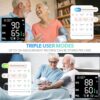
Description
Who this Yammoya monitor is for, and what it settles
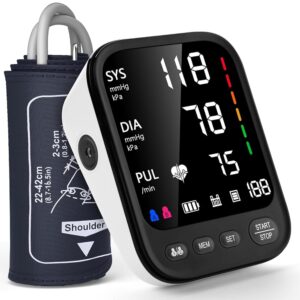
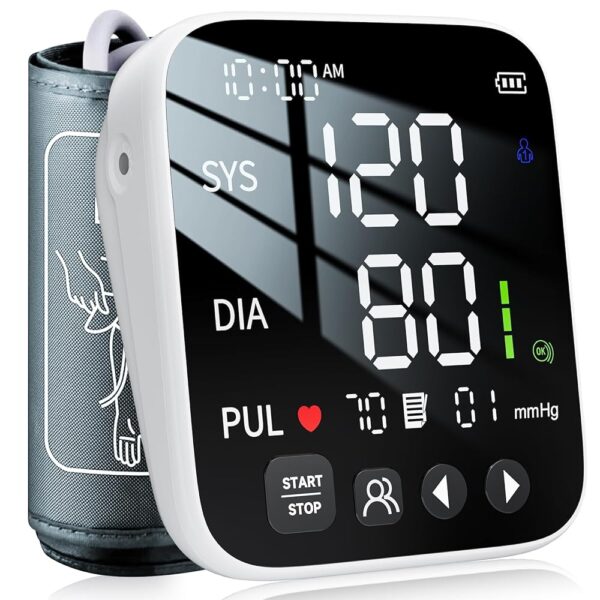
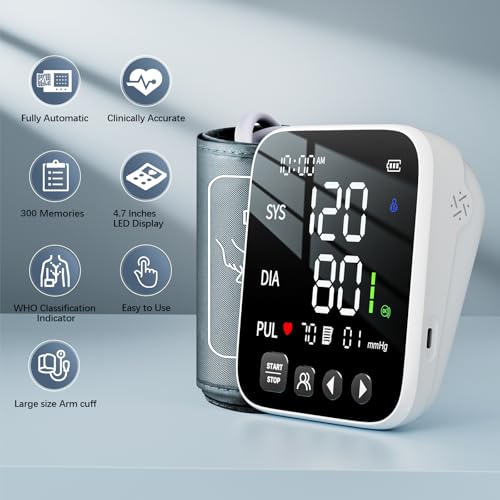
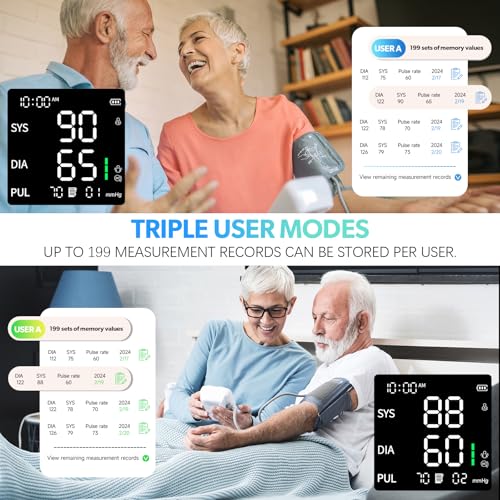
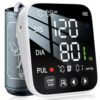
This is an automatic upper arm monitor aimed at a household that wants a very large screen and a deep memory without paying for a connected device. Yammoya lists a 4.7 inch backlit display, two user profiles holding 300 readings each, single button operation and automatic averaging of three consecutive measurements. On paper that is a lot of storage, roughly five months of twice daily readings per person before anything is overwritten, and the screen is larger than most units in this part of the catalog.
What it does not settle is fit, and that is the problem this review keeps returning to. Before anything else: this device measures and records, it does not diagnose, and it does not replace professional medical care. Readings belong in a conversation with the clinician who manages your health.
The claims on the box, and how to read them
The product title states that the device is medical grade and FDA cleared. Those are the seller’s claims, not ours, and they are worth unpacking because the two phrases do different work. Medical grade is a marketing term with no fixed regulatory meaning. FDA clearance is a specific regulatory status, and a cleared device has a clearance number attached to it. No clearance number appears anywhere in this listing. No submission number, no company registration and no date are given either. We are not repeating either phrase in our own voice, and we are not describing this device as accurate or clinically validated, because nothing in the published data supports doing so.
If regulatory status matters to your purchase, and for a device you intend to rely on it reasonably should, you can look a clearance up yourself in the FDA’s public database using the manufacturer name rather than the brand name. That distinction matters here: the brand on the box is Yammoya, but the manufacturer field names Shenzhen AOJ Medical Technology. The same manufacturer appears behind other brands in this catalog, including the products covered in our Invaxe AOJ-30G review and our Abesee AOJ-30C review. A single factory selling through several brand names is common in this category, and it means a claim made under one brand tells you little about the device sold under another.
The listing also credits the readings to advanced chips and AI algorithms. That is manufacturer copy describing a mechanism. No accuracy figure, tolerance or validation protocol is attached to it, so there is nothing here we can attribute beyond the claim itself.
The specification that is missing
This listing does not publish a cuff circumference range. Not in inches, not in centimeters, not anywhere. The size field says Large, and a second size field on the same product says Extra Large, and those two do not agree with each other. Neither is a measurement.
That gap is the most consequential thing about the product. A cuff that is too small for the arm or too large for it will change the numbers a properly functioning monitor produces, so a monitor sold without a stated range is a monitor you cannot size before it arrives. Measure the midpoint of your upper arm with a soft tape, arm relaxed at your side, write the number down, and ask the seller for the cuff range in centimeters before ordering. If they cannot supply one, buy something that publishes it. Our home blood pressure monitor section lists ranges alongside the machines for exactly this reason.
The rest of the specifications
Display and controls
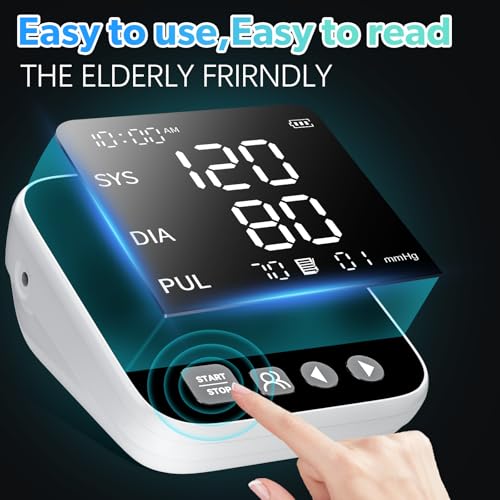
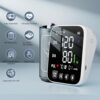
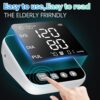
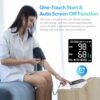
Yammoya states a 4.7 inch backlit screen with bold numerals, readable in the dark, and operation from a single button with no menu to work through. For anyone who has struggled with a small unlit display, that is the strongest practical reason to consider this unit.
Memory and averaging
Two users, 300 readings each. The listing also states that three consecutive measurements are averaged into one result, which is a more specific and more useful description than several competitors manage. Confirm the spacing between the three measurements if a clinician has specified a routine, because the listing does not give it.
Irregular heartbeat alerts
The device is described as detecting irregular heartbeats and alerting you immediately. Treat that alert as a flag rather than a finding. It reports that the device saw an irregularity during one measurement, and it is a prompt to mention the alert to a clinician. It does not diagnose an arrhythmia, and Yammoya does not claim that it does.
Power and dimensions
Listed dimensions are 6 by 3.1 by 4.5 inches, given twice in the same listing in slightly different formats. Power source is battery powered, with no battery type, count or included status stated, and no AC adapter named. That is another gap worth resolving with the seller before ordering, because a monitor with a large backlit screen will get through cells faster than a small unlit one.
Using it correctly
Sit still for five minutes before you measure, back supported, both feet on the floor. Put the cuff on a bare upper arm, lower edge about an inch above the elbow crease, artery marker on the inside of the arm, snug enough that two fingers slide under with mild resistance. Rest the arm on a table so the cuff sits level with your heart. Stay quiet and stay still until the result appears.
If you use the averaging feature, let all three measurements complete rather than stopping after one that looks reassuring or alarming. Select the correct user profile first, because 300 stored readings are only useful if they belong to one person. Keep a short written log with dates and times alongside the on device memory, since that is the format most clinicians actually want to look at.
Alternatives worth comparing
If a published cuff range is what you need, the Omron BP5100 states its band size plainly and comes from a manufacturer whose validation record is straightforward to look up. For buyers who specifically need a larger band, the Qutryven extra large cuff monitor is built around that requirement rather than leaving it unstated. And if the appeal here is the big screen rather than anything else, the Abesee upper arm monitor covers similar ground at a similar level of documentation.
Who should buy it, and who should not
Consider this monitor if a very large lit display and deep memory are your priorities, and only after the seller has given you a cuff circumference range in writing that matches your measured arm. Skip it if you are buying because the title says medical grade and FDA cleared, since neither phrase comes with a number attached here, and skip it if you need to know before ordering what batteries it takes and what size arm it fits. A monitor you cannot size is a monitor you cannot trust to be measuring the right thing, and that has nothing to do with how good the screen is.