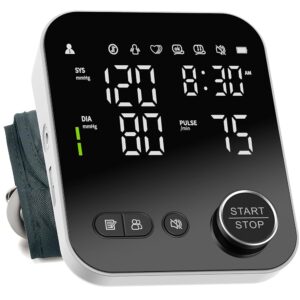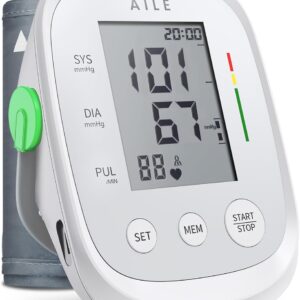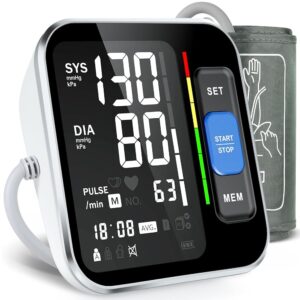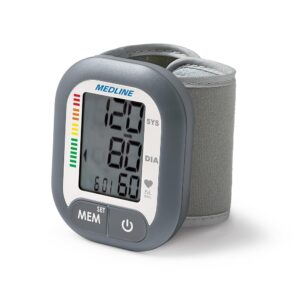

Description
Who the GUAEVER BP186W is for, and what it settles
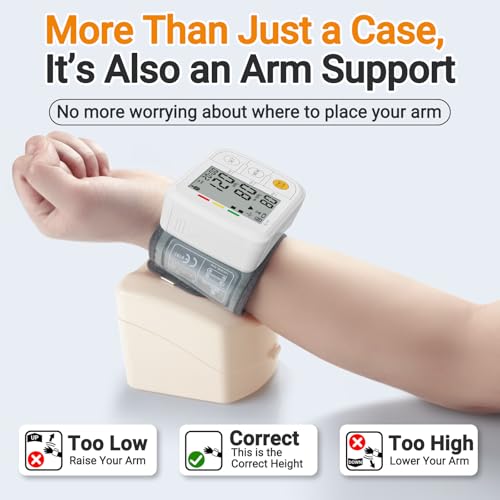
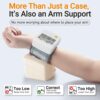
This is a wrist monitor with one genuinely clever idea attached to it. The carrying case is designed to double as a positioning aid: you rest your left hand palm up on the case, which holds the wrist at a consistent height and angle instead of leaving you to guess. On a wrist device, where posture moves the result more than anything else, a physical prompt to sit the same way every time is worth more than most feature list entries.
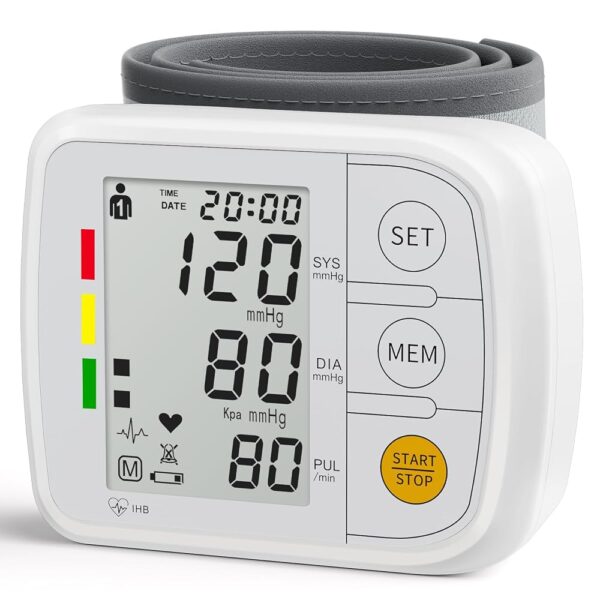
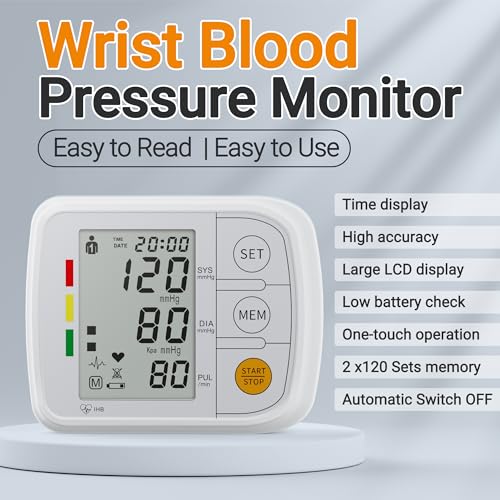
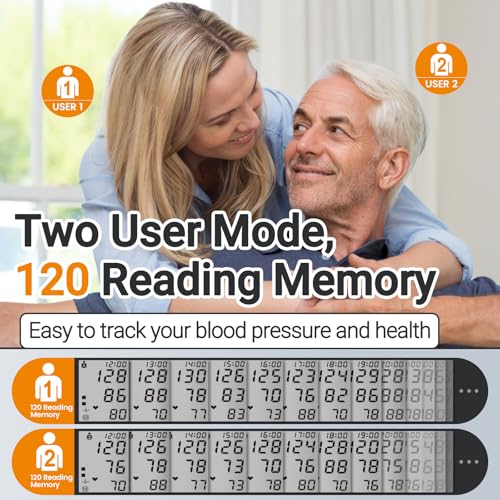
Around that sits a light 4.8 ounce unit, an LCD with voice prompts, two user profiles holding 120 readings each, and a band adjustable across the usual wrist range. It runs on AAA cells rather than an internal battery.
Before the specifications, the format. A wrist device is not equivalent to an upper arm device. The wrist is further from the heart, the arteries are smaller, and readings shift with hand position in a way arm readings do not. Upper arm monitors remain the usual recommendation for home monitoring, and a wrist unit is normally the choice when an arm cuff is impractical. If you have a free choice, our HoMedics upper arm review covers the alternative.
A line in the listing we will not repeat
One of GUAEVER’s feature bullets says you can check your health at home with no need to go to the hospital. We are flagging that rather than passing it along. A home monitor records numbers. It does not replace a clinical assessment, it cannot tell you whether something needs attention, and no product description should be read as a reason not to seek care. If something concerns you, that is a conversation with a clinician, and this device does not substitute for one.
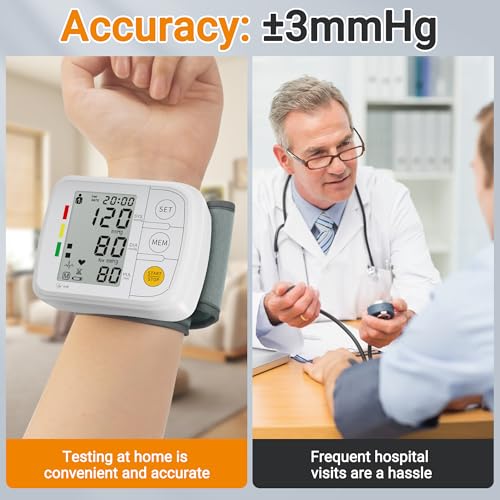
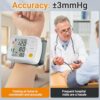
The same bullet states the monitor is super accurate with a precision of plus or minus 3 mmHg. That figure is GUAEVER’s, and it deserves careful reading rather than repetition. A tolerance of that size describes how closely the internal pressure sensor tracks a reference pressure. It is not the same as a validated result on human arms, which is what a validation protocol measures and what actually determines whether a device can be relied on. No validation protocol is named anywhere in this listing, no clearance number is quoted, and no study is referenced. We make no accuracy claim about this device in our own voice, and validation status can be checked independently through the lists that medical societies publish.
The listing also advertises irregular heartbeat detection. That is a flag raised during a single measurement and a prompt to mention it to a clinician. It does not diagnose anything.
The band range, published three different ways
The product title gives 5.47 to 7.68 inches. A feature bullet gives 5.3 to 7.7 inches. The structured band size field gives 7.68 inches alone, with no lower bound. Three fields, three different accounts, and a quarter inch of disagreement at the bottom end.
A quarter inch matters more on a wrist than it would on an arm, because a wrist band has very little adjustment to spare. Measure your wrist just below the bone, where a watch strap sits. If your measurement is under about 5.5 inches, the difference between the two published minimums decides whether this device fits you, and you should get an answer from GUAEVER in writing before ordering rather than choosing the number you prefer.
The rest of the specifications
Memory and users
Two profiles, 120 readings each, for 240 in total. That is a useful depth for two people keeping a log over months, and it is a clear advantage over the single user wrist monitors elsewhere in this catalog, such as the one covered in our SureLife WRS-35H review.
Weight, and a small disagreement
A feature bullet gives the weight as 145 grams. The specification field gives 4.8 ounces, which is about 136 grams, and a third field gives 0.3 pounds, which is the same 136. Nine grams changes nothing about how the device performs, but it is one more example of a listing whose numbers were not checked against each other, which is context for how much weight to put on the other figures.
What is in the box
The structured contents field lists a case and nothing else. The feature bullet lists the monitor, a user guide, a storage case and the box. Neither mentions batteries, though the title says AAA cells are part of the package. Get a packing list from the seller if that matters.
Voice and display
An LCD with a large screen and clear spoken prompts, aimed at older users. The listing does not name the language spoken or say whether the voice can be switched off, which are both worth confirming if the device is a gift.
Using it correctly, and a caution about the case
The positioning case is a good idea with one limitation you should understand. Resting the wrist on the case fixes the angle and gives you repeatability, which is the main thing. It does not automatically put the wrist at heart height, because that depends on the height of the table and of your chair. Set yourself up once so that, with the hand on the case, the wrist sits roughly level with the middle of your chest, and then use that same table and chair every time.
Beyond that, the usual conditions. Rest for five minutes first, back supported, feet flat, legs uncrossed. Bare wrist, band snug, display facing up. Stay quiet and still. If you take a second reading, wait a minute or two and repeat the identical posture, because the value of a home log is that it is comparable with itself.
Confirm the correct user profile before pressing start, and write readings down with dates and times even though the device stores 120 of them. Paper is what gets read at an appointment.
Alternatives worth comparing
The same BP186W model appears in this catalog under a different brand name, covered in our Windray BP186W review, which is worth reading as a reminder that the label on a wrist monitor often tells you less than the model code does. GUAEVER itself has several listings here, including the BP351A and a second wrist model with different published figures. Our home blood pressure monitor section puts the wrist devices next to the arm ones so the two formats can be weighed against each other.
Who should buy it, and who should not
Buy the BP186W if an arm cuff is impractical, if two people need separate records, and if your wrist measures comfortably inside the published range rather than at its edge. Skip it if your wrist is small enough that the disagreement between 5.3 and 5.47 inches decides the fit, if you want a device whose accuracy claim comes with a named validation, or if the bullet about not needing to go to the hospital influenced you at all. It should not. The device produces a number, and the reading of that number is a clinician’s job.