



Description
Who the PLAYOUNG BSX525 is for
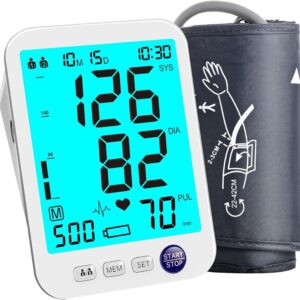
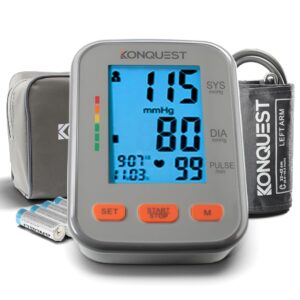
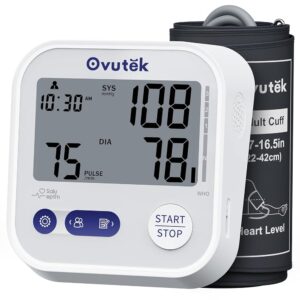
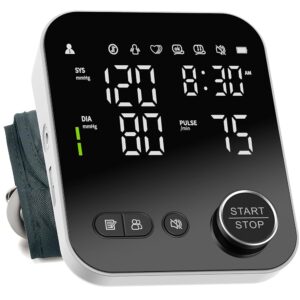
This is an entry level upper arm automatic blood pressure monitor with a wide range cuff, a three color backlit display and two user memories. It records numbers for a clinician to review. It is not a diagnostic device and it does not replace professional medical care.
The manufacturer is recorded as Shenzhen BSX Technology Electronics, and the BSX designation appears across a number of differently branded monitors in this catalog. That is a shared hardware platform sold under several labels, so comparing those listings is mostly a matter of what is in the box and who stands behind it.
Cuff range and the specifications that matter
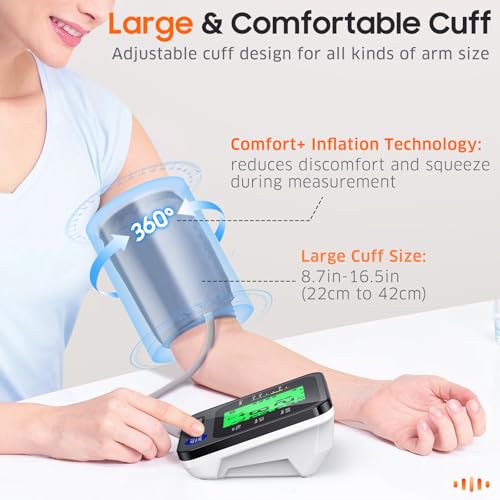
The listing states an adjustable large upper arm cuff covering 8.66 to 16.53 inches, given as 22 to 42 cm, and describes it as wrapping 360 degrees around the arm for even pressure. That is a proper wide range cuff and it covers most adults. Note that our stored band size attribute records only 16.5 inches, dropping the lower bound, so use the full range as stated.
Measure the circumference of your bare upper arm with a cloth tape, midway between elbow and shoulder, before ordering. A cuff that is too small or too large produces a reading that does not match what the same device would record with the right one, and there is no warning on the display. The listing describes the cuff as ensuring a comfortable fit for all kinds of arm size, which 22 to 42 cm does not literally mean, so work from the numbers.
Memory and the measurement
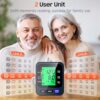
The device stores 99 readings for each of two users, 198 in total, and the display shows systolic pressure, diastolic pressure, pulse rate, date, time and which user slot is selected. The listing states a measurement completes within 45 seconds. It also suggests taking three readings in succession, which is sound advice and worth following, although the listing does not describe an automatic averaging function to do it for you, so the arithmetic is yours.
The three color display, and how to read it
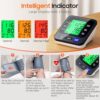
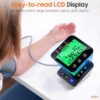
The headline feature is a backlit display that shows green, yellow or red. The listing states that these represent normal, mid and high categories. That is a category indicator: the color changes according to where a reading falls against thresholds programmed into the device.
Treat it as a prompt rather than a verdict. A color on a consumer display does not know your history, your medication or anything else about you, and what a particular number means for a particular person is a clinical judgment. We are not reprinting the thresholds here as targets to aim for. If a color appears that concerns you, the useful response is to record the reading and raise it at your next appointment, not to change anything on your own.
Set against that caution, a color coded display has a genuine practical advantage: it is readable across a room and by someone who struggles with small digits, which is the reason this kind of screen keeps appearing on devices aimed at older users.
Using it correctly, and what the readings are for
Sit with your back supported and your feet flat on the floor rather than crossed, and rest quietly for several minutes before measuring. Fit the cuff on a bare upper arm rather than over a sleeve, and support the arm so the cuff sits at about the height of your heart. Do not talk during the measurement. Use the same arm at about the same time each day.
What you collect is a record for someone else to read. What a reading means, whether a pattern across your readings is significant, and whether anything about your treatment should change are questions for a healthcare professional who knows your history. This device does not replace professional medical care, and no reading from it should be used to start, stop or alter medication on your own.
The accuracy claim, which does not hold together
The listing states that the monitor passed thousands of repeated tests, clinical tests and laboratory blackbody tests. The last of those is worth pausing on, because a blackbody test is a procedure from radiometry, used for calibrating instruments that measure thermal radiation. It has no application to a device that inflates a cuff and measures pressure. Either that phrase has been carried across from a different product, most likely a thermometer, or it is decorative language. Either way it is not evidence of anything.
We do not test products and we will not describe any monitor as accurate in our own voice. No accuracy figure in mmHg, no independent validation protocol and no assessing body is named anywhere in this listing. Check whether this model number appears on an independent validation listing if that matters to you.
Limits and gaps
No irregular heartbeat detection is described. There is no app and no wireless connection, so 99 readings per user is the whole history unless you write them down, and there is no automatic averaging despite the listing recommending three readings.
The included components field lists only a cuff. No batteries, no cable, no adapter and no case is confirmed anywhere in the record, which matters because our own earlier summary of this product described an included travel case. We have removed that claim. Battery life is not published, no display dimension is given and no warranty term appears.
One more point about shared platform devices, since this is one. When a manufacturer builds a monitor and sells it through several brands, the after sales position varies far more than the hardware does. The brand on the box is usually the party you deal with if a cuff splits or a device stops holding pressure inside its first year, and some of these brands are trading names with no service operation behind them at all. That is worth weighing against a small price difference, particularly on a device that has no independent validation and therefore no external reference point if you start to doubt its readings.
Alternatives worth comparing
Other monitors on what appears to be the same platform include the Laukum BSX583, whose cuff is narrower than its title implies, the Maraawa BSX583, the Cardiovantage BSX595 and the ORWK BSX593. The Arsimai BSX312 is an earlier device in the same family. Compare them on package contents and support rather than assuming the hardware differs. Our index of home monitors and cuffs lists the cuff range each one publishes.
Who should buy it and who should not
Buy it if two people need separate records, arms measure between 8.66 and 16.53 inches, and a color coded display that can be read from a distance is the deciding feature. Do not buy it expecting a case, batteries or a cable, do not read the color band as an assessment of your health, and do not take the testing language in the listing at face value. Take your readings to a clinician.