


Description
Who the TESACOT FC-BP121 is for, and what it settles
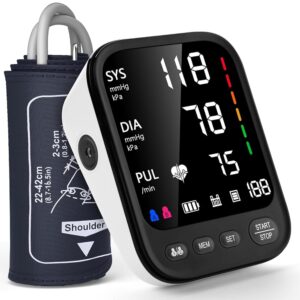
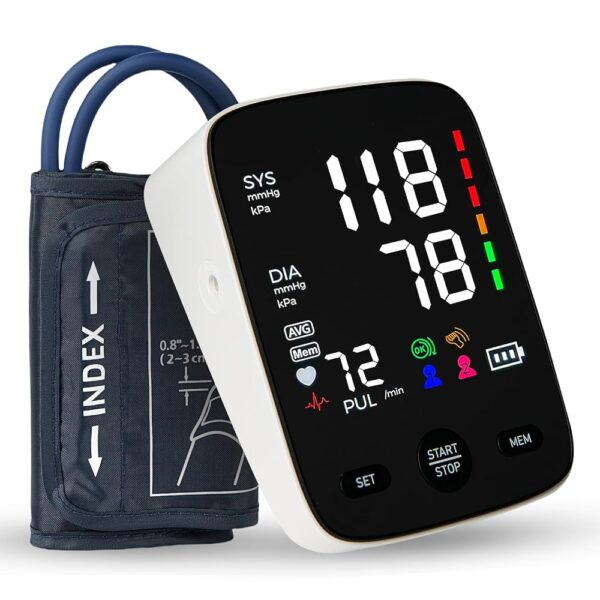
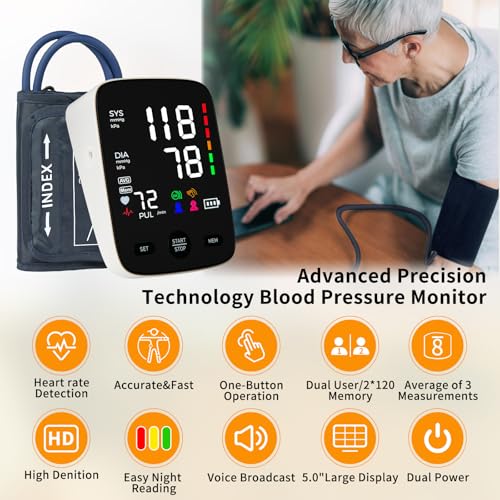
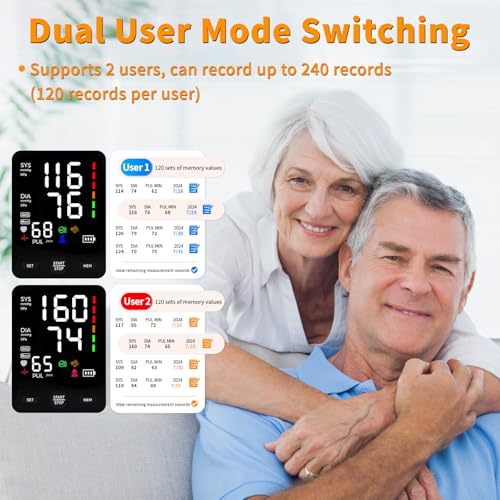
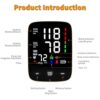
TESACOT is aiming this upper arm monitor at a shared household: two user profiles holding 120 timestamped readings each, a large backlit screen, one button operation, a stated 30 second measurement, and dual power from either four AAA cells or a Type-C cable. The carrying case makes it a plausible second machine for a bag or a second home.
What it settles is the power question. Most monitors at this level make you choose between disposable cells and a rechargeable battery. This one takes either, which is useful if the device will be shared between a house where batteries are always around and a trip where a phone charger is the only thing packed.
What it does not settle is fit, and there is a claim in the product title that needs addressing before anything else. This device measures and records. It does not diagnose, it does not replace professional medical care, and every reading belongs in a conversation with the clinician who manages your health.
The claim in the title
The product title describes the device as an arrhythmia and home hypertension detector. That is TESACOT’s wording, and we are not adopting it. Detecting hypertension is a clinical judgment made by a professional using more than one measurement and more than one piece of information. No home monitor detects a condition. It reports a number.
The underlying feature is described more modestly in the feature bullets, where TESACOT says the device tracks pulse rate so that irregular heartbeats can be detected. Read that as a flag rather than a finding: the device can register an irregularity during a single measurement, which is a prompt to mention it to a clinician. It does not diagnose an arrhythmia, and the bullets themselves do not claim it does. The gap between the bullet and the title is worth noticing, because the title is the part most buyers read.
TESACOT also states that the device collects a large amount of clinical data using intelligent sensing technology, that it is tested to ensure accuracy, and that no calibration is required. Those are all manufacturer statements. No validation protocol is named, no clearance number appears, and no accuracy tolerance is published anywhere in the listing, so there is nothing here we can attribute beyond the claims themselves and nothing we will assert in our own voice. The no calibration claim is the one to treat most carefully, since many manufacturers of home monitors recommend periodic verification against a reference device, and the listing gives no basis for the exception.
The cuff, and where its range is published
The product title gives an adjustable large cuff of 9 to 17 inches. That is the only place a range appears. There is no band size field in the specifications, no centimeter equivalent anywhere, and the size field on the product reads Medium, which contradicts the title’s description of a large cuff and is not a circumference in any case.
A range that exists only in a marketing title is thinner evidence than a specification, so ask the seller to confirm the figures in centimeters before ordering, particularly if your measurement is near either end. Measure the midpoint of your upper arm with a soft tape, arm relaxed, and buy on that number. Cuff fit is the single largest thing a home user controls, and a band that has run out of adjustment, or one too large to be seated evenly, changes the reading on a machine that is functioning correctly. For comparison, a listing that publishes a range in both units in a proper specification field, such as the A&D Medical UA-651, gives you something firmer to work from even when its own figures disagree.
The rest of the specifications
Power and the packing list
TESACOT states four AAA batteries included, or a Type-C charging cable included, and describes the device as compact with a carrying case. The structured included components field lists a cuff and nothing else. Batteries, cable and case are all absent from it. That field is plainly incomplete rather than accurate, but if the cable or the case is part of why you are buying, get a packing list in writing.
Display and timing
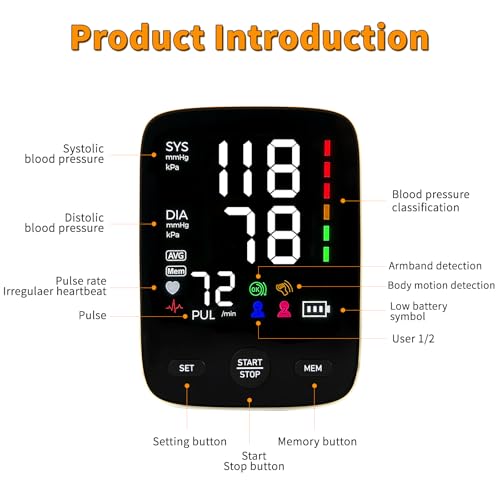
The title advertises a five inch backlit large screen, while the display type field reads LED. No screen size appears in the specifications to confirm the five inch figure. TESACOT states a measurement completes within 30 seconds and the unit powers down after a minute of inactivity.
Memory
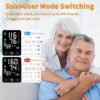
Two users, 120 sets each, stored automatically at the end of every measurement with the date and time attached. That is a useful depth for a log kept over months.
Size and weight
Listed dimensions are 6.08 by 4.28 by 3.18 inches and listed weight is 1.01 pounds, given consistently in two places, which is a small mercy in this catalog.
A note on where this design comes from
The model code FC-BP121 belongs to a family that appears across several unrelated brand names in this catalog. Our reviews of the Greetmed FC-BP111, the Zixcare FC-BP102, the Zixcare FC-BP106 and the KIKEANG FC-BP201 all cover machines carrying the same prefix. Shared platforms are ordinary in this category, and none of that is a criticism of the hardware. The practical consequence is that a brand name here carries less information than buyers usually assume, and a claim made under one label does not transfer to another.
Using it correctly
Sit for five minutes before measuring, back supported, feet flat, legs uncrossed. Bare the upper arm rather than pushing a sleeve up. Place the lower edge of the cuff about an inch above the elbow crease, artery marker over the inside of the arm, snug enough that two fingers slide underneath with mild resistance, and rest the arm so the cuff sits level with your heart. Stay quiet and still until the reading appears.
Select the right user profile before you press start. Take readings at consistent times of day rather than at random, and write them down with the time, because the pattern across a fortnight is what a clinician can use and a single number is not.
If an irregular heartbeat symbol appears, note when it happened and mention it at your next appointment. Do not repeat the measurement until the symbol goes away and then log only that one, because a log edited to look reassuring is worse than no log.
Who should buy it, and who should not
Buy the FC-BP121 if the dual power arrangement is genuinely useful to you, if two people need deep timestamped records, and if the seller will confirm the cuff range in centimeters against your measured arm. Skip it if you want a cuff range published somewhere more solid than a title, if you need the packing list settled first, or if the phrase hypertension detector on the box was the reason you were interested. No monitor detects hypertension. Yours reports numbers, and the reading of those numbers is a clinician’s job. The wider home blood pressure monitor section lists the alternatives with their ranges attached.